
News
Protecting Your WhatsApp Account From Hackers: Kaspersky Expert Tips
Cybercriminals can hijack WhatsApp accounts using linked devices or re-registration. Cybersecurity experts from Kaspersky explain how to protect yourself.


Your WhatsApp account isn’t just a way to chat with friends — unfortunately it’s also a potential target for cybercriminals. Stolen accounts are often used for everything from spamming to elaborate scams. Hackers are always looking for ways to hijack accounts, and understanding their methods is the first step to protecting yourself.
How Hackers Can Take Over Your WhatsApp Account
Cybercriminals typically use two main tactics to gain access to WhatsApp accounts: One method involves linking a new device to an existing account using the “Linked devices” feature. In this case, the original user can still use their account, but attackers can see recent messages.
The second method is more aggressive — hackers re-register the account on their own device, as if setting up a new phone. When this happens, the original user is locked out, and all control is transferred to the attacker. While past messages remain inaccessible to the hacker, they can still exploit the account for scams and fraud.
Also Read: Is Your Phone Hacked? How To Find Out & Protect Yourself
Seifallah Jedidi, Head of Consumer Channel, META, at cybersecurity firm Kaspersky, highlights the risks: “Messengers are a private space, as they often contain personal information about our lives and relationships with family and friends. They can also contain information about work and, in some cases, confidential information. If you notice any unusual activity, such as receiving replies to messages that you didn’t send, or if your friends complain about strange messages coming from your account, it’s important to take steps to protect your privacy immediately”.
How To Keep Your WhatsApp Account Secure
If your account has already been compromised, you’ll need to follow WhatsApp’s recovery steps. However, according to Kaspersky, the best defense is prevention.
Here’s what you should do:
- Enable two-step verification and memorize your PIN: This is a permanent code, not a one-time password. You can set it up in WhatsApp by navigating to Settings → Account → Two-step verification.
- Don’t share your PIN or registration codes: Legitimate services will never ask for them — only scammers do.
- Use passkeys for added security: WhatsApp recently introduced support for passkeys, which replace PINs with biometric authentication. To activate this, go to Settings → Account → Passkeys.
- Set up a backup email address to help recover your account if needed: You can do this by going to Settings → Account → Email address.
- Secure your email account: If you’ve already linked an email, update your password to a strong, unique one. Consider using a password manager to store it safely.
- Enable two-factor authentication (2FA) for your email: This adds an extra layer of protection.
- Watch out for SIM swap scams: Contact your mobile carrier — preferably in person — to confirm that no unauthorized SIM cards have been issued for your number. Also, check that call forwarding hasn’t been set up without your consent. If any suspicious activity is detected, ask about additional security measures such as requiring an extra password for authentication.
Finally, ensure that your computer or phone are fully protected from malware, as no amount of security settings will help if a device is compromised. During Ramadan, Kaspersky is offering a 30% discount on its Premium solution, which also includes a one-month complimentary OSN Plus subscription with access to a vast selection of 4K, ad-free movies and series.



News
Instagram Redraws Its Wordmark And The Internet Reads “Instagzam”
Instagram’s first wordmark refresh in a decade arrives with new fonts, a restrained gradient — and a Reddit verdict of sidegrade.
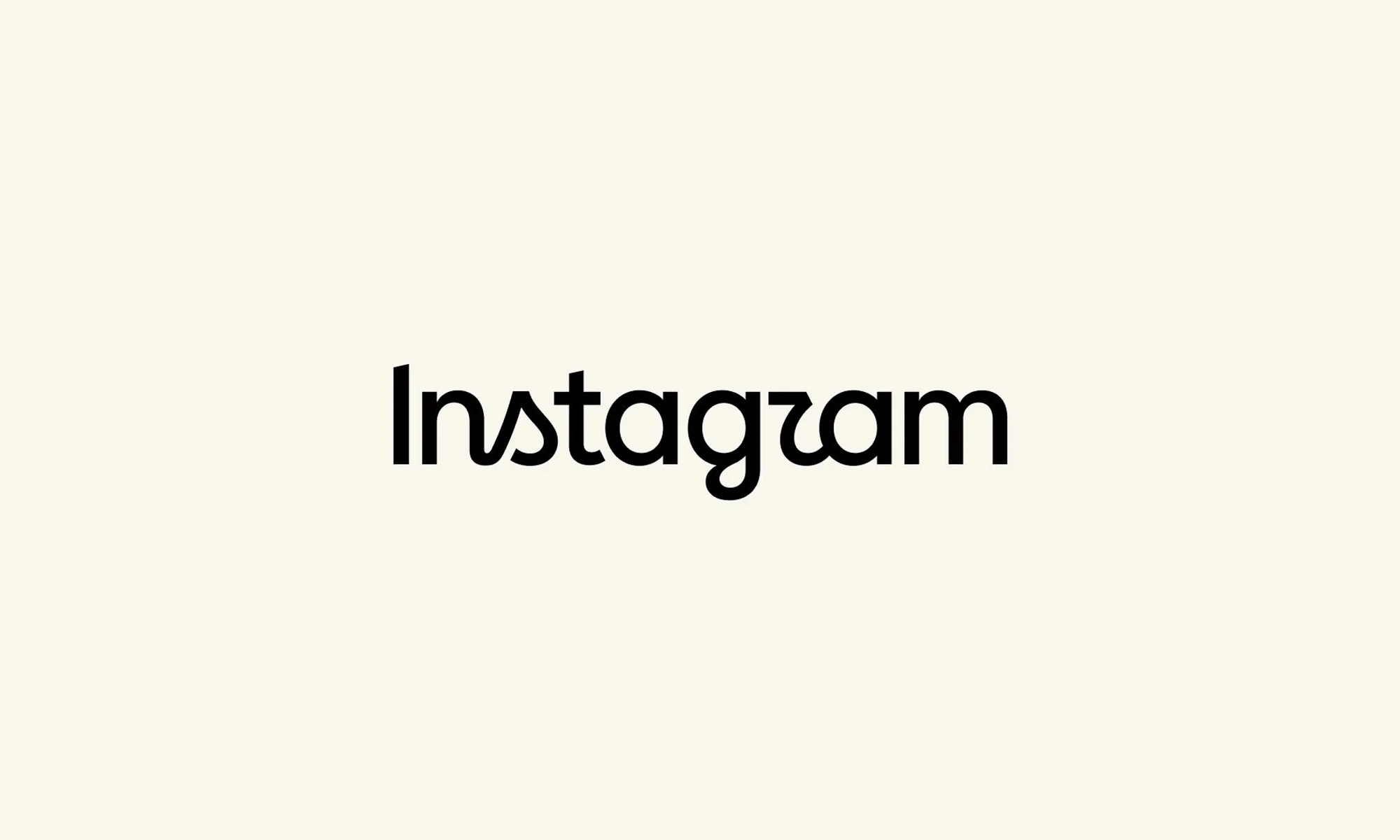
Although Instagram’s famous camera icon hasn’t changed, the company has refreshed the handwritten wordmark at the top of its app. This is the first redesign we’ve seen in ten years, and one the internet promptly set about renaming.
“The wordmark at the top of the app hasn’t changed in 10 years, so it was time for a refresh,” Instagram head Adam Mosseri wrote in a post on August 13, describing the new version as “cleaner and more modern” while keeping references to the original design.
Instagram says its team explored hundreds of options — all-caps lettering, camera-inspired concepts, even literal handwriting — before returning to script. “Script reflects individuality, so referencing that felt right,” Instagram director of product design Jasmine Probst said in Meta’s announcement. “The new wordmark is bolder and simpler, with touches of unexpectedness. It cues individual expression, a personal voice, both of which have always been core to Instagram”.
The wordmark is part of a broader brand overhaul: an updated Instagram Sans typeface, two new fonts — the hand-drawn Instagram Pen and Instagram Mono — plus refreshed motion and layouts, and more restrained use of the signature gradient. The wordmark is rolling out globally now, with the rest arriving throughout 2026 and beyond.
Also Read: Spotify Will Now Tell You If Your Favorite Artist Isn’t Real
The design mixes cursive and print lettering, some characters connected and others floating free. That hybrid approach, combined with unusually shaped “s” and “r” characters, led some users to conclude the logo actually reads “Instagzam”. On the r/logodesign subreddit, one user said the wordmark looked “fan-made,” like something built in Canva; another called it “an unsettling mix of manuscript and cursive”; a third summarized it as a “sidegrade” — or, inevitably, a “zidegrade”.
Not everyone was hostile to the new look. Some found the half-cursive design stylish and surprisingly readable, while others called it an improvement on its predecessor, and one commenter argued Instagram was simply adopting minimalist branding later than everyone else. Either way, the platform now has a refreshed identity, three updated fonts, and an unofficial new pronunciation.

Instagram Redraws Its Wordmark And The Internet Reads “Instagzam”

Spotify Will Now Tell You If Your Favorite Artist Isn’t Real

Samsung And Spotify Offer Free Premium Deal In MENA

Lebanon’s 5G Era Begins With 150 Stations And A $1M Budget

Syria Just Got Its First Super App Featuring Built-In Digital Payments

Dubai Police Finishes 65 Projects, Says AI Is The Next Priority

Beirut Wins US Flight Access, But Carriers Aren’t Sold Yet

Samsung’s Fold Goes Wide, And The Whole Galaxy Range Gets Pricier

Gulf AI Job Vacancies Nearly Triple, But Hiring Stays Lopsided

This UAE Platform Wants To Replace Fashion Photo Shoots With AI


-
 News3 weeks ago
This UAE Platform Wants To Replace Fashion Photo Shoots With AI
-

 News3 weeks ago
Nike And Hyperice’s New Slides Heat And Vibrate Your Feet
-
 Product Reviews3 weeks ago
Shokz OpenFit Pro Review: Open-Ear Audio Finally Grows Up
-
 News2 weeks ago
Syria Just Got Its First Super App Featuring Built-In Digital Payments