News
United Arab Emirates To Quit OPEC After 59 Years
Abu Dhabi’s exit clears the way for higher oil output as production limits and Gulf supply risks test the producer group.


The UAE will leave OPEC and OPEC+ on May 1, 2026, ending a 59-year membership and changing its role in global energy markets.
The decision was announced in a government statement carried by state news agency WAM after what Abu Dhabi described as a broad review of its production policy and capacity. The statement said the move reflects “the UAE’s long-term strategic and economic vision and evolving energy profile”.
For Abu Dhabi, the break removes a quota system that had become harder to justify. OPEC’s production limits are meant to support prices by holding back supply. That model fits economies more exposed to oil revenue. The UAE says its non-oil economy now accounts for about 75 percent of GDP, while ADNOC (The Abu Dhabi National Oil Company) has spent heavily to lift crude capacity.
It does not plan an immediate surge in production. The UAE said it would bring more barrels to market “in a gradual and measured manner, aligned with demand and market conditions”. It also pointed to continued spending on oil, gas, renewables and low-carbon technologies.
The market reaction was swift. Brent crude, the European benchmark, moved above $100 per barrel for the first time since April 8 and reached $111 as of writing.
The timing is awkward for OPEC. Iraq, Kazakhstan and the UAE have all produced above agreed quotas in recent months and faced pressure to compensate. The UAE is the group’s third-largest producer. Its departure follows Qatar’s exit in 2019 and comes as OPEC prepared for a meeting in Vienna on Wednesday.
Also Read: Creative Zone Launches UAE Startup Setup Program
There’s also the Strait of Hormuz issue. The statement referred to disruption linked to the conflict with Iran, which has sharply restricted tanker movement through the waterway between Iran and Oman. Around a fifth of global crude oil and liquefied natural gas normally passes through the route. The EIA estimates Iraq, Saudi Arabia, Kuwait, the UAE, Qatar and Bahrain kept 7.5 million barrels per day of crude output offline in March and 9.1 million in April.
Despite current volatility, the split hasn’t appeared from nowhere. In 2021, the UAE resisted an extension of production cuts unless its quota was raised, arguing that capacity investments were being constrained by outdated baselines. A compromise followed, but the dispute exposed the core issue: Abu Dhabi wanted to produce more than the system allowed.
Abu Dhabi is targeting 5 million barrels per day by 2027. Current production is around 3.4 million barrels per day, while the OPEC+ limit has held the country near 3.2 million despite capacity above 4 million.




News
Instagram Now Lets You Tune Its Algorithm, But There’s One Big Catch
The new controls promise users “agency” over their feed, but asking to see more from accounts you actually follow returns an error.

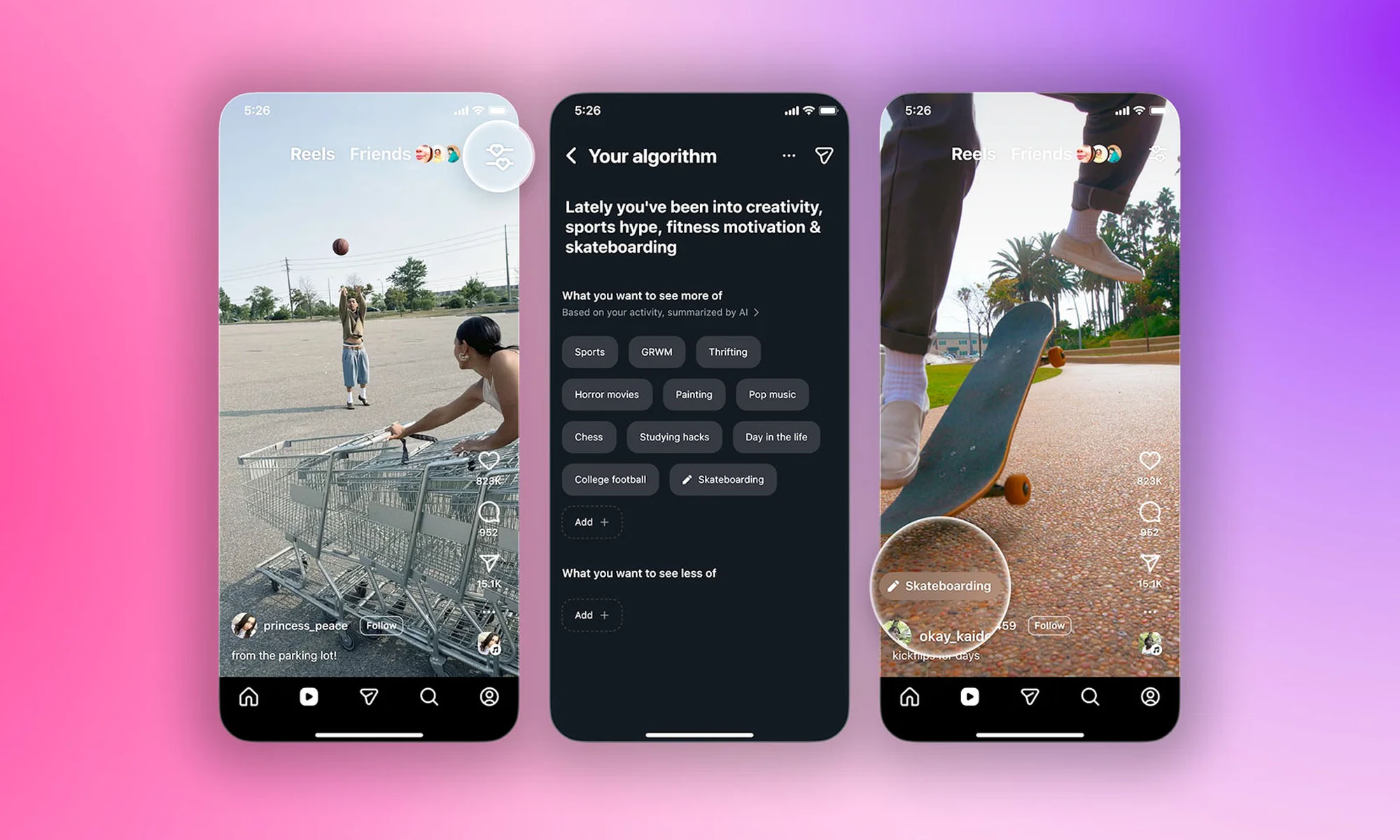
Instagram has expanded its algorithm personalization feature to the main feed, letting users specify which topics they want surfaced more or less often in recommendations.
Instagram chief Adam Mosseri framed the change as a matter of user control. “I believe it’s in our best interest as a business to empower people to shape Instagram into something that works for them, and that people should be able to have a meaningful amount of agency over the products they spend so much time in,” he wrote on Threads.
Though it turns out that agency has limits. The controls only accept interest-based topics, such as “rescue dogs” or “parenting humor”. Requesting “posts from people I follow” returns no results, which is obviously a sore point for creators whose posts rarely reach their own audiences. Mosseri conceded the tension: “Who you follow used to be a meaningful tool people had for shaping their own experience, and as recommendations took over the main feed that tool quietly stopped working”.
Also Read: How To Find & Cancel Pending Instagram Requests
Instagram credits large language models for making its algorithms legible enough to personalize, and says it is “actively working on supporting requests for people, different moods or vibes, content types, and more” – potentially leading to a fully “bespoke” version of the app.

Instagram Now Lets You Tune Its Algorithm, But There’s One Big Catch

Deezer’s Free AI Detector Reveals What’s Hiding In Your Playlists

Logitech’s New Folding Mouse Is Designed For Work On The Go

2026 Crypto Trends: Bitcoin, ETFs & The Future Of Payments

At I/O 2026, Sundar Pichai Concedes AI Must Deliver Real Value
2026 Crypto Trends: Bitcoin, ETFs & The Future Of Payments
At I/O 2026, Sundar Pichai Concedes AI Must Deliver Real Value
Logitech’s New Folding Mouse Is Designed For Work On The Go
Instagram Now Lets You Tune Its Algorithm, But There’s One Big Catch