
News
6 Automation Tools Transforming Middle Eastern Businesses
From finance to HR, automation is helping companies in the region cut costs, reduce risk, and focus on smarter, higher-value work.


As growth accelerates across the Middle East, businesses are under pressure to run leaner, faster, and smarter. In the UAE alone, 64% of companies plan to increase their automation budgets in 2025, targeting finance, HR, and customer support in particular. With that momentum building, here are six automation tools already reshaping how regional companies operate.
Spend Management
Spend management platforms are replacing manual expense workflows with real-time control. Tools like Qashio automate approvals, issue custom corporate cards, and integrate directly with ERP systems — giving companies visibility into spend patterns and reducing fraud and delays. Travel businesses using Qashio for Travel, for example, have cut FX losses and streamlined reconciliation. Even smaller teams benefit from built-in rewards like air miles and hotel points.
HR Automation
HR automation platforms are potentially reducing thousands of errors and freeing up time. From applicant tracking to payroll, these systems replace repetitive admin with centralized dashboards for leave, benefits, tax documents, and onboarding. The result is lower compliance risk and more time for strategic HR initiatives like retention and workplace culture.
Marketing
Marketing teams are also scaling faster with automation. Tools now handle email targeting, social scheduling, lead scoring, and cross-channel analytics — creating smarter, data-driven campaigns without manual effort. Rather than chasing clicks, teams can focus on high-converting journeys, backed by real user behavior.
Customer Support
Customer support automation is another game-changer. As demand rises, chatbots, smart ticketing, and real-time translation help resolve basic queries instantly. A 2025 survey by Zendesk found 90% of C-level execs expect most customer issues to be handled without human agents in the near future. These platforms improve satisfaction while reducing overhead, keeping teams lean without compromising service.
Project Management
Project management tools are bringing structure to distributed teams. They offer live updates, task tracking, and performance insights in one place — helping managers spot delays early, keep teams accountable, and maintain transparency with stakeholders. As businesses scale, automated coordination becomes essential.
Procurement
Procurement automation is tackling one of the most overlooked inefficiencies. These systems digitize purchase requests, approvals, vendor management, and invoice tracking, often with real-time budget controls and ERP sync. The result is faster cycles, better compliance, and stronger supplier relationships.
With automation gaining traction across every core function, Middle East businesses are entering a new operational era. CEOs know what’s at stake: 60% say they’ll need to evolve significantly over the next decade to stay competitive. For many, that evolution has already begun.

News
Microsoft Plans $10 Billion-Plus Gulf Expansion Despite Iran Conflict
Security is shaping Microsoft’s approach, from resilience work with governments to what it will say about how the money splits by country.
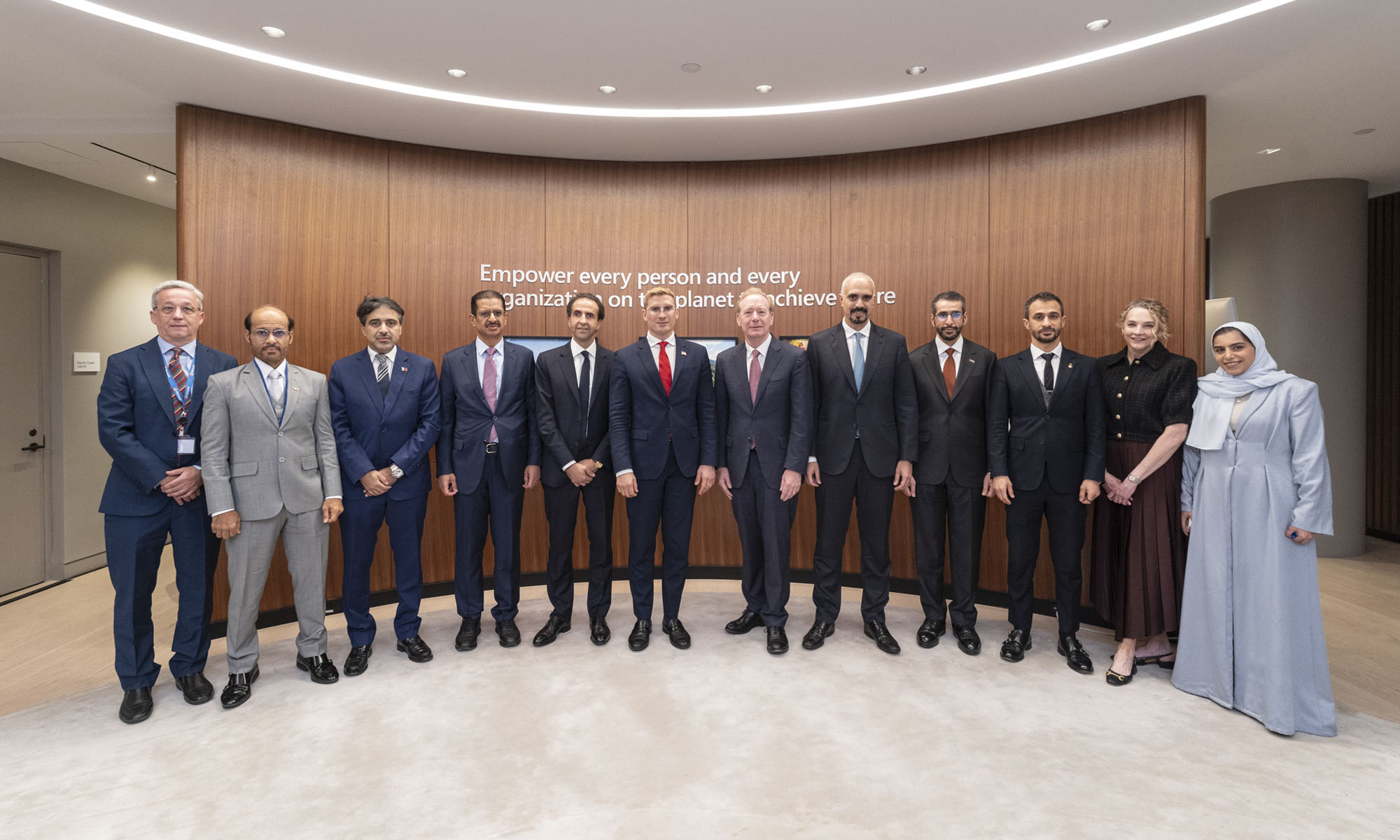
Microsoft is planning more than $10 billion of investment across the UAE, Saudi Arabia, Qatar and Kuwait through 2030, Vice Chair and President Brad Smith told Reuters, calling the spending schedule aggressive. The Iranian conflict that began on February 28 has not persuaded the company to scale back.
“We’re sustaining all the investments we planned to make before this conflict started, and we are in fact adding to them,” Smith said. The $10 billion-plus total does not, however, show how large those additions are.
The investment, which Smith described as part of Microsoft’s continued infrastructure expansion, is aimed at cloud and AI infrastructure and at the company’s growing regional operations. Microsoft also intends to put more than $400 million into subsea and terrestrial connectivity across the Middle East by 2030.
The spending fits the region’s own ambitions too. Gulf governments have been investing heavily in AI infrastructure as part of a push to diversify their economies beyond oil and gas and turn themselves into global technology hubs. Major cloud and AI providers have been drawn in part by the land and relatively low-cost energy on offer.
Microsoft is widening its partnerships with regional AI companies, though not on identical terms. In 2024, it invested $1.5 billion in Abu Dhabi-based G42 for a minority stake, and Smith currently sits on G42’s board. Saudi Arabia’s Humain and Qatar’s Qai are working with Microsoft on selected priority areas, but Smith said the company does not plan to make capital investments in either.
Also Read: Egypt’s Mobile Wallets Are Booming, But Cash Still Has Power
The conflict has added another strand to Microsoft’s work in the region. Since it began, Smith said, the company has supported regional partners with digital resilience assessments, and it is now working with Gulf countries through a digital resilience initiative focused on preparedness and the protection of critical data.
So far, the company has given no country-by-country breakdown of the investment, citing security among other factors. So while the headline figure is public, how Microsoft divides the spending among the four countries is not.

Microsoft Plans $10 Billion-Plus Gulf Expansion Despite Iran Conflict

In Kuwait, Your Surgeon Might Be Operating From Another Country

Qatar Folds 45 State Companies Into A Single Investment Platform

Trip.com Is Betting An AI Agent Will Book Your Next Vacation

Meta’s New $499 Plan Puts A Price On Reaching A Real Person

Apple’s First Folding iPhone Arrives Late To A Shrinking Market
Trip.com Is Betting An AI Agent Will Book Your Next Vacation

Egypt’s Mobile Wallets Are Booming, But Cash Still Has Power

OKX Bets Streaming Perks Can Take Crypto Mainstream Across MENA

Musk’s Boring Company Wants To Dig 150 KM Of Tunnel Under The UAE


-
 News3 weeks ago
Apple’s First Folding iPhone Arrives Late To A Shrinking Market
-
 News2 weeks ago
Trip.com Is Betting An AI Agent Will Book Your Next Vacation
-
 News2 weeks ago
Egypt’s Mobile Wallets Are Booming, But Cash Still Has Power
-
 News2 weeks ago
OKX Bets Streaming Perks Can Take Crypto Mainstream Across MENA