
News
Whish Money Partners With Mastercard For Cross Border Payments
Users in Lebanon can send money abroad to over 50 countries, while Lebanese people living overseas can send money home.


Whish Money, Lebanon’s leading e-wallet and personal finance app, has partnered with Mastercard to unlock faster inbound and outbound remittances for consumers across the country. The tie-up taps into Mastercard Move, the company’s global money movement network, to allow users in Lebanon to send funds to more than 50 countries — and for Lebanese abroad to send money home in near real time.
Through the Whish Money mobile app, users can now make cost-effective transfers to a wide range of destinations. Depending on the recipient’s market, senders can choose how funds are delivered: directly into bank accounts, mobile wallets, or collected as cash. Customers can also fund their Whish Money wallets with cards as well as cash, expanding convenience for everyday users. This marks Mastercard’s first collaboration with a mobile wallet in Lebanon to facilitate remittances.
“Many people in Lebanon rely on remittances from their family members abroad to meet their basic needs. In this challenging economic situation, international money transfer services provide a vital inflow of foreign currency into Lebanon. Thanks to Mastercard Move, we can now offer fast, efficient and secure remittances to Lebanese people,” said Toufic Koussa, Co-founder and CEO of Whish Money.
Onur Kursun, Executive Vice President of Commercial and New Payment Flows, EEMEA at Mastercard, added: “Our collaboration will give Whish Money the reach, transparency and speed needed to scale its cross-border business and address consumer demand for sending and receiving funds internationally. Meanwhile, it will enable us to expand our payment network and introduce market firsts for inbound and outbound money transfers in Lebanon. We look forward to working together to improve the lives of Lebanese people and address their everyday needs”.
Also Read: Private Photoshoots, Powered By AI And Built For Arab Women
According to World Bank estimates, Lebanon was the third-largest recipient of remittances in the MENA region in 2022, receiving around US$6.4 billion. Only Egypt (US$28.3 billion) and Morocco (US$11.2 billion) recorded larger inflows. For Lebanese residents, remittances are both a lifeline and a source of foreign currency, meaning the Whish Mastercard collaboration could soon prove to be transformative.




News
G42’s Inception42 Wants AI To Show Its Work Before Investors Commit
Launched at SuperReturn Middle East, Alpha is pitched at sovereign wealth funds and private equity firms underwriting bigger deals on tighter timelines.
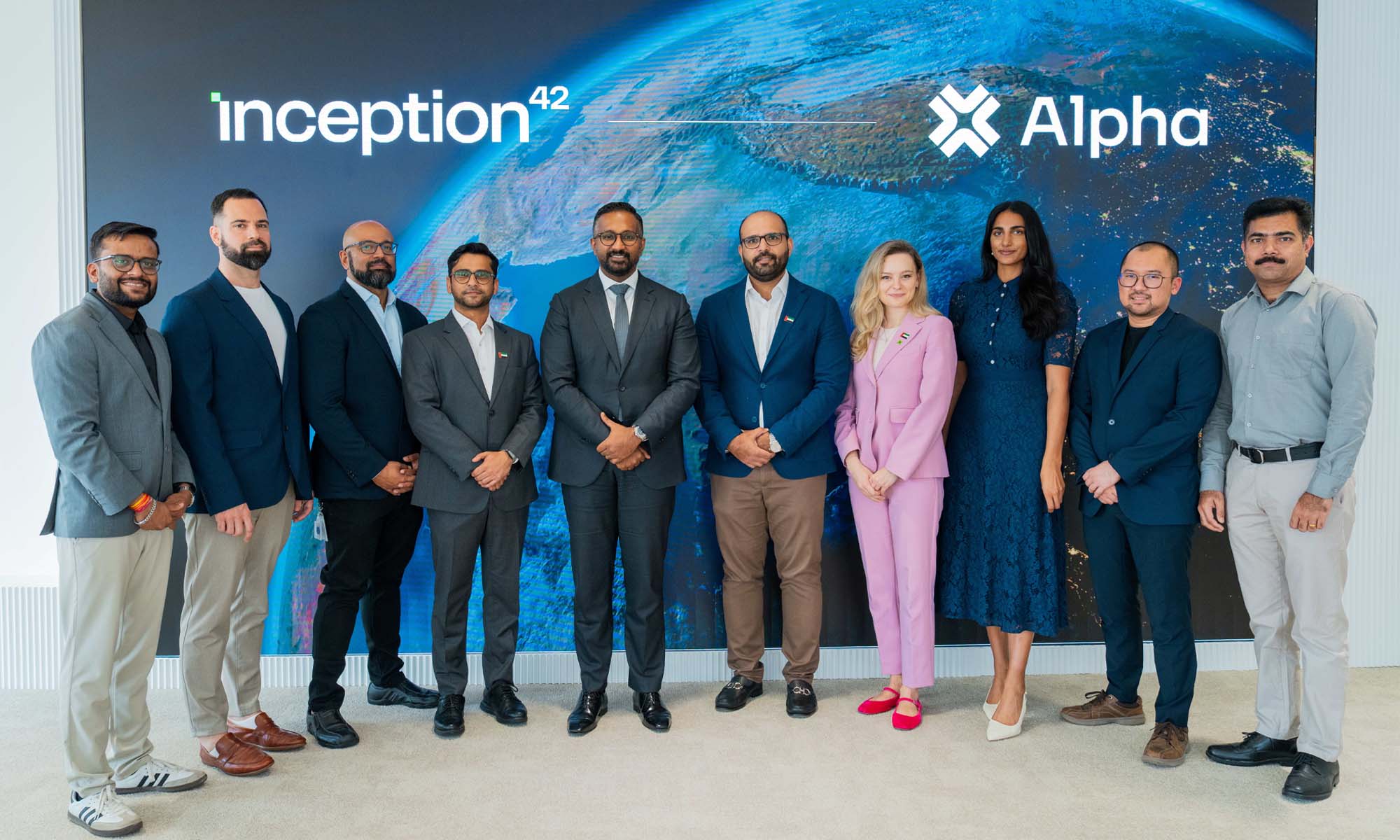
Inception42, G42’s agentic AI company, believes that institutional investors want AI they can check, not just AI that saves time. Its new tool, Alpha, launched at SuperReturn Middle East, is designed to draft investment memos in which every claim points back to its source.
Alpha is aimed at private equity firms, sovereign wealth funds and institutional allocators, which Inception42 says are underwriting larger, more complex positions under tighter timelines. Most AI tools, it argues, speed up individual tasks such as a memo draft or a comps table but leave the investment strategy scattered across files, inboxes and committee decks.
Teams upload Confidential Information Memoranda, diligence packs and portfolio data, which Alpha turns into insights grounded in that material. It checks how complete the diligence is, flagging gaps before they become late-stage surprises, then scores the deal against criteria the institution sets and drafts the memo.
Sourcing every claim is the core of Inception42’s Alpha pitch. Investment committees, the company says, have little time to challenge the evidence, and the audit trail is meant to give them more certainty. The company also promises institutions proof that their own strategy was applied consistently on every deal.
Also Read: Dubai Says Its Deepfake Detector Needs Just 7 Seconds Of Video
“Every investment committee wants the same thing: the full picture of a deal and the confidence to act on it,” says Ashish Koshy, CEO of Inception42. “Alpha gives deal teams and committee members that picture, with every insight traceable to its source, so speed and rigor finally pull in the same direction”.
Alpha is available as SaaS, and investment data, Inception42 says, stays under the institution’s control at every step. Firms can tailor the tool with custom agents, and Alpha Skills will eventually add reusable, practitioner-designed workflows for tasks such as comparables analysis and credit assessment.
The company says Alpha is already proven in the region’s most significant financial institutions. If the tool works as described, committees get an investment memo they can interrogate rather than simply take on trust.

Shokz OpenDots 2 Review: Clip-On Audio Gets A Bass-Heavy Makeover

G42’s Inception42 Wants AI To Show Its Work Before Investors Commit

WHOOP Goes Arabic, Betting On The Gulf’s Appetite For Health Data

New Disney+ Streaming App Has Officially Launched In The UAE

Dubai Says Its Deepfake Detector Needs Just 7 Seconds Of Video

In Kuwait, Your Surgeon Might Be Operating From Another Country

Microsoft Plans $10 Billion-Plus Gulf Expansion Despite Iran Conflict

Qatar Folds 45 State Companies Into A Single Investment Platform

NEOPAY Wants To Follow Merchants Across Channels And Borders

RØDE’s Low-Profile Studio Arm Is Designed To Stay Out Of Shot


-
 News3 weeks ago
In Kuwait, Your Surgeon Might Be Operating From Another Country
-
 News3 weeks ago
Microsoft Plans $10 Billion-Plus Gulf Expansion Despite Iran Conflict
-
 News3 weeks ago
Qatar Folds 45 State Companies Into A Single Investment Platform
-
 News2 weeks ago
NEOPAY Wants To Follow Merchants Across Channels And Borders