
News
Scientists Discover Bacteria That Makes Toxic Water Safe To Drink
Treating wastewater using the newly discovered bacteria doesn’t require expensive equipment and chemicals, so it can be done at scale at a reasonable price.


UNICEF and the World Health Organization (WHO) estimate that 1 in 3 people in the world don’t have access to safe drinking water. In places where safe drinking water is scarce, nutrition-related problems are prevalent, children have trouble staying focused in school, and diseases caused by bacteria and unhygienic practices are common.
Solving this global problem is one of the greatest challenges of our time, which is why many scientists from around the world are researching all kinds of methods for making unsafe water drinkable.
Among them are Dr. Vishal Mishra and PhD student Veer Singh from the Indian Institute of Technology, Banaras Hindu University (IIT-BHU). Recently, the two scientists have published a paper in the Journal of Environmental Chemical Engineering, describing their discovery of a bacteria capable of separating toxic metal from wastewater and making it safe to drink.
They named the bacteria “Microbacterium paraoxydans strain VSVM IIT (BHU),” and described it as very effective when it comes to the elimination of hexavalent chromium, a known carcinogen and a reproductive toxicant present in many water sources around the world.
“It is very effective for removal of hexavalent chromium from wastewater compared to other conventional methods,” said Dr. Mishra. “This bacterial strain showed fast growth rate in the Hexavalent chromium Cr (VI) containing aqueous medium and gets easily separated from the aqueous medium after the treatment process”.
Also Read: Istanbul Fights Disease-Carrying Mosquitoes Using A Smartphone App
Treating wastewater using the newly discovered bacteria doesn’t require expensive equipment and chemicals, so it can be done at scale at a reasonable price.
In India, the country from where the two scientists come from, less than 50 percent of the population has access to safely managed drinking water, and water contamination is present in more than 1.96 million dwellings. Hopefully, this and other similar discoveries will eventually help reduce these numbers to zero.

News
Microsoft Plans $10 Billion-Plus Gulf Expansion Despite Iran Conflict
Security is shaping Microsoft’s approach, from resilience work with governments to what it will say about how the money splits by country.

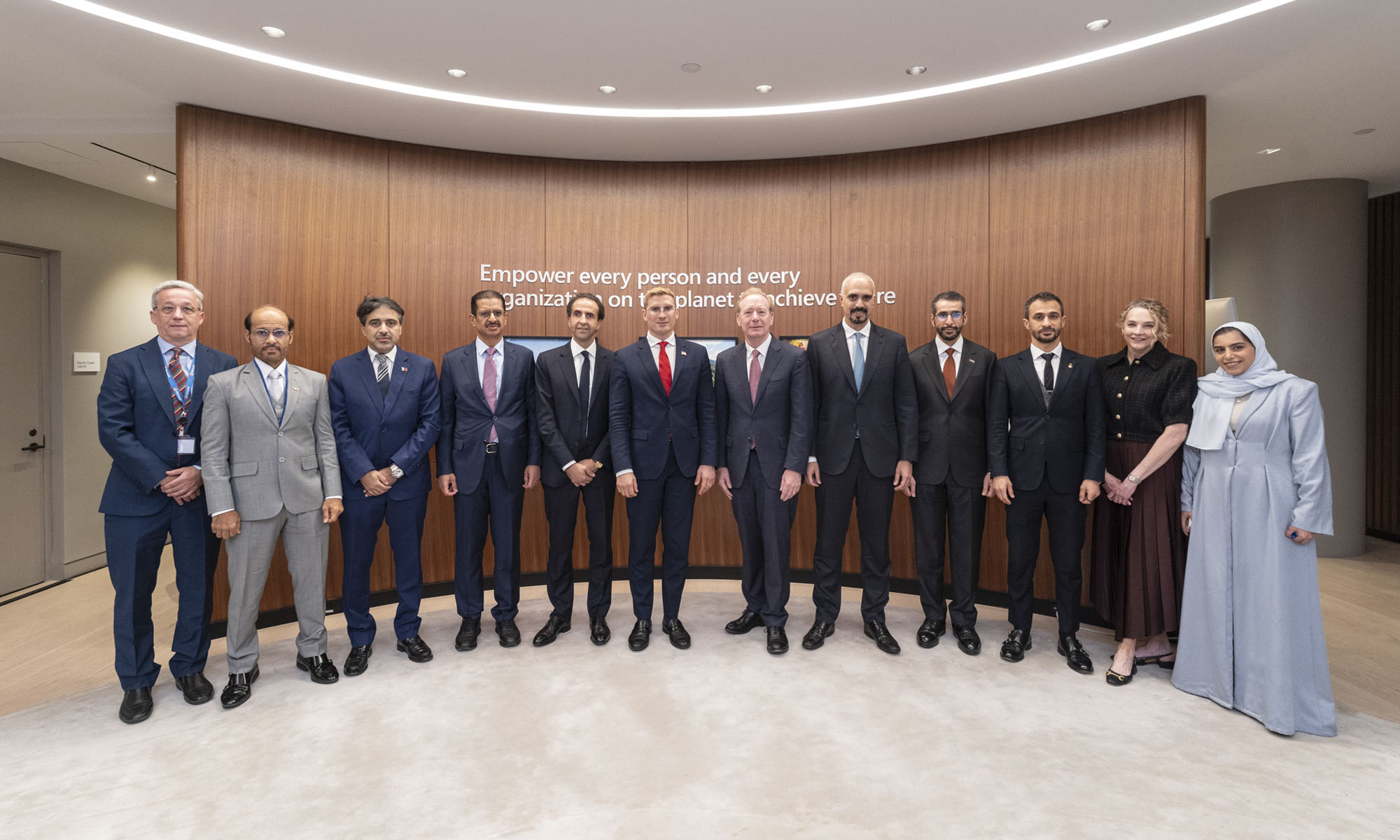
Microsoft is planning more than $10 billion of investment across the UAE, Saudi Arabia, Qatar and Kuwait through 2030, Vice Chair and President Brad Smith told Reuters, calling the spending schedule aggressive. The Iranian conflict that began on February 28 has not persuaded the company to scale back.
“We’re sustaining all the investments we planned to make before this conflict started, and we are in fact adding to them,” Smith said. The $10 billion-plus total does not, however, show how large those additions are.
The investment, which Smith described as part of Microsoft’s continued infrastructure expansion, is aimed at cloud and AI infrastructure and at the company’s growing regional operations. Microsoft also intends to put more than $400 million into subsea and terrestrial connectivity across the Middle East by 2030.
The spending fits the region’s own ambitions too. Gulf governments have been investing heavily in AI infrastructure as part of a push to diversify their economies beyond oil and gas and turn themselves into global technology hubs. Major cloud and AI providers have been drawn in part by the land and relatively low-cost energy on offer.
Microsoft is widening its partnerships with regional AI companies, though not on identical terms. In 2024, it invested $1.5 billion in Abu Dhabi-based G42 for a minority stake, and Smith currently sits on G42’s board. Saudi Arabia’s Humain and Qatar’s Qai are working with Microsoft on selected priority areas, but Smith said the company does not plan to make capital investments in either.
Also Read: Egypt’s Mobile Wallets Are Booming, But Cash Still Has Power
The conflict has added another strand to Microsoft’s work in the region. Since it began, Smith said, the company has supported regional partners with digital resilience assessments, and it is now working with Gulf countries through a digital resilience initiative focused on preparedness and the protection of critical data.
So far, the company has given no country-by-country breakdown of the investment, citing security among other factors. So while the headline figure is public, how Microsoft divides the spending among the four countries is not.

Microsoft Plans $10 Billion-Plus Gulf Expansion Despite Iran Conflict

In Kuwait, Your Surgeon Might Be Operating From Another Country

Qatar Folds 45 State Companies Into A Single Investment Platform

Trip.com Is Betting An AI Agent Will Book Your Next Vacation

Meta’s New $499 Plan Puts A Price On Reaching A Real Person

Apple’s First Folding iPhone Arrives Late To A Shrinking Market
Trip.com Is Betting An AI Agent Will Book Your Next Vacation

Egypt’s Mobile Wallets Are Booming, But Cash Still Has Power

OKX Bets Streaming Perks Can Take Crypto Mainstream Across MENA

Musk’s Boring Company Wants To Dig 150 KM Of Tunnel Under The UAE


-
 News3 weeks ago
Apple’s First Folding iPhone Arrives Late To A Shrinking Market
-
 News2 weeks ago
Trip.com Is Betting An AI Agent Will Book Your Next Vacation
-
 News2 weeks ago
Egypt’s Mobile Wallets Are Booming, But Cash Still Has Power
-
 News2 weeks ago
OKX Bets Streaming Perks Can Take Crypto Mainstream Across MENA