News
Egypt’s Tech Startup OneOrder Raises $3M In Funding
Investors have now injected a total of $10.5 million into the Egypt-based catering logistics firm.

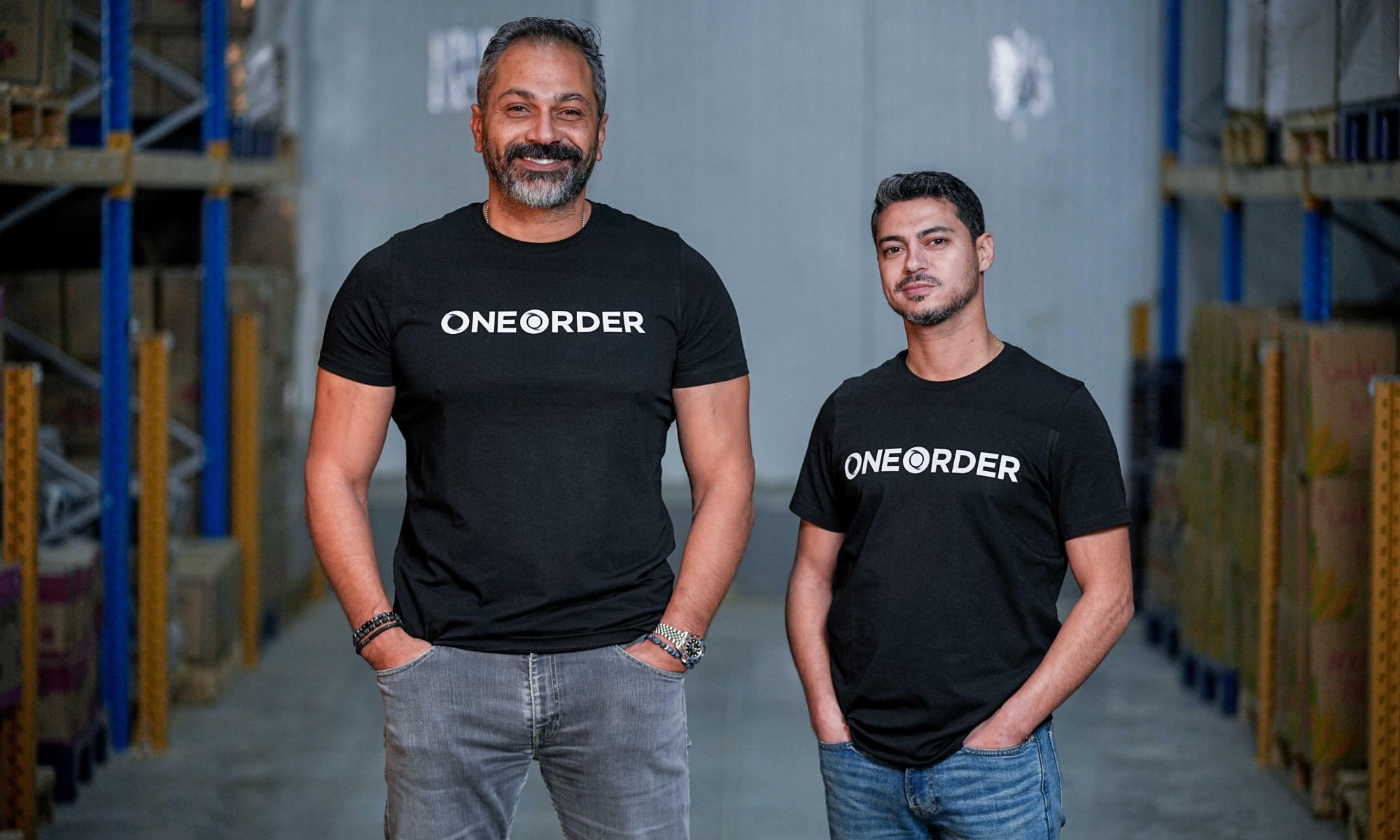
OneOrder, the Egyptian catering logistics and technology startup, has just raised another $3 million after a recent round of funding, with a view to boosting the firm’s core technology offering and upgrading in-house operations.
The latest funding round was led by Nclude, an investment platform that describes itself as an “Innovation Engine powered by tech startups”, as well as venture capital firm A15, and delivery giant Delivery Hero.
The fresh capital injection will help boost OneOrder’s in-house operations, improve sales and market share, and allow the firm to recruit top talent and improve its proprietary technology. In addition, OneOrder will now be able to scale its offline operations, expanding its network of warehouses further across Egypt and the MENA region.
“Aside from improving efficiency, we are reducing costs and impacting restaurants’ bottom lines. Joined by prominent global investors with deep knowledge and extensive expertise in our sector, we look forward to our next phase of rapid growth,” says Tamer Amer, co-founder and chief executive of OneOrder.
Also Read: Hub71’s Startup Ecosystem Now Boasts Over 200 Members
OneOrder has only been in existence since October 2021 and has already made a name for itself by using technology to address the inefficiencies faced by restaurants when sourcing supplies. The company’s platform allows restaurants to interact with a fragmented supplier base to efficiently source their supplies, such as meat, vegetables and catering equipment.
In Egypt, OneOrder has a potential market of 400,000 restaurants with an aggregate annual spend of $40 billion. Due to non-integrated supply chains, these businesses spend between 6-7% of their revenue to ensure logistical stability, so the future certainly looks interesting for this prominent startup.







News
Lebanon Ministers Meet Visa Over National Digital Payment Platform
Finance and technology ministers say a comparative study and roadmap will follow before any decision on adopting a model.


Lebanon’s finance and technology ministers met representatives from Visa last week to discuss a proposed unified national digital payment platform for government services, according to a readout from the Ministry of Finance.
The meeting brought together Finance Minister Yassin Jaber, Minister of State for Technology and Artificial Intelligence Kamal Shehadeh, a Visa delegation, and experts from both ministries. Discussion focused on whether Lebanon could establish a single platform through which citizens and institutions would pay taxes, fees, fines and other official transactions electronically, using mobile phones and other digital channels.
The Visa delegation presented examples from countries that have adopted unified government payment platforms, including the United Arab Emirates, Singapore, Estonia and Jordan. According to the readout, the examples were presented as having increased collection rates and expanded financial inclusion.
Talks covered settlement mechanisms, direct transfer to the treasury account, financial reconciliation, risk management, cybersecurity, fees, and an operational model that would involve the private sector. The parties agreed to continue technical and institutional consultations, prepare a comparative study, and develop an implementation roadmap before any decision on adopting a model for Lebanon.
Jaber said the Ministry of Finance had already enabled citizens to pay using credit cards and e-wallets through transfer companies, but described the proposed platform as a further step. He framed the development of electronic payment and collection systems as a priority within the ministry’s modernization plan.
Also Read: Deezer Says AI Tracks Now Make Up 44% Of Uploads
Shehadeh outlined the citizen-facing concept as a single mobile application through which users could settle obligations to ministries, government institutions and other bodies.
“The idea, in short, is that any citizen downloads an application on their mobile phone, through which they can pay all service obligations for all ministries, government institutions, or those owned by the Lebanese state, and others as well, as the platform is not limited only to state institutions,” he said.
Shehadeh added that the platform would not displace banks and money transfer companies that currently provide collection services to the state, calling it complementary to their work.

Lebanon Ministers Meet Visa Over National Digital Payment Platform

AltoVolo Releases Sigma Footage & Sets Date For Demonstrator

Careem Launches Lebanon Aid Drive With WFP

United Arab Emirates To Quit OPEC After 59 Years

YouTube Tests Conversational AI Search Tool

Yango Ride Introduces In-Chat Trip Planning In ChatGPT

Deezer Says AI Tracks Now Make Up 44% Of Uploads

NVIDIA Puts GPT-5.5 Codex In Hands Of 10,000 Staff
United Arab Emirates To Quit OPEC After 59 Years