News
New Premium Airline Riyadh Air Prepares For Late 2025 Takeoff
The ultra-premium service has already begun forging strong partnership and sponsor deals, and plans to connect 100 cities by 2030.

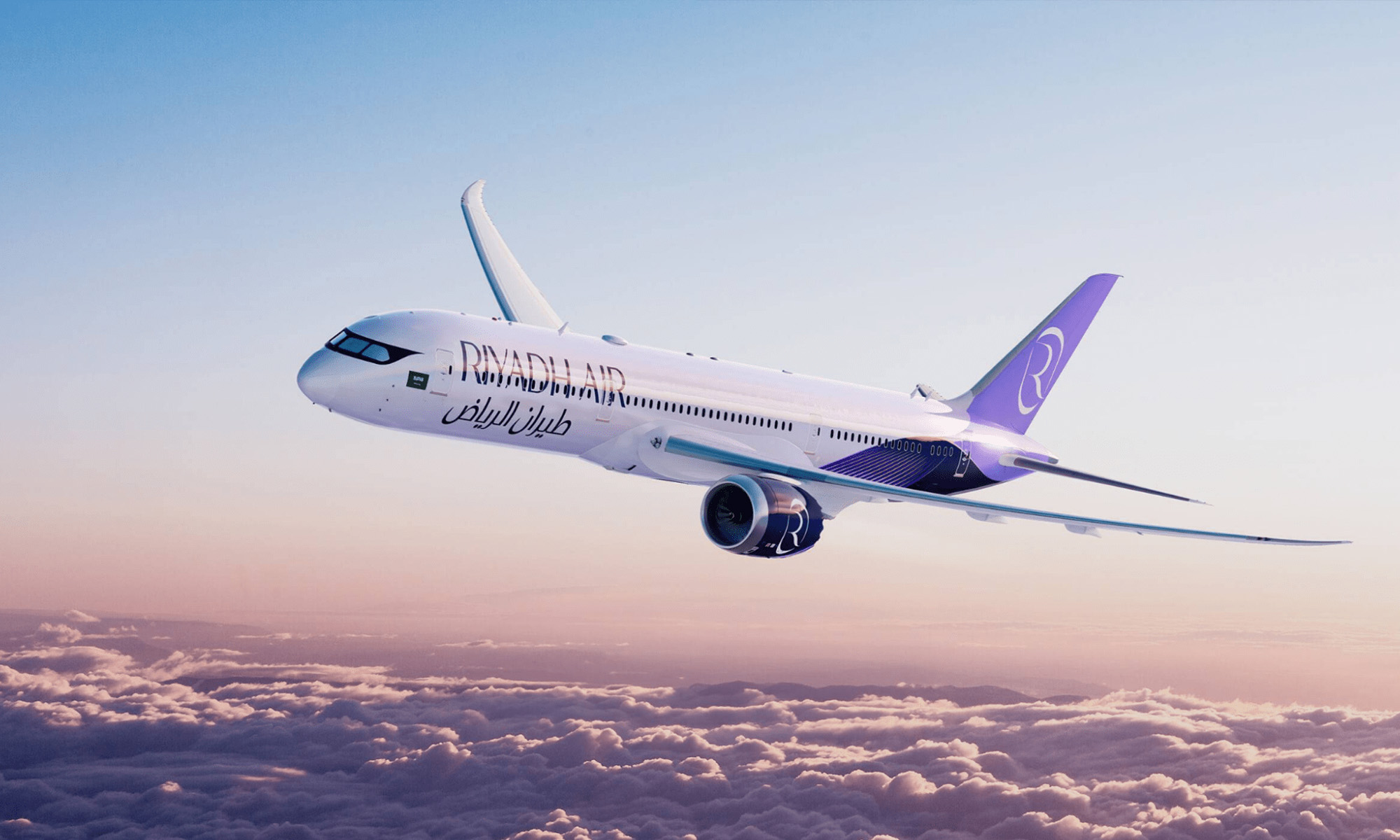
Saudi Arabia’s latest airline venture, Riyadh Air, is gearing up for its first flights in late 2025. With a strong emphasis on digital innovation, premium service, and strategic alliances, the airline is poised to shake up the aviation sector.
“By the end of this year, you will see Riyadh Air in the skies,” CEO Tony Douglas announced at the Saudi-backed Future Investment Initiative conference. His message was clear: the airline is fully prepared to serve both domestic and international travelers.
At #FIIPRIORITY in Miami, during the 'How is Technology Disrupting the Sky' panel, our CEO Tony Douglas shared insights on how #RiyadhAir’s digital-first approach will elevate modern travelers’ experiences.
Get ready for a fast, convenient, and seamless all-in-one booking… pic.twitter.com/yYYhO3jDaV
— Riyadh Air (@RiyadhAir) February 21, 2025
As a key player in the Kingdom’s Vision 2030 initiative, Riyadh Air has been rapidly building international partnerships, such as its latest collaboration with LIV Golf. The airline was also responsible for bringing singer Jameela to Saudi Arabia for the first time.
CEO Douglas has ambitious hopes of Riyadh Air bringing back the golden age of aviation, comparing it to iconic carriers like TWA and Pan Am. He promised “haute couture, glamour, refinement, and style” from the airline’s cabin experience, setting a high bar for service and aesthetics.
Despite a desire to bring back the glory days of commercial aviation, Riyadh Air is still adopting a modern, digital-first approach. An AI-driven concierge service will integrate travel bookings with entertainment and dining options, with CEO Tony Douglas likening the system’s intuitive capabilities to platforms like Amazon, Uber, and Airbnb.
Douglas sees vast potential in the Saudi aviation market, calling it “underserved” and ready for growth. Riyadh Air has already secured connectivity agreements with major carriers like Delta Air Lines and Singapore Airlines, ensuring smooth connections to international destinations.
“With Delta, for example, a passenger flying from Riyadh can easily connect to Phoenix or Baltimore via Atlanta or JFK,” Douglas explained, highlighting the convenience of the partnership.
Also Read: Dubai Teams Up With Elon Musk’s Boring Company For “Dubai Loop”
The airline’s fleet plans include commissioning 72 Boeing 787s and 60 Airbus A321neos, with negotiations ongoing for additional widebody aircraft. Despite Boeing’s recent delivery issues, Douglas remains confident: “Boeing will come good, there is no question”.
By 2030, Riyadh Air aims to serve 100 global destinations, with Miami among the cities under review. Douglas pointed to Saudi Arabia’s rising tourism profile, noting that it was the second most-searched travel destination on Google last year, thanks to attractions like Diriyah, AlUla, and Riyadh itself.





News
Lebanon Ministers Meet Visa Over National Digital Payment Platform
Finance and technology ministers say a comparative study and roadmap will follow before any decision on adopting a model.


Lebanon’s finance and technology ministers met representatives from Visa last week to discuss a proposed unified national digital payment platform for government services, according to a readout from the Ministry of Finance.
The meeting brought together Finance Minister Yassin Jaber, Minister of State for Technology and Artificial Intelligence Kamal Shehadeh, a Visa delegation, and experts from both ministries. Discussion focused on whether Lebanon could establish a single platform through which citizens and institutions would pay taxes, fees, fines and other official transactions electronically, using mobile phones and other digital channels.
The Visa delegation presented examples from countries that have adopted unified government payment platforms, including the United Arab Emirates, Singapore, Estonia and Jordan. According to the readout, the examples were presented as having increased collection rates and expanded financial inclusion.
Talks covered settlement mechanisms, direct transfer to the treasury account, financial reconciliation, risk management, cybersecurity, fees, and an operational model that would involve the private sector. The parties agreed to continue technical and institutional consultations, prepare a comparative study, and develop an implementation roadmap before any decision on adopting a model for Lebanon.
Jaber said the Ministry of Finance had already enabled citizens to pay using credit cards and e-wallets through transfer companies, but described the proposed platform as a further step. He framed the development of electronic payment and collection systems as a priority within the ministry’s modernization plan.
Also Read: Deezer Says AI Tracks Now Make Up 44% Of Uploads
Shehadeh outlined the citizen-facing concept as a single mobile application through which users could settle obligations to ministries, government institutions and other bodies.
“The idea, in short, is that any citizen downloads an application on their mobile phone, through which they can pay all service obligations for all ministries, government institutions, or those owned by the Lebanese state, and others as well, as the platform is not limited only to state institutions,” he said.
Shehadeh added that the platform would not displace banks and money transfer companies that currently provide collection services to the state, calling it complementary to their work.

Lebanon Ministers Meet Visa Over National Digital Payment Platform

AltoVolo Releases Sigma Footage & Sets Date For Demonstrator

Careem Launches Lebanon Aid Drive With WFP

United Arab Emirates To Quit OPEC After 59 Years

YouTube Tests Conversational AI Search Tool

Deezer Says AI Tracks Now Make Up 44% Of Uploads

Yango Ride Introduces In-Chat Trip Planning In ChatGPT

NVIDIA Puts GPT-5.5 Codex In Hands Of 10,000 Staff
United Arab Emirates To Quit OPEC After 59 Years