
News
Etihad Rail Plans 30 Minute Dubai To Abu Dhabi Train Link
The groundbreaking 350 km/h high-speed service will seamlessly connect the two Emirates while stopping at key tourist destinations.

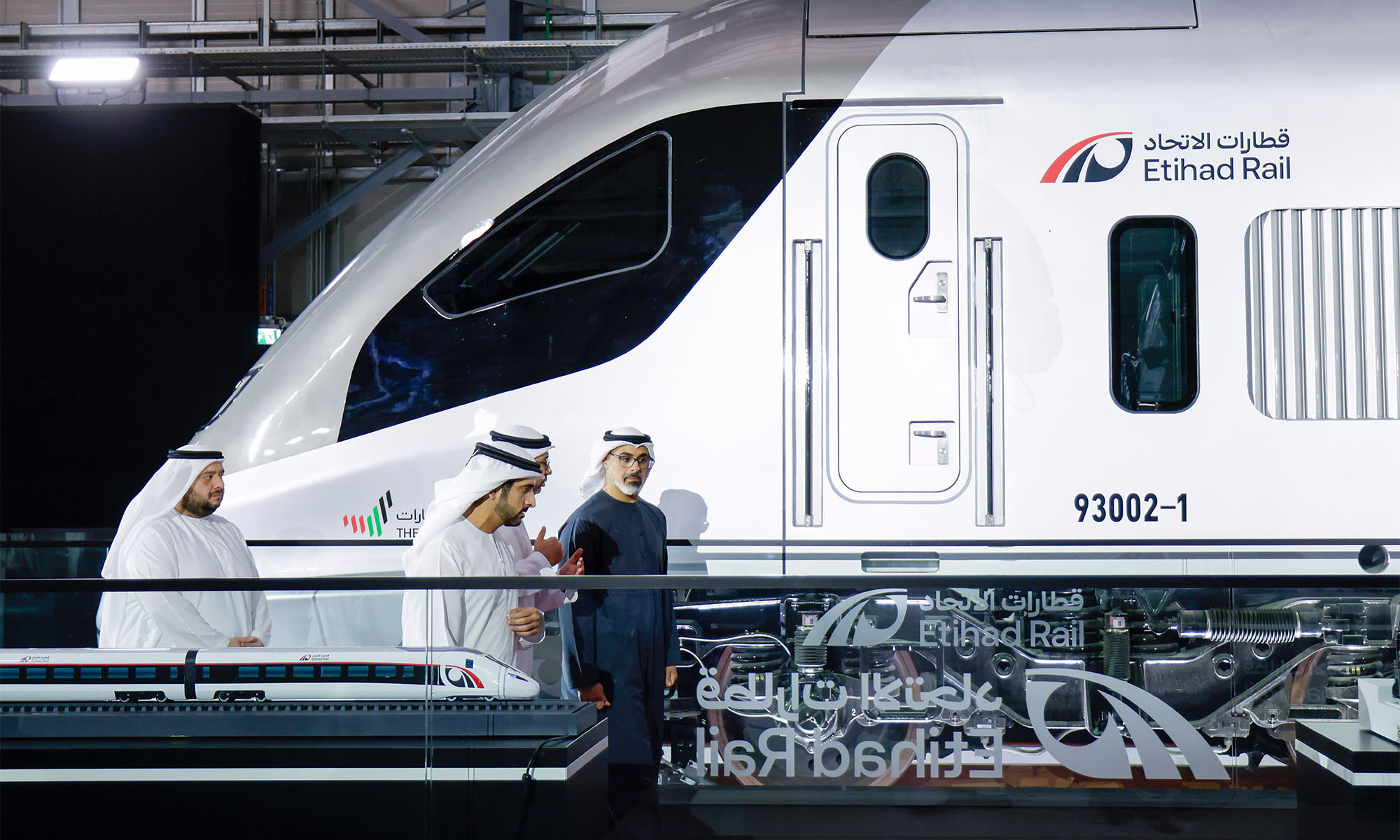
A new high-speed rail project connecting Dubai and Abu Dhabi is in the works, according to an announcement from the Abu Dhabi Media Office. Led by Etihad Rail, the planned line will allow passengers to travel between the two Emirates in just 30 minutes, reaching speeds exceeding 350 km/h.
The project was officially unveiled in the presence of prominent UAE leaders, including His Highness Sheikh Mohammed bin Zayed Al Nahyan, President of the UAE, His Highness Sheikh Khaled bin Mohamed bin Zayed Al Nahyan, Crown Prince of Abu Dhabi, and His Highness Sheikh Hamdan bin Mohammed bin Rashid Al Maktoum, Crown Prince of Dubai.
With the blessing of H.H. Sheikh Mohamed bin Zayed Al Nahyan, President of the United Arab Emirates, H.H. Sheikh Khaled bin Mohamed bin Zayed, and H.H. Sheikh Hamdan bin Mohammed bin Rashid witnessed the announcement of the high-speed rail project that will link Abu Dhabi and… pic.twitter.com/1iCbiHifyC
— Etihad Rail (@Etihad_Rail) January 23, 2025
The Abu Dhabi Media Office revealed that the rail project is expected to inject over AED 145 billion into the UAE’s GDP while linking strategic destinations and tourist attractions. Beyond economic growth, the initiative is aligned with the country’s Net Zero 2050 Strategy, as the high-speed trains will offer a more environmentally sustainable travel option for people who would otherwise have chosen to fly.
His Highness Sheikh Khaled praised the development, emphasizing its far-reaching impact. “The project unlocks new horizons for comprehensive development by advancing national transportation and infrastructure and ensuring a sustainable future for current and future generations,” he said.
Also Read: “AI Seal” Certification Now Required For Dubai Gov Partnerships
In addition to Etihad Rail’s high-speed rail system, UAE leaders also reviewed plans for the country’s first passenger train network. These passenger trains will reach speeds of up to 200 km/h and serve four initial stations: Abu Dhabi, Dubai, Sharjah, and Fujairah. Each station will include business-class lounges, modern amenities, and connections to local transit systems, ensuring a smooth and convenient travel experience for commuters.
The visionary projects not only strengthen the UAE’s transportation infrastructure but also reflect the nation’s commitment to sustainability and innovation, making inter-Emirate travel faster and more accessible than ever.






News
New Disney+ Streaming App Has Officially Launched In The UAE
The app’s recommendations now factor in what’s popular in the UAE, and a dedicated Junior Mode gives kids their own corner of Disney+.


A new Disney+ app has officially launched in the UAE, and subscribers can now keep watching their favorite titles when they travel. Disney+ says access extends across supported markets in Europe, the United States and beyond.
The app is built around a dynamic homepage and simpler navigation, with recommendations drawn from each customer’s viewing habits and what’s popular in the UAE. Content from Hulu and ESPN is now easier to find alongside Disney+’s own library, the company says. Audio and subtitles come in up to 25 languages, and supported devices get high-quality video and sound.
For families, the app includes Junior Mode, a dedicated, simplified version of Disney+ for younger viewers, built around age-appropriate shows and movies. It sits alongside existing controls such as PIN-protected profiles, customizable content ratings and account notifications when a profile is changed.
The catalog still spans Disney, Pixar, Marvel, Star Wars, National Geographic, Hulu and FX. Returning series include Season 8 of “The Kardashians,” Season 23 of “Grey’s Anatomy” and Season 38 of “The Simpsons”. Also on the service are the second season of International Emmy and BAFTA Award-winning series “Rivals,” comedy “Only Murders in the Building,” Walt Disney Animation Studios’ “Zootropolis 2” and 20th Century Studios’ “Send Help”.
Also Read: Best Video Streaming Services In The Middle East
Marvel Television’s “VisionQuest” is on the way, and Disney’s live-action “Moana” is due later this autumn. Beyond Hollywood, the Turkish title “Halef” is coming to the platform alongside a lineup of Korean entertainment: Korean-Japanese romantic comedy “Merry Berry Love” is streaming now, and “The Remarried Empress” arrives November 4.
Existing subscribers will be prompted to download the new app and sign in with their current credentials, with on-screen steps covering account confirmation and profile setup. Subscriptions start at AED 49.99 per month and can be canceled at any time.
For UAE subscribers planning to travel, the update will likely be well received, but Disney has left one question open. It confirms Europe and the United States as supported markets but doesn’t yet say which others fall under and beyond.

New Disney+ Streaming App Has Officially Launched In The UAE

Dubai Says Its Deepfake Detector Needs Just 7 Seconds Of Video

OpenAI Has Announced A Visual Ad Format For ChatGPT

For etisalat, More Bandwidth Is A Matter Of Digital Sovereignty

NEOPAY Wants To Follow Merchants Across Channels And Borders

Trip.com Is Betting An AI Agent Will Book Your Next Vacation

Musk’s Boring Company Wants To Dig 150 KM Of Tunnel Under The UAE

OKX Bets Streaming Perks Can Take Crypto Mainstream Across MENA

Meta’s New $499 Plan Puts A Price On Reaching A Real Person

Apple’s First Folding iPhone Arrives Late To A Shrinking Market


-
 News3 weeks ago
Trip.com Is Betting An AI Agent Will Book Your Next Vacation
-
 News4 weeks ago
Musk’s Boring Company Wants To Dig 150 KM Of Tunnel Under The UAE
-
 News3 weeks ago
OKX Bets Streaming Perks Can Take Crypto Mainstream Across MENA
-
 News3 weeks ago
Meta’s New $499 Plan Puts A Price On Reaching A Real Person