
News
Everything Announced At The Android Show: I/O Edition
Android 16 updates, Gemini’s broader rollout, a Material 3 overhaul, and new privacy tools have been revealed ahead of the upcoming Google I/O event.


A week before its annual I/O conference, Google gave developers and Android fans a sneak peek at the future of its mobile ecosystem at The Android Show: I/O Edition. The event covered updates across Android 16, Wear OS, Google TV, and Android Auto, with a heavy focus on design, AI integration, and privacy.
Here’s a breakdown of what’s new:
Material 3 Expressive Makes Android More Playful
Android is getting a visual refresh with Material 3 Expressive, an evolution of Google’s design language that arrives with the Android 16 beta in June 2025 on select devices. The update introduces richer animations, dynamic typography, and more vibrant colors. The goal is to make Android feel more intuitive — and more appealing to younger users.
This design shift will show up in Android 16 and Wear OS 6, making both platforms feel more personalized and fun. On phones, users will also gain more flexibility with Quick Settings customization and home screen app grid enhancements.
Gemini Expands Across Google’s Platforms
Google’s Gemini AI assistant is expanding from Android and iOS into more Google-owned platforms, including:
- Wear OS (smartwatches)
- Google TV
- Android Auto
- Google’s new Android XR (mixed reality) platform
Gemini takes over all the core tasks once handled by Google Assistant — like setting reminders or timers — but adds multimodal capabilities and more natural conversation. For example, in Android Auto, Gemini Live allows real-time, open-ended conversations while you drive.
On Google TV, Gemini will recommend shows based on genre or viewer preferences, and even answer actor-specific questions. More details on the XR platform are expected at Google I/O on May 20.
Android 16 Brings Security Upgrades And The New Find Hub
Security continues to be a major focus with Android 16. Notable updates include:
- Smarter AI-based spam detection, expanding to cover new scam types like toll road fraud.
- A Key Verifier tool for securely exchanging encryption keys during calls.
- The ability to grant accessibility permissions during calls with unknown contacts, improving safety and inclusivity.
Also Read: Meet The AltoVolo Sigma: A 1,608HP Personal eVTOL Jet
For device tracking, Google is evolving the Find My Device service into the new Find Hub. This tool supports ultra-wideband (UWB) for precise location data and even allows devices to ping satellites when out of cell range.
While full details on Gemini’s XR ambitions and the next-gen Android hardware are reserved for I/O next week, The Android Show provided a useful preview of how Google is merging AI, design, and security to further refine its popular ecosystem.





News
Abu Dhabi’s Robot Kitchen Is Serving Up Biryani, Not Burgers
Circus SE wants to put a tiny automated factory inside the buildings where Gulf residents live and work, bypassing part of last-mile delivery.

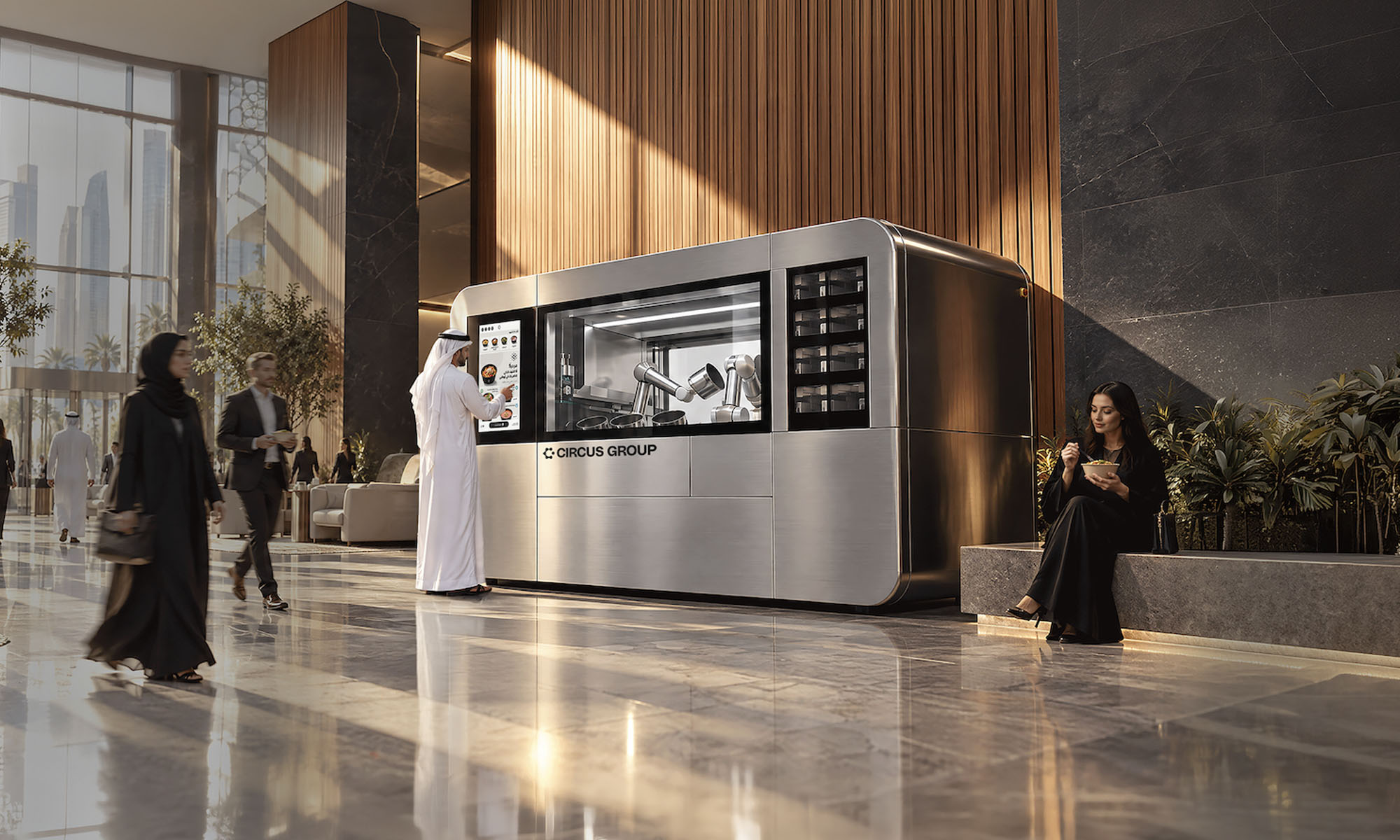
The most telling thing about a new autonomous kitchen now running in Abu Dhabi’s Marina Square is what it won’t cook:
“We don’t do fast food,” says Nikolas Bullwinkel, Founder and CEO of Circus SE. “We’ve actively decided not to build a machine that can only do burgers”.
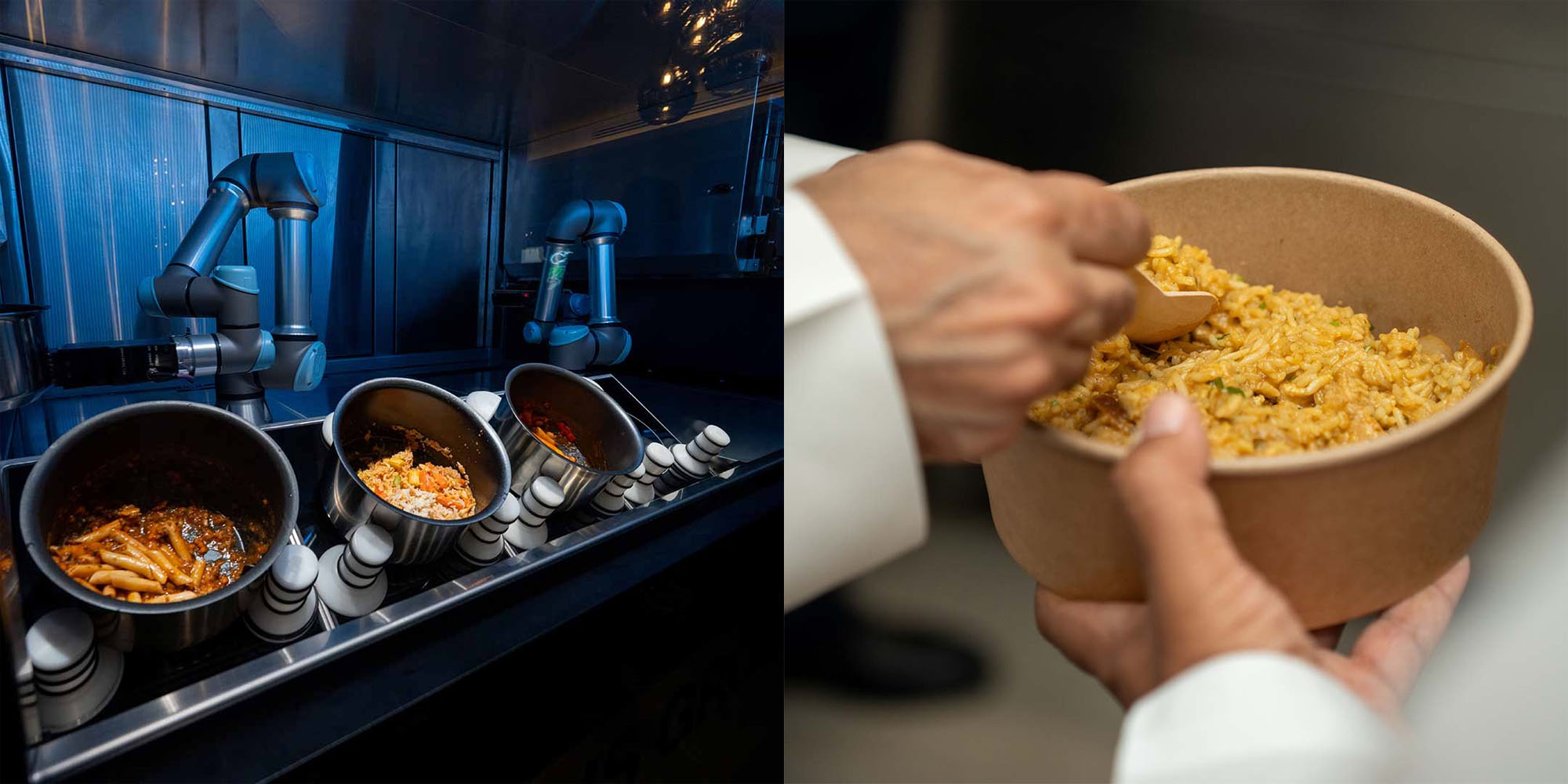
Instead, the CA-1 system is built around pot-based cooking: curries, pastas, soups and rice dishes. After experimenting with highly personalized recipes, Circus deliberately leaned back toward recognizable food. “We’re going with a chicken biryani because you know it,” Bullwinkel says of the AED 40 dish.
The Germany-based robotics and food technology company operates across eight countries, and Abu Dhabi is its first deployment outside Europe. More locations are expected there and in Dubai.
In Germany, its units can be placed in supermarkets, gas stations, airports and hospitals. In the Gulf, Bullwinkel wants them inside residential and office buildings, replacing some of the complexity of last-mile delivery. “We’re basically bringing a very tiny factory a few square meters into your building,” he says. Catering company Royal Prestige supplies the ingredients and knowledge of local tastes.
The CA-1 manages up to 36 refrigerated ingredient silos alongside automated induction cooking, robotic plating and a self-cleaning dishwasher. Two robotic arms move ingredients through the system with minimal human intervention. It can produce up to 120 hot meals an hour, and a meal such as rice and curry can take around three to four minutes.
Also Read: Ooredoo Qatar’s 5G+ Network Is Built For Machines As Much As People
Five cameras and multiple sensors monitor heat, temperature and consistency, an attempt to approximate what a chef perceives. “You can hear something gets burned, you can smell it, you can see it at some point,” Bullwinkel says. CircusOS, the company’s operating system, adjusts recipes in real time.
You might think of the platform as a threat to kitchen staff, but Bullwinkel frames Circus as a way for chefs to develop recipes and distribute them at scale. With that being said, rising labor costs and shortages are also part of his case for automation.

Abu Dhabi’s Robot Kitchen Is Serving Up Biryani, Not Burgers

Sennheiser’s MOMENTUM 5 Series Bets On Batteries You Can Swap

UAE’s 3-Minute University Registration Runs On Government Data

How Online Ads Became A Delivery System For Zero-Click Spyware

Shokz OpenDots 2 Review: Clip-On Audio Gets A Bass-Heavy Makeover

Dubai Says Its Deepfake Detector Needs Just 7 Seconds Of Video

New Disney+ Streaming App Has Officially Launched In The UAE

NEOPAY Wants To Follow Merchants Across Channels And Borders

RØDE’s Low-Profile Studio Arm Is Designed To Stay Out Of Shot

G42’s Inception42 Wants AI To Show Its Work Before Investors Commit


-
 News3 weeks ago
Dubai Says Its Deepfake Detector Needs Just 7 Seconds Of Video
-
 News2 weeks ago
New Disney+ Streaming App Has Officially Launched In The UAE
-
 News3 weeks ago
NEOPAY Wants To Follow Merchants Across Channels And Borders
-
 News4 weeks ago
RØDE’s Low-Profile Studio Arm Is Designed To Stay Out Of Shot