
News
Expo City Dubai And Yango Group Launch Autonomous Food Delivery
AI-powered delivery robots are now serving Expo City Dubai, advancing the city’s smart mobility vision with zero-emission, last-mile logistics.


Yango Group has kicked off a four-month pilot program for autonomous food delivery at Expo City Dubai, introducing AI-powered robots that offer a glimpse into the future of last-mile logistics. The initiative aims to enhance convenience for employees, residents, and visitors, while supporting Dubai’s broader smart city ambitions.
The electric, zero-emission robots will deliver meals from select restaurants to Expo City’s main office at Al Wasl Plaza. Operated through the Expo City Eats app, the service currently supports deliveries to the Al Wasl 3 building from four dining outlets.
Using high-definition maps and a suite of sensors, the robots navigate urban areas in real time, avoiding pedestrians, vehicles, and obstacles — even in low light or adverse weather. The bots independently plan their routes and adjust to dynamic conditions, quietly weaving through city environments with precision.
“We are thrilled to collaborate with Expo City Dubai on this pilot program,” said Nikita Gavrilov, Regional Head of Yango Tech Autonomy. “[The] clearly defined zones provide a perfectly controlled environment to safely and efficiently test autonomous technologies”.
Also Read: Face Recognition Tech Rolls Out In Abu Dhabi Hotels
The trial is being conducted through Expo City’s Urban Lab, a city-wide innovation platform designed to test and scale technologies for sustainable, human-centric cities. “Urban Lab lowers barriers to innovation, rigorously testing solutions and preparing markets to adopt impactful, sustainable technologies,” said Dr. Amy Hochadel, Vice President – Urban Lab, Expo City Dubai.
If successful, the pilot will expand to include more restaurants and offer autonomous deliveries to all Expo City residents and businesses. The project also broadens the reach of Yango Tech — Yango Group’s B2B division — by adding to its portfolio of AI-powered enterprise solutions.
As autonomous food delivery becomes more viable, Expo City Dubai is positioning itself as a living testbed for innovation — where sustainability, mobility, and technology converge.


News
Microsoft Plans $10 Billion-Plus Gulf Expansion Despite Iran Conflict
Security is shaping Microsoft’s approach, from resilience work with governments to what it will say about how the money splits by country.
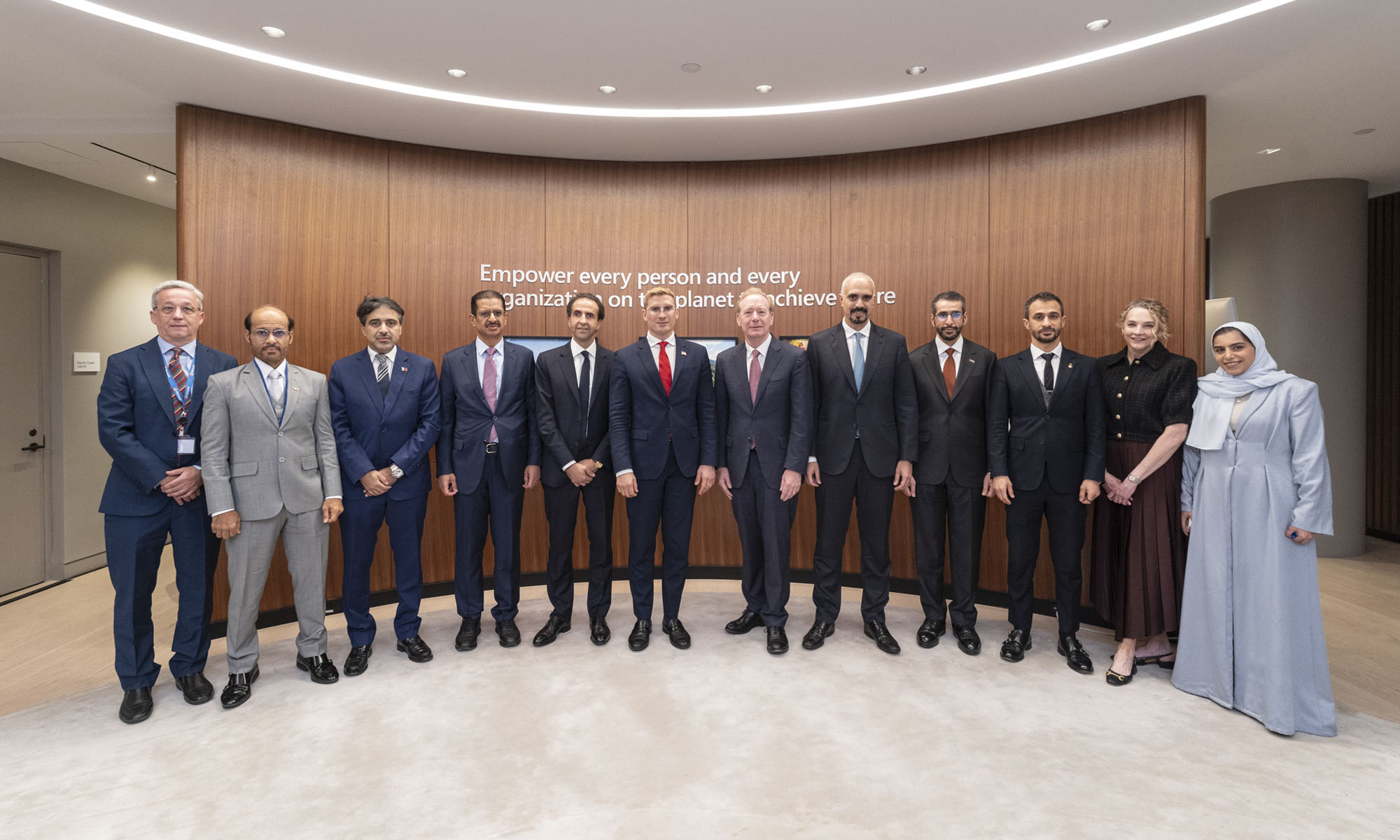
Microsoft is planning more than $10 billion of investment across the UAE, Saudi Arabia, Qatar and Kuwait through 2030, Vice Chair and President Brad Smith told Reuters, calling the spending schedule aggressive. The Iranian conflict that began on February 28 has not persuaded the company to scale back.
“We’re sustaining all the investments we planned to make before this conflict started, and we are in fact adding to them,” Smith said. The $10 billion-plus total does not, however, show how large those additions are.
The investment, which Smith described as part of Microsoft’s continued infrastructure expansion, is aimed at cloud and AI infrastructure and at the company’s growing regional operations. Microsoft also intends to put more than $400 million into subsea and terrestrial connectivity across the Middle East by 2030.
The spending fits the region’s own ambitions too. Gulf governments have been investing heavily in AI infrastructure as part of a push to diversify their economies beyond oil and gas and turn themselves into global technology hubs. Major cloud and AI providers have been drawn in part by the land and relatively low-cost energy on offer.
Microsoft is widening its partnerships with regional AI companies, though not on identical terms. In 2024, it invested $1.5 billion in Abu Dhabi-based G42 for a minority stake, and Smith currently sits on G42’s board. Saudi Arabia’s Humain and Qatar’s Qai are working with Microsoft on selected priority areas, but Smith said the company does not plan to make capital investments in either.
Also Read: Egypt’s Mobile Wallets Are Booming, But Cash Still Has Power
The conflict has added another strand to Microsoft’s work in the region. Since it began, Smith said, the company has supported regional partners with digital resilience assessments, and it is now working with Gulf countries through a digital resilience initiative focused on preparedness and the protection of critical data.
So far, the company has given no country-by-country breakdown of the investment, citing security among other factors. So while the headline figure is public, how Microsoft divides the spending among the four countries is not.

Microsoft Plans $10 Billion-Plus Gulf Expansion Despite Iran Conflict

In Kuwait, Your Surgeon Might Be Operating From Another Country

Qatar Folds 45 State Companies Into A Single Investment Platform

Trip.com Is Betting An AI Agent Will Book Your Next Vacation

Meta’s New $499 Plan Puts A Price On Reaching A Real Person

Apple’s First Folding iPhone Arrives Late To A Shrinking Market
Trip.com Is Betting An AI Agent Will Book Your Next Vacation

Egypt’s Mobile Wallets Are Booming, But Cash Still Has Power

OKX Bets Streaming Perks Can Take Crypto Mainstream Across MENA

Apple’s Latest Product Releases Make The Headlines


-
 News3 weeks ago
Apple’s First Folding iPhone Arrives Late To A Shrinking Market
-
 News2 weeks ago
Trip.com Is Betting An AI Agent Will Book Your Next Vacation
-
 News2 weeks ago
Egypt’s Mobile Wallets Are Booming, But Cash Still Has Power
-
 News2 weeks ago
OKX Bets Streaming Perks Can Take Crypto Mainstream Across MENA