News
Fujifilm Launches Its Instax Mini Evo Hybrid Instant Camera
A new hybrid instant camera that includes all the amazing features of a hybrid instant camera, a classic analog look, and a little more!

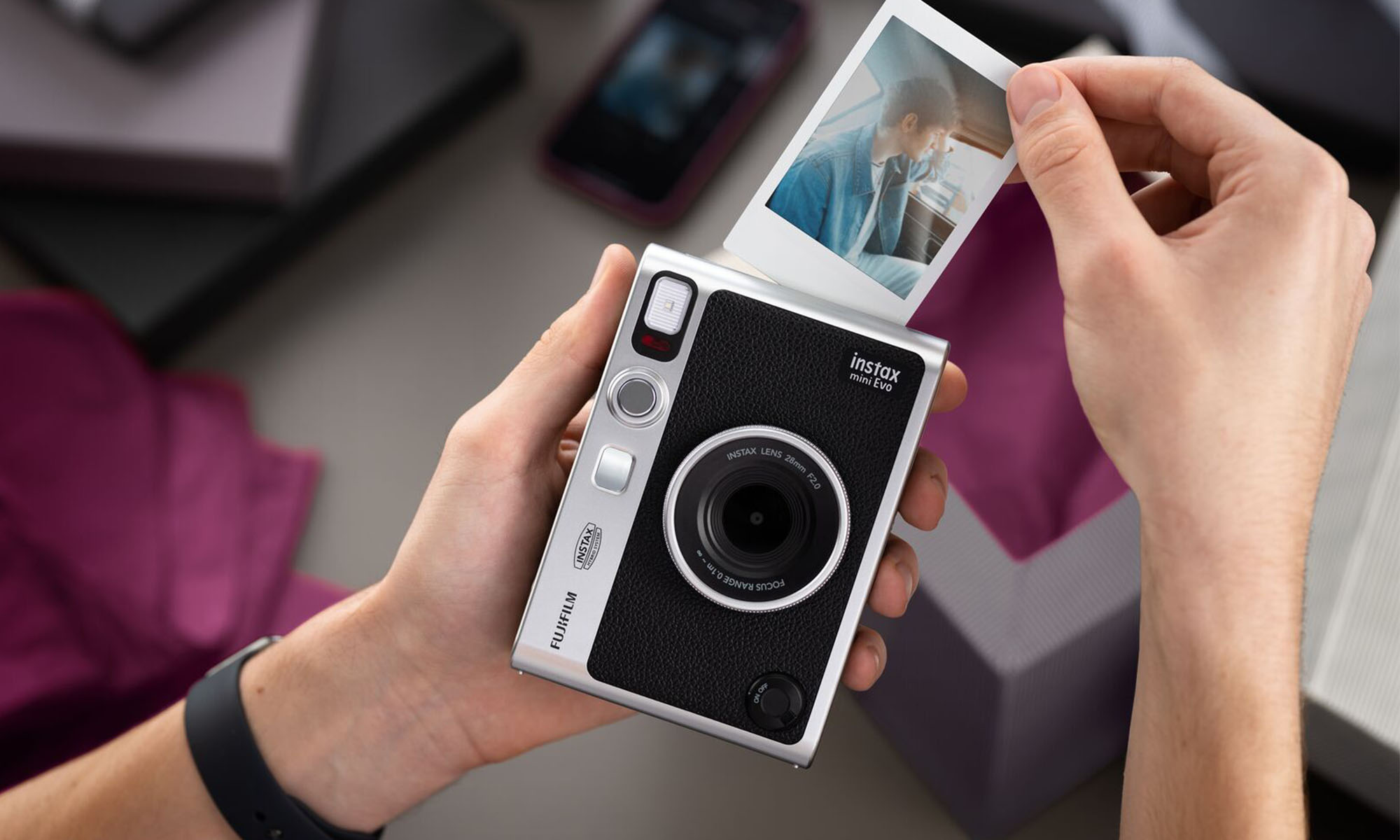
The Instax Mini Evo is the newest hybrid Instax camera launched by Fujifilm. It’s a flagship model of the Instax series of instant cameras that features more advanced functions, operability, print quality, and apps than ever before.
Like other hybrid instant cameras, users can review photos captured on the device via the LCD monitor on the rear panel of the camera and select images they want to print.
The new Instax Mini Evo offers versatile shooting effects that can deliver up to 100 different combinations of effects for Instax shots.
Design & Specifications
The Instax Mini Evo comes with ten lens effects including “Soft Focus” and “Light Leak” as well as ten film effects including “Monochrome” and “Retro”. These two types of effects can be combined freely to create up to 100 different shooting effects, giving users the ability to fully express their emotions.
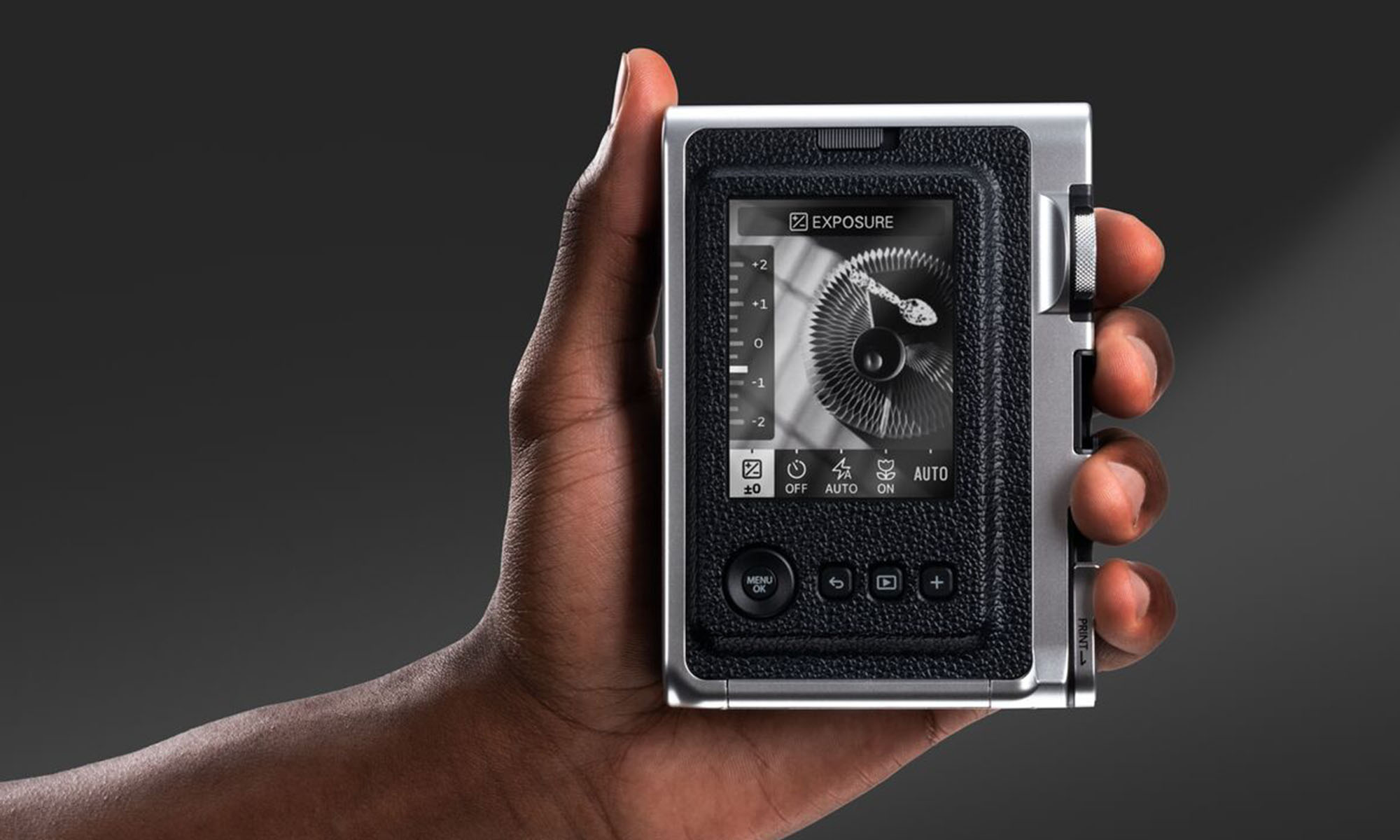
The new model, designed with a classical and luxurious touch, is the first Instax camera equipped with a print lever, lens dial and film dial allowing users to choose a plethora of shooting effects and print. These dials are designed with attention to the finest details including operation sound offering the joy of creating analog photographic arts to the users.
Also Read: Fujifilm Launches Instax Link WIDE Smartphone Printer
A ring around the 28mm (equivalent) F2.0 lens can be twisted to switch between ten lens effects: Normal, Vignette, Soft Focus, Blur, Fisheye, Color Shift, Light Leak, Mirror, Double Exposure, and Half-Frame.
Behind the lens is a 1/5-inch CMOS sensor with a resolution of 4.9 MP (or about 2560 x 1920 pixels), ISO range from 100 to 1600, and shutter speed range from 1/4s to 1/8000s.
The camera weighs 285 grams and measures 87 x 122.9 x 36 mm, so it’s approximately twice as heavy as the iPhone 12 or the iPhone 13 Mini.
High-Quality Prints From Any Device
The Instax Mini Evo’s resolution of exposure has been doubled compared to the previous models to achieve greater print quality. The camera offers the “Instax-Rich” mode for rich colors in addition to the “Instax-Natural” mode for softer touch characteristic of Instax prints.
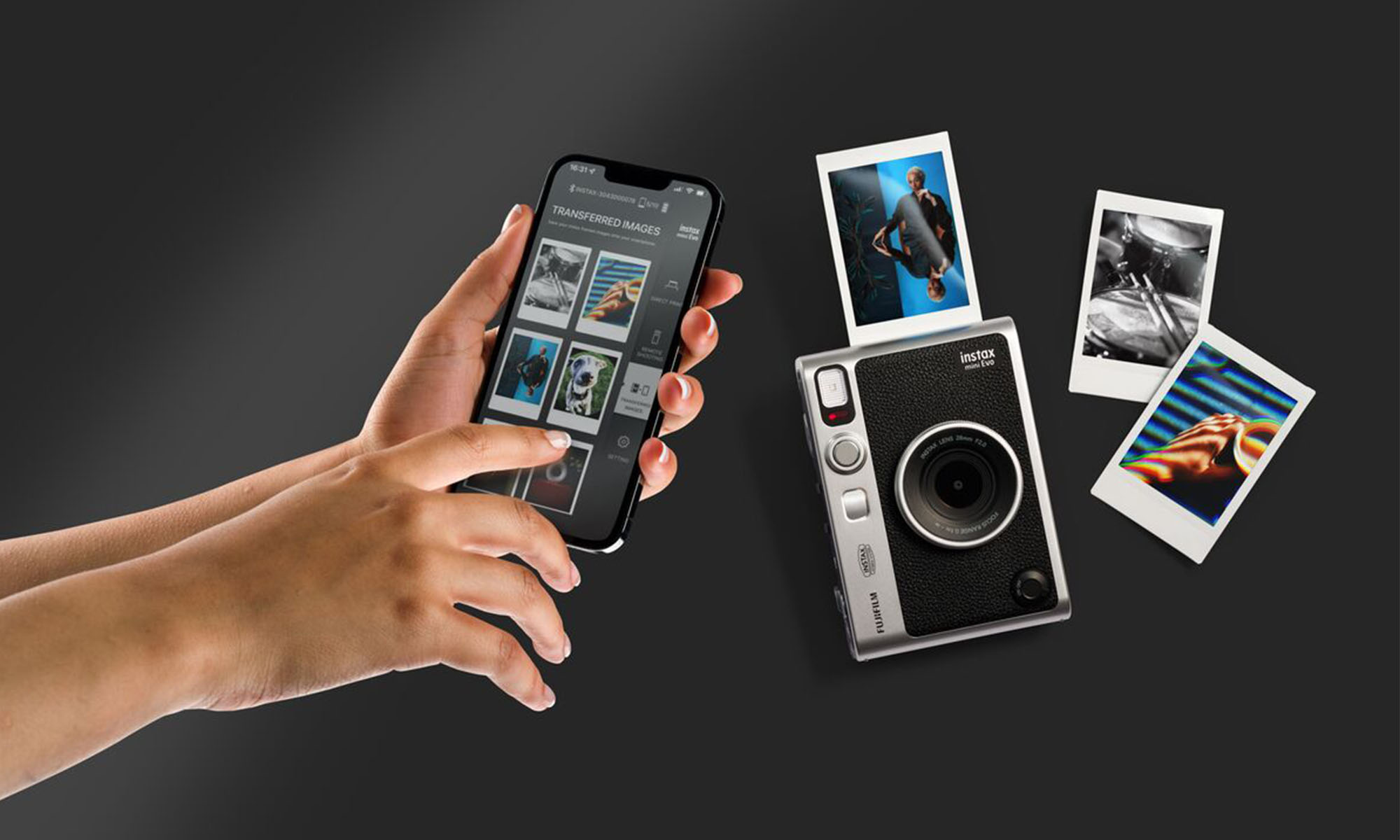
The Mini Evo also works as an Instax printer, meaning you can print out pictures from your smartphone wirelessly using a dedicated app.
The app features the “Direct Print” function for using the Instax Mini Evo as a smartphone printer, “Remote” function for remotely shooting pictures away from the camera, and the “Transferred Images” function for saving a photo (shot with the Instax Mini Evo) in a smartphone as an image decorated with an Instax frame so you can share them as digital Instax snaps.
Make sure you’re following Fujifilm Middle East on Facebook and Instagram for all the latest updates.





News
At I/O 2026, Sundar Pichai Concedes AI Must Deliver Real Value
Gemini 3.5, a personal agent called Spark, agentic shopping, and Android XR eyewear are all aimed at making AI feel useful, not just impressive.

Google’s annual I/O developer conference (I/O 2026) has recently become a status update on the same question: can the company turn its AI spending into products people use every day? This year, chief executive Sundar Pichai described Google as being in a phase of hyper progress, while conceding this is the part of the cycle where people want to see real value in the products they use on a day-to-day basis.
The strategy on display was to push agents — AI systems that act on a user’s behalf — into nearly every Google product at once. Search now has an “intelligent search box” that returns generated explainer videos alongside links. Gmail, Docs, YouTube and Maps are gaining their own agent layers, including a Docs Live feature that turns spoken instructions into drafted text with citations.
Two new models, Gemini 3.5 and a cheaper Gemini 3.5 Flash, arrived the same day. Google says 900 million people now use Gemini, and that more than 50 billion images have been generated with it. The pricing tier names are likely to confuse buyers: a new AI Ultra plan launches at $100 a month, while the older Gemini AI Ultra drops from $250 to $200.
The flashier announcements were Gemini Omni, a video generator pitched as a more realistic answer to OpenAI’s discontinued Sora 2, and Gemini Spark, a personal agent that handles recurring tasks across a user’s Google account. A new universal shopping cart lets agents complete purchases across multiple retailers from inside Google itself, placing the company between the merchant and the buyer, and also owning the checkout.
Also Read: DJI Teases Dual-Camera Osmo Pocket 4P For 2026 Launch
Google also confirmed its Android XR eyewear, built with Samsung and frames from Warby Parker and Gentle Monster. Audio-only glasses ship this autumn; a display-equipped version, which would superimpose live translations into the wearer’s field of view, is still in development. Both sets translate, however only the display version shows you the result.
What Pichai did not resolve is the bargain underneath all this. An agent is only useful to the degree it knows your calendar, your inbox, your shopping history and your physical surroundings. Google has now confirmed that, in time, the same context may carry advertising.

2026 Crypto Trends: Bitcoin, ETFs & The Future Of Payments

At I/O 2026, Sundar Pichai Concedes AI Must Deliver Real Value

DJI Teases Dual-Camera Osmo Pocket 4P For 2026 Launch

Lebanon Ministers Meet Visa Over National Digital Payment Platform