News
Lebanon Approves Starlink License To Provide Internet Nationwide
The government has finally granted Starlink a license to operate nationwide for business users, with packages starting at $100 a month.


Lebanon has granted Starlink a license to provide services across the country, ending months of negotiations between the government and Elon Musk’s satellite internet provider.
Tony Saad, spokesperson for Telecommunications Minister Charles Hage, confirmed that Starlink established a local entity to secure the license. The service will be limited to companies rather than individuals, with packages starting at $100 per month.
Talks began in early 2025 after Lebanese President Joseph Aoun met with Sam Turner, Starlink’s Global Director of Licensing and Development. Turner argued satellite connectivity could support sectors including industry, banking, education and government services.
The presidency later disclosed that Aoun spoke directly with Musk by phone, extending an invitation to visit Beirut. Musk reportedly expressed interest in Lebanon’s telecom market and said he would consider travelling when timing allowed. Aoun’s office said the government was prepared to provide the necessary facilitation under the country’s legal and regulatory framework.
Also Read: Ooredoo And Qatar Airways Partner To Build National AI Hub
Lebanon has struggled for years with some of the slowest and most expensive internet in the region. High mobile data costs, underinvestment and mismanagement have left infrastructure fragile and businesses reliant on patchy connections. Officials hope Starlink’s entry will give companies more reliable access, though consumer availability remains uncertain.
The license marks a rare step forward for a sector still weakened by corruption and debt.






News
Microsoft Plans $10 Billion-Plus Gulf Expansion Despite Iran Conflict
Security is shaping Microsoft’s approach, from resilience work with governments to what it will say about how the money splits by country.
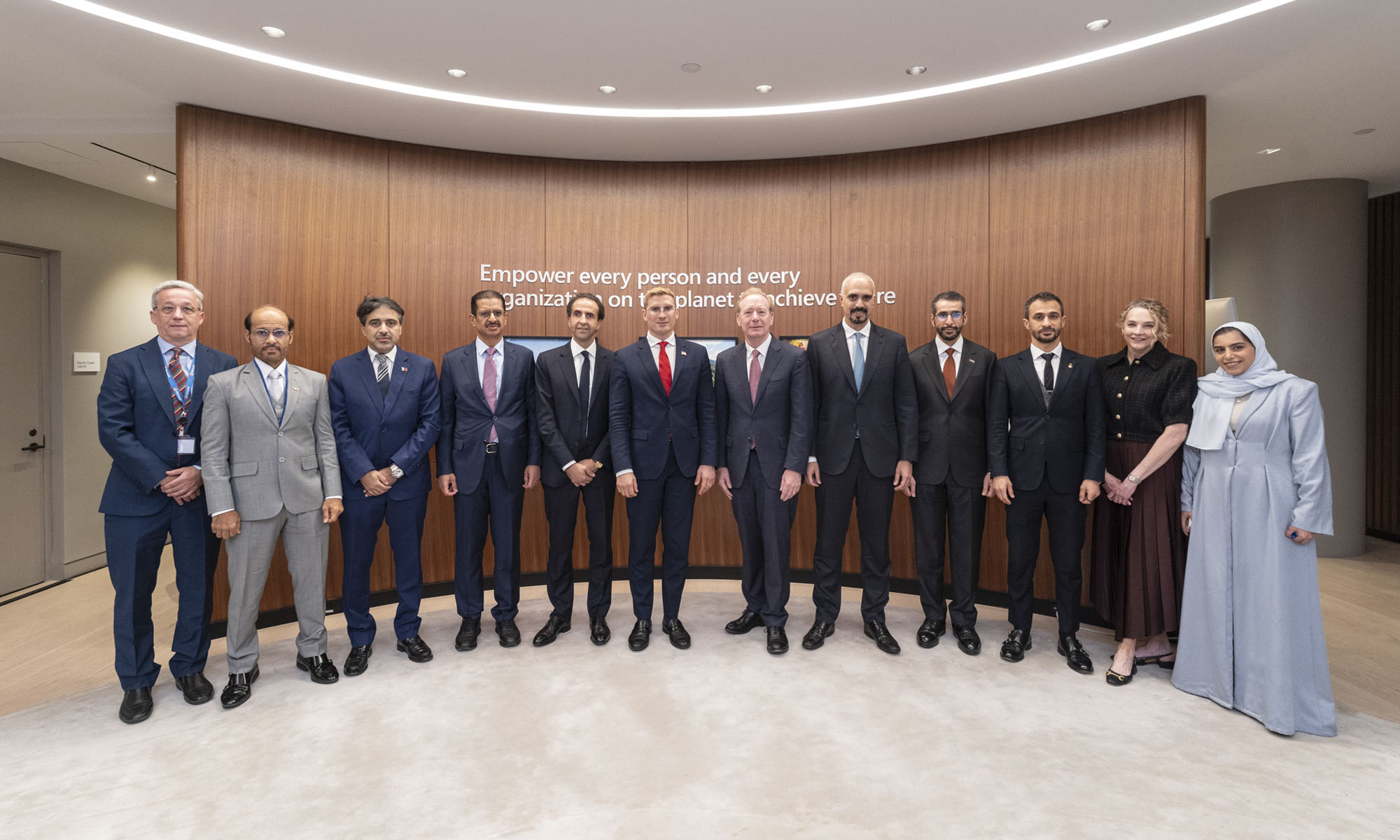
Microsoft is planning more than $10 billion of investment across the UAE, Saudi Arabia, Qatar and Kuwait through 2030, Vice Chair and President Brad Smith told Reuters, calling the spending schedule aggressive. The Iranian conflict that began on February 28 has not persuaded the company to scale back.
“We’re sustaining all the investments we planned to make before this conflict started, and we are in fact adding to them,” Smith said. The $10 billion-plus total does not, however, show how large those additions are.
The investment, which Smith described as part of Microsoft’s continued infrastructure expansion, is aimed at cloud and AI infrastructure and at the company’s growing regional operations. Microsoft also intends to put more than $400 million into subsea and terrestrial connectivity across the Middle East by 2030.
The spending fits the region’s own ambitions too. Gulf governments have been investing heavily in AI infrastructure as part of a push to diversify their economies beyond oil and gas and turn themselves into global technology hubs. Major cloud and AI providers have been drawn in part by the land and relatively low-cost energy on offer.
Microsoft is widening its partnerships with regional AI companies, though not on identical terms. In 2024, it invested $1.5 billion in Abu Dhabi-based G42 for a minority stake, and Smith currently sits on G42’s board. Saudi Arabia’s Humain and Qatar’s Qai are working with Microsoft on selected priority areas, but Smith said the company does not plan to make capital investments in either.
Also Read: Egypt’s Mobile Wallets Are Booming, But Cash Still Has Power
The conflict has added another strand to Microsoft’s work in the region. Since it began, Smith said, the company has supported regional partners with digital resilience assessments, and it is now working with Gulf countries through a digital resilience initiative focused on preparedness and the protection of critical data.
So far, the company has given no country-by-country breakdown of the investment, citing security among other factors. So while the headline figure is public, how Microsoft divides the spending among the four countries is not.

Microsoft Plans $10 Billion-Plus Gulf Expansion Despite Iran Conflict

In Kuwait, Your Surgeon Might Be Operating From Another Country

Qatar Folds 45 State Companies Into A Single Investment Platform

Trip.com Is Betting An AI Agent Will Book Your Next Vacation

Meta’s New $499 Plan Puts A Price On Reaching A Real Person

Visa’s Return To Syria Starts With A Test And A Bank In Lebanon

Apple’s Latest Product Releases Make The Headlines

Apple’s First Folding iPhone Arrives Late To A Shrinking Market
Trip.com Is Betting An AI Agent Will Book Your Next Vacation