
News
Samsung Galaxy S25 Unpacked: Everything Announced At The Event
The S25, S25 Plus, and S25 Ultra were unveiled at the event, along with plenty of new AI features and a teaser for the incoming S25 Edge.

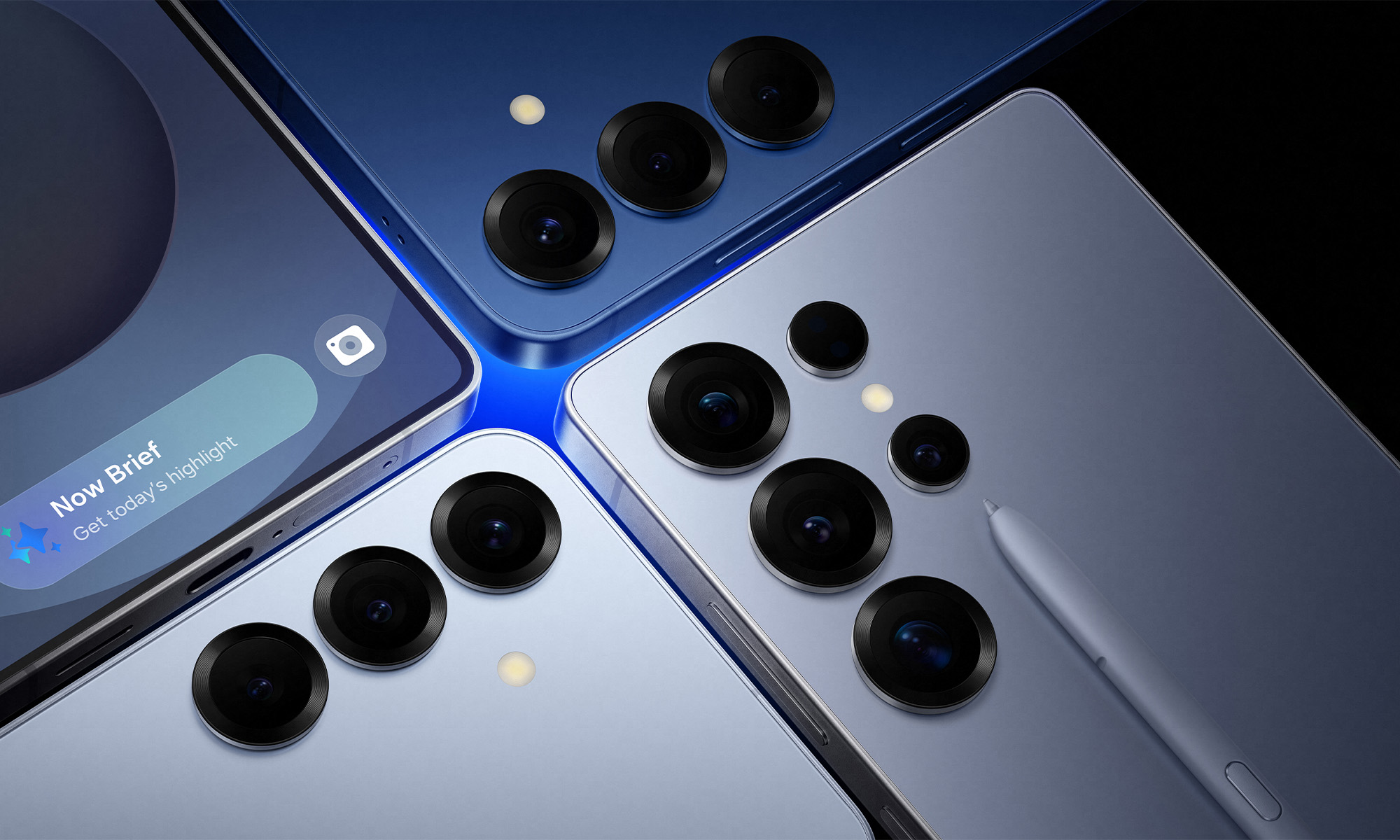
Samsung has kicked off 2025 with its first Unpacked event debuting the Galaxy S25 series. While this year’s lineup doesn’t boast groundbreaking hardware upgrades, the company doubled down on integrating smarter AI features into its devices, promising a more personalized experience.
Here’s a breakdown of everything announced by the Korean tech giant:
Galaxy S25 Ultra
The Galaxy S25 Ultra — Samsung’s flagship powerhouse — sports a 6.9-inch display and a frame with more rounded edges for improved comfort and grip. Samsung also claims it’s their “slimmest, lightest, and most durable Ultra device yet,” thanks to a titanium frame and Corning’s Gorilla Armor 2.
The most notable hardware change is a new ultrawide camera, upgraded from 12MP to 50MP. Like the rest of the lineup, the S25 Ultra is powered by a customized Snapdragon 8 Elite processor, enabling more efficient on-device AI processing.
Interestingly, Samsung has removed Air Commands from the S Pen, citing low usage rates. This change reduced the device’s weight while making the stylus sturdier.
The Ultra comes with 12GB of RAM and storage options of 256GB, 512GB, and 1TB. Prices start at $1,300.
Galaxy S25 And S25+
The Galaxy S25 and S25+ retain much of their predecessors’ design and specs, including 6.2-inch and 6.7-inch displays, respectively. However, like the Ultra, both models now pack 12GB of RAM, up from 8GB in last year’s versions. The Snapdragon 8 Elite processor also powers these devices, ensuring smoother handling of Samsung’s AI-driven features.
One of these new tools, ProScaler AI, promises to improve image quality in real-time, potentially compensating for the unchanged display hardware.
Like its predecessor, the S25 offers 128GB or 256GB storage, while the S25+ comes in 256GB or 512GB configurations. Pricing starts at $800 for the S25 and $1,000 for the S25+.
AI Takes Center Stage
Since the S25 lineup sees only modest hardware upgrades this year, Samsung showed off its software, branding its One UI 7 on Android 15 as a new AI-integrated OS.
AI enhancements improve low-light photography and video by reducing noise. A new feature, Audio Eraser, can eliminate background sounds like wind or chatter from your videos. Samsung has also bundled its AI tools into the Personal Data Engine, which powers features like AI Select.
A new “Now Bar” — similar to Apple’s Dynamic Island — has been added to the bottom of the lock screen, and will serve up context-driven reminders and summaries, while the revamped Drawing Assist tool offers better precision and lets users incorporate their own images.
Galaxy S25 Edge Teaser
Samsung teased the Galaxy S25 Edge, which is rumored to be a slimmer alternative to the Ultra. While details were sparse, the event teaser highlighted the upcoming device’s vapor chamber, camera modules, and metallic design.
Samsung Wallet Updates
Samsung introduced new features to its Wallet app, including Instant Installment, a buy-now-pay-later service that manages offline payment plans for Visa and Mastercard purchases. Another addition, Tap to Transfer, is a peer-to-peer payment system allowing users to transfer money by simply bumping phones.
Galaxy Watch For Kids
Finally, Samsung announced a child-friendly mode for the Galaxy Watch 7, comparable to the Apple Watch feature. Parents can set up a child’s watch with an eSIM, manage apps, and enable location tracking. The system also includes kid-focused apps and customizable watch faces, adding a layer of fun for younger users.






News
Microsoft Plans $10 Billion-Plus Gulf Expansion Despite Iran Conflict
Security is shaping Microsoft’s approach, from resilience work with governments to what it will say about how the money splits by country.
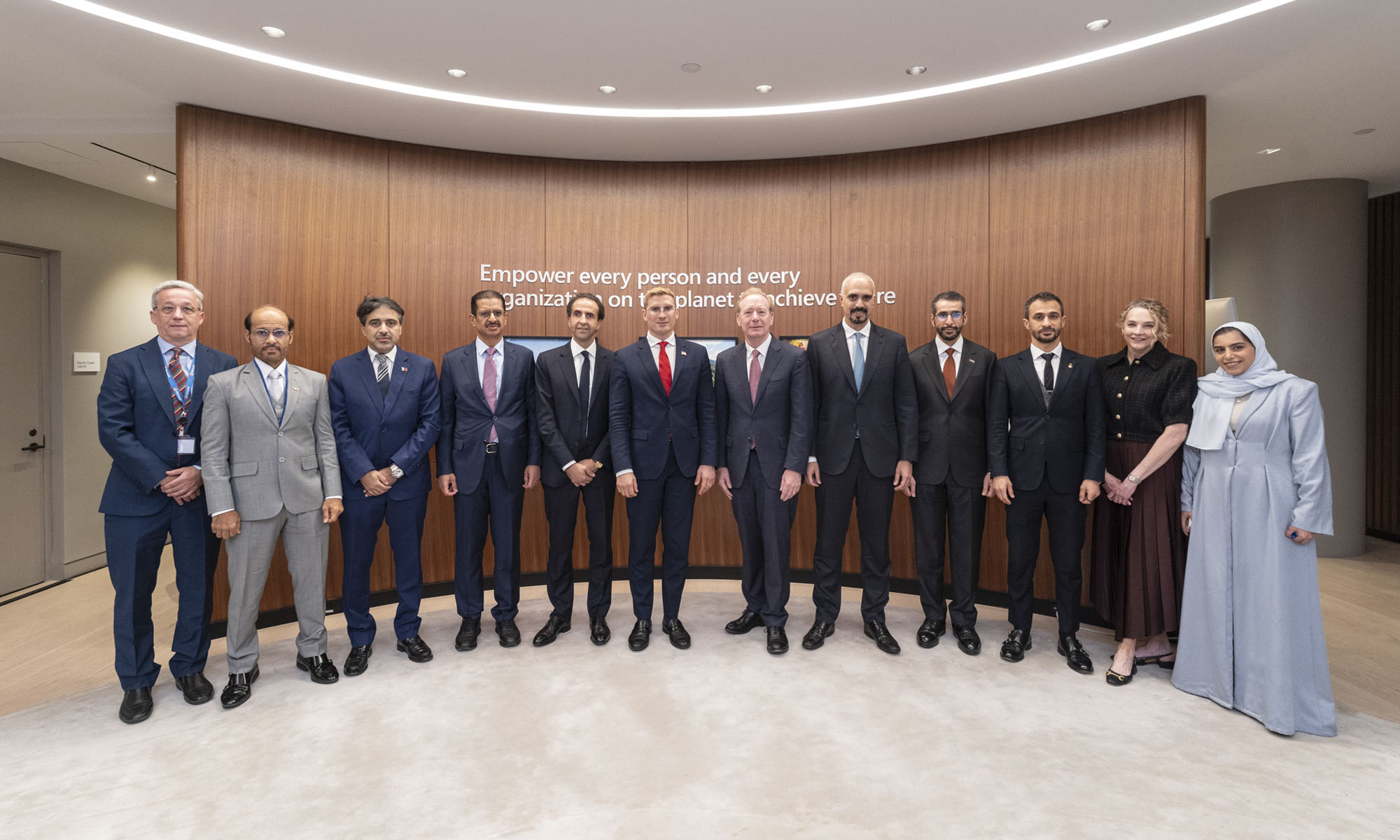
Microsoft is planning more than $10 billion of investment across the UAE, Saudi Arabia, Qatar and Kuwait through 2030, Vice Chair and President Brad Smith told Reuters, calling the spending schedule aggressive. The Iranian conflict that began on February 28 has not persuaded the company to scale back.
“We’re sustaining all the investments we planned to make before this conflict started, and we are in fact adding to them,” Smith said. The $10 billion-plus total does not, however, show how large those additions are.
The investment, which Smith described as part of Microsoft’s continued infrastructure expansion, is aimed at cloud and AI infrastructure and at the company’s growing regional operations. Microsoft also intends to put more than $400 million into subsea and terrestrial connectivity across the Middle East by 2030.
The spending fits the region’s own ambitions too. Gulf governments have been investing heavily in AI infrastructure as part of a push to diversify their economies beyond oil and gas and turn themselves into global technology hubs. Major cloud and AI providers have been drawn in part by the land and relatively low-cost energy on offer.
Microsoft is widening its partnerships with regional AI companies, though not on identical terms. In 2024, it invested $1.5 billion in Abu Dhabi-based G42 for a minority stake, and Smith currently sits on G42’s board. Saudi Arabia’s Humain and Qatar’s Qai are working with Microsoft on selected priority areas, but Smith said the company does not plan to make capital investments in either.
Also Read: Egypt’s Mobile Wallets Are Booming, But Cash Still Has Power
The conflict has added another strand to Microsoft’s work in the region. Since it began, Smith said, the company has supported regional partners with digital resilience assessments, and it is now working with Gulf countries through a digital resilience initiative focused on preparedness and the protection of critical data.
So far, the company has given no country-by-country breakdown of the investment, citing security among other factors. So while the headline figure is public, how Microsoft divides the spending among the four countries is not.

Microsoft Plans $10 Billion-Plus Gulf Expansion Despite Iran Conflict

In Kuwait, Your Surgeon Might Be Operating From Another Country

Qatar Folds 45 State Companies Into A Single Investment Platform

Trip.com Is Betting An AI Agent Will Book Your Next Vacation

Meta’s New $499 Plan Puts A Price On Reaching A Real Person

Apple’s First Folding iPhone Arrives Late To A Shrinking Market
Trip.com Is Betting An AI Agent Will Book Your Next Vacation

Egypt’s Mobile Wallets Are Booming, But Cash Still Has Power

OKX Bets Streaming Perks Can Take Crypto Mainstream Across MENA

Musk’s Boring Company Wants To Dig 150 KM Of Tunnel Under The UAE


-
 News3 weeks ago
Apple’s First Folding iPhone Arrives Late To A Shrinking Market
-
 News2 weeks ago
Trip.com Is Betting An AI Agent Will Book Your Next Vacation
-
 News2 weeks ago
Egypt’s Mobile Wallets Are Booming, But Cash Still Has Power
-
 News2 weeks ago
OKX Bets Streaming Perks Can Take Crypto Mainstream Across MENA