News
Saudi Arabia Unveils World’s First Gaming And eSport District
The site at Qiddiya will host global events and attract 10 million visitors annually with gaming-themed accommodation and 100,000 sqm of entertainment.


Saudi Arabia has revealed plans to create the world’s first dedicated gaming and eSports district at Qiddiya City. The project aims to propel the Kingdom into the thriving professional eSports scene.
In the heart of Qiddiya City — 40 km from the capital Riyadh — the new gaming district will be centered around four eSports venues designed to host prominent events and attract up to 10 million visitors yearly, the state news agency SPA announced.

The Gaming & eSports District launch comes after Saudi Crown Prince Mohammed bin Salman’s support for the sector demonstrated through a “National Strategy” and initiatives, including talent development programs and targeted investments. The district, with its widespread appeal to over two-thirds of the Saudi population, aims to “engage and inspire”.

Abdullah bin Nasser Aldawood, the Managing Director of Qiddiya Investment Company, explained: “The gaming and eSports sector is experiencing rapid growth, and we observe the ambitious plans to propel it forward. Our responsibility will be to host major events and tournaments by enhancing the infrastructure, enabling Qiddiya City to invite the world to live, learn, and compete in gaming and eSports. The gaming and eSports district in Qiddiya City caters to eSports professionals and gaming enthusiasts of all levels and ages. This district transforms the gaming world into a tangible reality, serving as a welcoming space for the gaming community”.
Also Read: The Middle East Is Rapidly Becoming An eSports Hub
The 500,000 square meter site will boast four gaming arenas with a total capacity of 73,000 seats. The largest of the venues is planned to have a capacity of 5,300, making it one of the biggest eSports stadiums in the world. The district will also be home to up to 25 eSports clubs, with 100,000 square meters allocated to retail, dining, and entertainment. When completed, Qiddiya City will allow gamers to live, work, and play, even offering gaming-themed apartments and hotels.



News
Lebanon Ministers Meet Visa Over National Digital Payment Platform
Finance and technology ministers say a comparative study and roadmap will follow before any decision on adopting a model.


Lebanon’s finance and technology ministers met representatives from Visa last week to discuss a proposed unified national digital payment platform for government services, according to a readout from the Ministry of Finance.
The meeting brought together Finance Minister Yassin Jaber, Minister of State for Technology and Artificial Intelligence Kamal Shehadeh, a Visa delegation, and experts from both ministries. Discussion focused on whether Lebanon could establish a single platform through which citizens and institutions would pay taxes, fees, fines and other official transactions electronically, using mobile phones and other digital channels.
The Visa delegation presented examples from countries that have adopted unified government payment platforms, including the United Arab Emirates, Singapore, Estonia and Jordan. According to the readout, the examples were presented as having increased collection rates and expanded financial inclusion.
Talks covered settlement mechanisms, direct transfer to the treasury account, financial reconciliation, risk management, cybersecurity, fees, and an operational model that would involve the private sector. The parties agreed to continue technical and institutional consultations, prepare a comparative study, and develop an implementation roadmap before any decision on adopting a model for Lebanon.
Jaber said the Ministry of Finance had already enabled citizens to pay using credit cards and e-wallets through transfer companies, but described the proposed platform as a further step. He framed the development of electronic payment and collection systems as a priority within the ministry’s modernization plan.
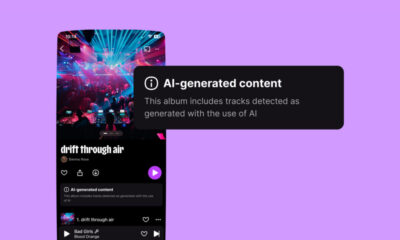
Also Read: Deezer Says AI Tracks Now Make Up 44% Of Uploads
Shehadeh outlined the citizen-facing concept as a single mobile application through which users could settle obligations to ministries, government institutions and other bodies.
“The idea, in short, is that any citizen downloads an application on their mobile phone, through which they can pay all service obligations for all ministries, government institutions, or those owned by the Lebanese state, and others as well, as the platform is not limited only to state institutions,” he said.
Shehadeh added that the platform would not displace banks and money transfer companies that currently provide collection services to the state, calling it complementary to their work.

Lebanon Ministers Meet Visa Over National Digital Payment Platform

AltoVolo Releases Sigma Footage & Sets Date For Demonstrator

Careem Launches Lebanon Aid Drive With WFP

United Arab Emirates To Quit OPEC After 59 Years

YouTube Tests Conversational AI Search Tool

Deezer Says AI Tracks Now Make Up 44% Of Uploads

Yango Ride Introduces In-Chat Trip Planning In ChatGPT

NVIDIA Puts GPT-5.5 Codex In Hands Of 10,000 Staff
YouTube Tests Conversational AI Search Tool