
News
Saudi Aviation Sector Embraces Tech To Meet Vision 2030 Goals
The kingdom aims to become a global logistics hub and attract 100 million tourists by 2030.


Saudi Arabia is rapidly becoming a highly sought-after tourist destination, and in response to growing demand, the aviation industry requires year-on-year development on an increasingly large scale. As aviation is one of the most environmentally damaging sectors, mitigating harmful emissions is crucial to helping the Kingdom meet its ambitious Vision 2030 goals.
According to a recent report by the King Abdullah Petroleum Studies and Research Center, developing modern, high-tech aviation technologies could enhance Saudi Arabia’s aviation sector and simultaneously meet the requirements of growing volumes of tourists.
Co-author of the report, Abdulrahman Alwosheel, noted that Saudi Arabia enjoys a “strategic geopolitical position” and is a key location that connects the Asia-Pacific region to Europe and America. Developing this logistics hub is a critical component of the Vision 2030 roadmap.
Also Read: Tech Firms Form Partnership To Boost UAE’s Space Program
The National Tourism Strategy of Saudi Arabia plans to attract 100 million visitors by 2030, which could account for up to 10% of the Kingdom’s GDP. Meeting these lofty goals will require significant infrastructure improvements, as well as large-scale investment in innovative new technology and a highly-skilled workforce.






News
G42’s Inception42 Wants AI To Show Its Work Before Investors Commit
Launched at SuperReturn Middle East, Alpha is pitched at sovereign wealth funds and private equity firms underwriting bigger deals on tighter timelines.
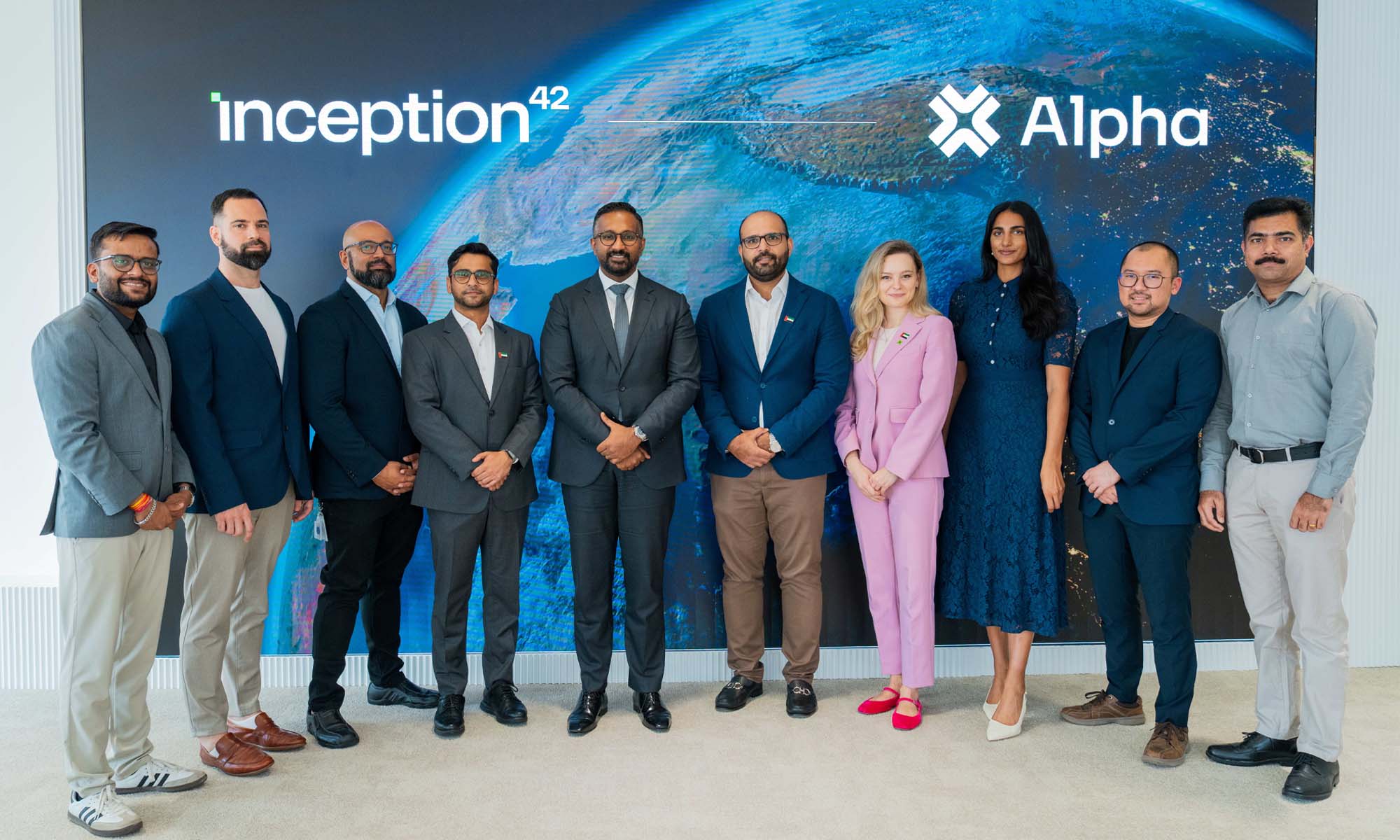
Inception42, G42’s agentic AI company, believes that institutional investors want AI they can check, not just AI that saves time. Its new tool, Alpha, launched at SuperReturn Middle East, is designed to draft investment memos in which every claim points back to its source.
Alpha is aimed at private equity firms, sovereign wealth funds and institutional allocators, which Inception42 says are underwriting larger, more complex positions under tighter timelines. Most AI tools, it argues, speed up individual tasks such as a memo draft or a comps table but leave the investment strategy scattered across files, inboxes and committee decks.
Teams upload Confidential Information Memoranda, diligence packs and portfolio data, which Alpha turns into insights grounded in that material. It checks how complete the diligence is, flagging gaps before they become late-stage surprises, then scores the deal against criteria the institution sets and drafts the memo.
Sourcing every claim is the core of Inception42’s Alpha pitch. Investment committees, the company says, have little time to challenge the evidence, and the audit trail is meant to give them more certainty. The company also promises institutions proof that their own strategy was applied consistently on every deal.
Also Read: Dubai Says Its Deepfake Detector Needs Just 7 Seconds Of Video
“Every investment committee wants the same thing: the full picture of a deal and the confidence to act on it,” says Ashish Koshy, CEO of Inception42. “Alpha gives deal teams and committee members that picture, with every insight traceable to its source, so speed and rigor finally pull in the same direction”.
Alpha is available as SaaS, and investment data, Inception42 says, stays under the institution’s control at every step. Firms can tailor the tool with custom agents, and Alpha Skills will eventually add reusable, practitioner-designed workflows for tasks such as comparables analysis and credit assessment.
The company says Alpha is already proven in the region’s most significant financial institutions. If the tool works as described, committees get an investment memo they can interrogate rather than simply take on trust.

Shokz OpenDots 2 Review: Clip-On Audio Gets A Bass-Heavy Makeover

G42’s Inception42 Wants AI To Show Its Work Before Investors Commit

WHOOP Goes Arabic, Betting On The Gulf’s Appetite For Health Data

New Disney+ Streaming App Has Officially Launched In The UAE

Dubai Says Its Deepfake Detector Needs Just 7 Seconds Of Video

In Kuwait, Your Surgeon Might Be Operating From Another Country

Microsoft Plans $10 Billion-Plus Gulf Expansion Despite Iran Conflict

Qatar Folds 45 State Companies Into A Single Investment Platform

NEOPAY Wants To Follow Merchants Across Channels And Borders

RØDE’s Low-Profile Studio Arm Is Designed To Stay Out Of Shot


-
 News3 weeks ago
In Kuwait, Your Surgeon Might Be Operating From Another Country
-
 News3 weeks ago
Microsoft Plans $10 Billion-Plus Gulf Expansion Despite Iran Conflict
-
 News3 weeks ago
Qatar Folds 45 State Companies Into A Single Investment Platform
-
 News2 weeks ago
NEOPAY Wants To Follow Merchants Across Channels And Borders