
News
Starlink To Launch In Lebanon As Soon As 2022

After launching its beta service to select customers across the United States and Canada, Elon Musk’s satellite internet constellation, Starlink, is set to launch in Lebanon as soon as 2022.
Last year, Lebanese computer science researcher Nadim Kobeissi asked Elon Musk on Twitter to position one of his satellites over Lebanon. His tweet quickly gained traction among other Lebanese Twitter users, many of which have to rely on slow and unreliable internet connections that are behind the rest of the world.
To everyone’s surprise, Musk replied, assuring Nadim that Starlink would provide global coverage. Well, it’s now clear that Musk was serious because pre-orders are already available with a fully refundable deposit of $99. The deposit will go toward the cost of the hardware kit ($499), the monthly service fee ($99 a month), and the shipping & handling fee (varies from region to region).
The fine print states that paying the deposit doesn’t guarantee availability. Instead, the deposit gives the payer’s order a higher priority in their region for ordering Starlink when it becomes available in the future.
Those who receive the Starlink kit can look forward to data speeds between 50 Mbps and 150 Mbps and latency from 20 ms to 40 ms, which is good enough for online gaming, high-definition streaming, and video conferencing. Both speed and latency are promised to keep improving as SpaceX, the company behind Starlink, launches more satellites and improves its software.
Already, around 1,000 Starlink satellites have been launched into orbit, but SpaceX has sought approval for tens of thousands more. Other private companies that are planning to launch satellite internet constellations include OneWeb, Amazon, Samsung, and Boeing.
Also Read: Instagram Music Is Finally Available In The Middle East
At the moment, satellite internet access is aimed mostly at people living in rural and hard-to-reach locations, where wired connectivity has typically been a challenge. As the technology improves and the number of satellites in orbit increases, it’s possible that it will become a viable alternative to broadband internet even in otherwise well-connected areas.
It still isn’t clear whether or not the Lebanese government will formally allow the use of Starlink within the country as Ogero, Lebanon’s state telecommunications operator, doesn’t allow the use of Internet services that don’t pass through their network. It will be interesting to see what their take is on the matter.



News
Instagram Redraws Its Wordmark And The Internet Reads “Instagzam”
Instagram’s first wordmark refresh in a decade arrives with new fonts, a restrained gradient — and a Reddit verdict of sidegrade.

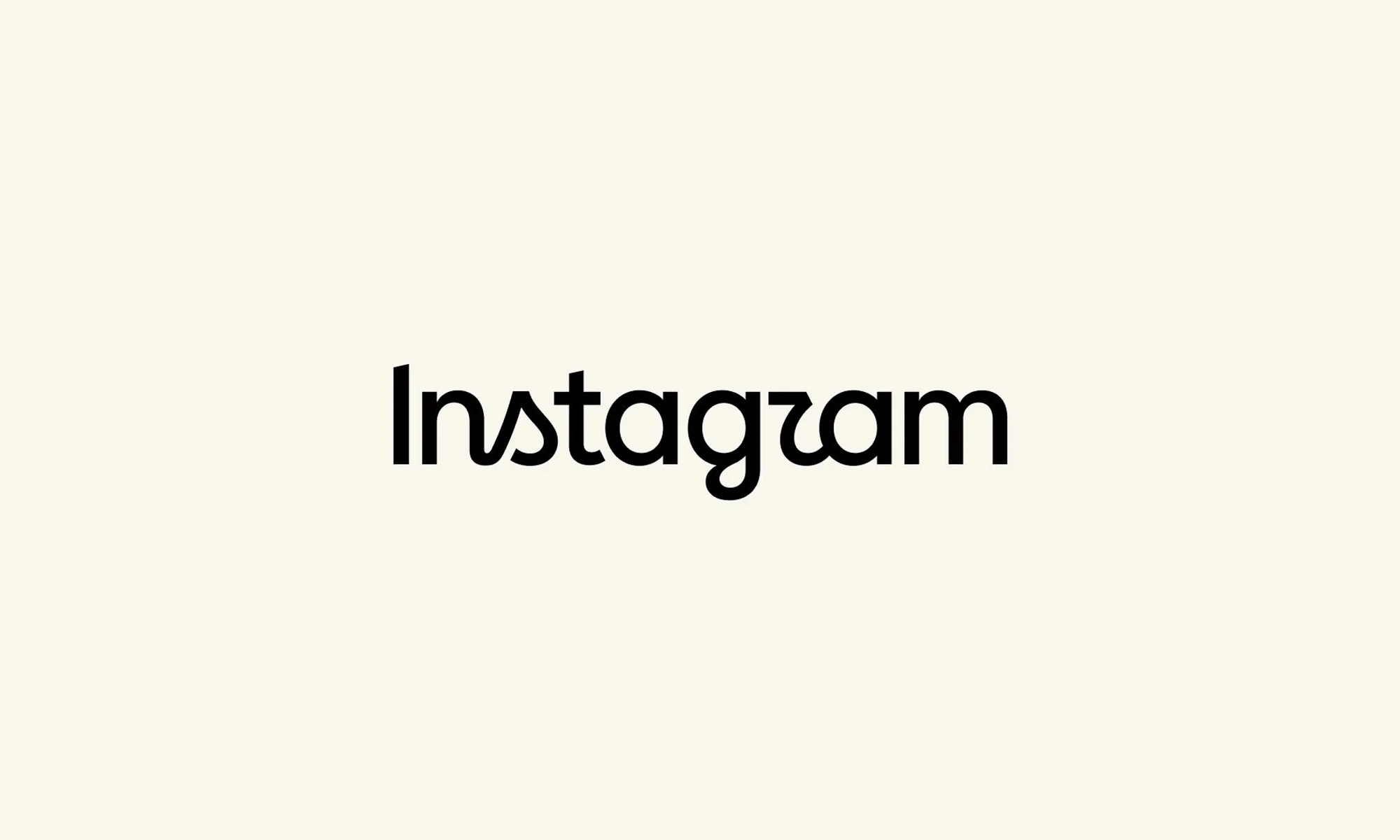
Although Instagram’s famous camera icon hasn’t changed, the company has refreshed the handwritten wordmark at the top of its app. This is the first redesign we’ve seen in ten years, and one the internet promptly set about renaming.
“The wordmark at the top of the app hasn’t changed in 10 years, so it was time for a refresh,” Instagram head Adam Mosseri wrote in a post on August 13, describing the new version as “cleaner and more modern” while keeping references to the original design.
Instagram says its team explored hundreds of options — all-caps lettering, camera-inspired concepts, even literal handwriting — before returning to script. “Script reflects individuality, so referencing that felt right,” Instagram director of product design Jasmine Probst said in Meta’s announcement. “The new wordmark is bolder and simpler, with touches of unexpectedness. It cues individual expression, a personal voice, both of which have always been core to Instagram”.
The wordmark is part of a broader brand overhaul: an updated Instagram Sans typeface, two new fonts — the hand-drawn Instagram Pen and Instagram Mono — plus refreshed motion and layouts, and more restrained use of the signature gradient. The wordmark is rolling out globally now, with the rest arriving throughout 2026 and beyond.
Also Read: Spotify Will Now Tell You If Your Favorite Artist Isn’t Real
The design mixes cursive and print lettering, some characters connected and others floating free. That hybrid approach, combined with unusually shaped “s” and “r” characters, led some users to conclude the logo actually reads “Instagzam”. On the r/logodesign subreddit, one user said the wordmark looked “fan-made,” like something built in Canva; another called it “an unsettling mix of manuscript and cursive”; a third summarized it as a “sidegrade” — or, inevitably, a “zidegrade”.
Not everyone was hostile to the new look. Some found the half-cursive design stylish and surprisingly readable, while others called it an improvement on its predecessor, and one commenter argued Instagram was simply adopting minimalist branding later than everyone else. Either way, the platform now has a refreshed identity, three updated fonts, and an unofficial new pronunciation.

Instagram Redraws Its Wordmark And The Internet Reads “Instagzam”

Spotify Will Now Tell You If Your Favorite Artist Isn’t Real

Samsung And Spotify Offer Free Premium Deal In MENA

Lebanon’s 5G Era Begins With 150 Stations And A $1M Budget

Syria Just Got Its First Super App Featuring Built-In Digital Payments

Dubai Police Finishes 65 Projects, Says AI Is The Next Priority

Beirut Wins US Flight Access, But Carriers Aren’t Sold Yet

Samsung’s Fold Goes Wide, And The Whole Galaxy Range Gets Pricier

Gulf AI Job Vacancies Nearly Triple, But Hiring Stays Lopsided

This UAE Platform Wants To Replace Fashion Photo Shoots With AI


-
 News3 weeks ago
This UAE Platform Wants To Replace Fashion Photo Shoots With AI
-
 News3 weeks ago
Nike And Hyperice’s New Slides Heat And Vibrate Your Feet
-
 Product Reviews3 weeks ago
Shokz OpenFit Pro Review: Open-Ear Audio Finally Grows Up
-
 News2 weeks ago
Syria Just Got Its First Super App Featuring Built-In Digital Payments