
News
6 Arab Musicians Triumph In TikTok MENA LIVE’s #GimmeTheMic
Aimed at discovering talented music creators, the competition has already revealed some of the most promising regional acts.

The TikTok LIVE #GimmeTheMic competition has concluded, providing a platform for rising musicians across the MENA region to share their unique sounds. The grand finale, held on September 9 at the Theatre of Digital Art and streamed live on the @TikTokLive_MENA page, featured standout performances from the finalists, all vying to represent the MENA region on the world stage.
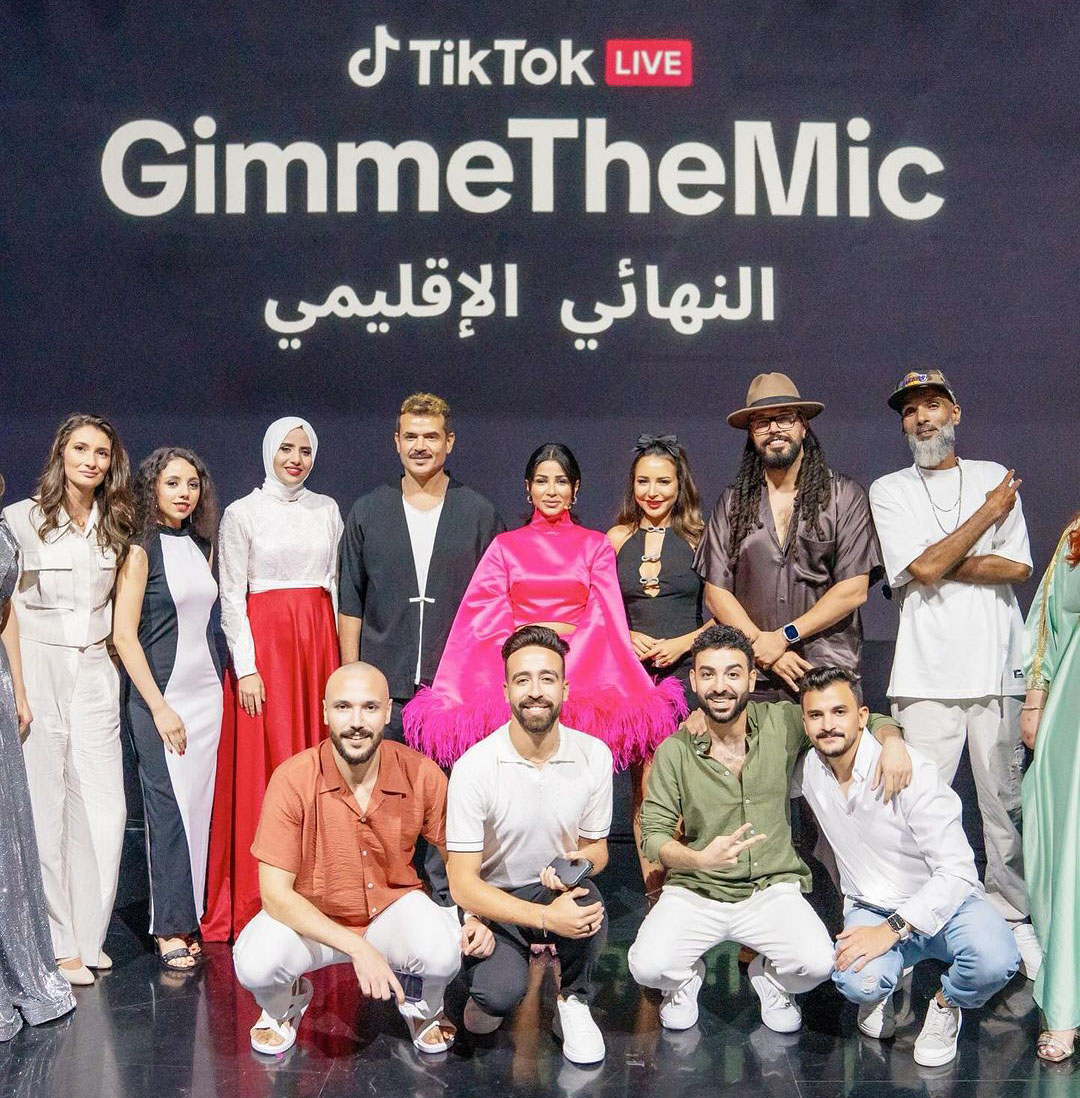
Since debuting last year, #GimmeTheMic has evolved into more than just a competition. It has become a showcase of creativity, resonating with TikTok’s vast community. Aimed at discovering and promoting talented music creators, this initiative has already revealed some of the most promising artists in the region. The 12 finalists, chosen through in-app voting by TikTok users, are part of a new wave of talent ready to make their global mark.
The road to the final performance was marked by intense preparation and overseen by an esteemed panel of judges. Celebrity experts included Arab pop sensation Sandy, Syrian singer and actor Samo Zaen — winner of the Best Middle East Artist Award — and Moroccan artist Grini, a recipient of the MTV European Music Award.
Through dedicated coaching sessions, the judges offered insights and personal experiences from their own careers. The sessions helped the contestants not only improve their skills but also gain confidence in their abilities. As a result, the competition served as a unique learning experience for all participants.
Also Read: Noble Announces Launch Of FoKus Apollo ANC Headphones
Reflecting on the event, Samo Zaen noted, “These performers aren’t just picking up the mic; they’re taking control. TikTok has become a space for artists to showcase their work and connect with a global audience”.
The competition’s six winners — Fathy Samir (@fathysamirrofficial), Balqees Raed (@balqees7890), Ahmed Yaser (@ahmedyassersinger), Amira Aly (@merooamira000), Jan Georg (@jaaan.official), and Amr Tarek (@amrtarek.tv) — will now represent the MENA region in the global #GimmeTheMic contest. Their success in the competition has already set the stage for a brighter future in the region’s music industry, fostering a community of creators passionate about sharing their craft with the world.






News
ESET Bets On Specialized Security AI At 0.5% The Training Cost
ESET says NeoCortex can estimate an attacker’s next move, with a kill switch and human oversight built in to keep it from going rogue.

A sign-in anomaly, a suspicious process launch and an unusual connection may look harmless alone. Together, they can describe an intrusion that is hard for security to teams to piece together.
To solve that problem, ESET announced ESET NeoCortex on November 4, 2026: a specialized foundational AI model for cybersecurity. It powers ESET LiveCortex, available within the ESET PROTECT Platform, which connects fragmented security signals and turns them into actionable incidents.
Filtering is the main selling point, with LiveCortex processing billions of raw telemetry events daily, and just 0.00111% of them contributing to incidents presented to customers. The aim is less alert fatigue and more analyst time spent on threats that matter.
NeoCortex is built on world-model architecture, learning how digital environments behave and how events relate. ESET says that lets it reconstruct missing incident context, recognize similar past cases and estimate an attacker’s likely next step – what the company calls “minus-one-day defense,” a chance to intervene before the next stage unfolds. ESET points to Black October, the week leading up to October 25, 2026, when critical security issues affecting PHP, Linux, GitLab and other key systems demanded rapid, prioritized responses, as the kind of moment where that context matters.
ESET’s internal research also suggests a specialized model like NeoCortex can be trained at up to 200 times lower cost than a large general reasoning model, while delivering more accurate, defense-focused results. The company credits optimized training, a focus on cybersecurity vocabulary, lower computing requirements and privately owned hardware.
Also Read: Dubai Says Its Deepfake Detector Needs Just 7 Seconds Of Video
“AI is accelerating both cyberattacks and cyberdefenses. With ESET NeoCortex, we are applying our AI investment to develop specialized foundational cybersecurity intelligence that remains under our control and strengthens, rather than replaces, human expertise,” said Juraj Malcho, Chief Technology Officer at ESET.
As part of the design, NeoCortex forms part of a layered architecture combining specialized models, deterministic controls, correlation logic, validation, auditability and expert human oversight. Safeguards include restricted sandboxes, read-only tools, continuous monitoring, defined usage and token limits, a kill switch and human oversight of critical response decisions. The model is also developed and self-hosted on ESET’s own infrastructure, which the company says reduces exposure to shifts among third-party AI providers, including commercial and geopolitical ones.

ESET Bets On Specialized Security AI At 0.5% The Training Cost

Whish Money Opens A Montreal Flagship To Enter The Canadian Market

Abu Dhabi Is Making Its Rulebook Readable To AI, With OpenAI

Binance Reportedly Loses $6.3 Billion In Record Crypto Heist

Robinhood Receives Approval To Launch In The Middle East

G42’s Inception42 Wants AI To Show Its Work Before Investors Commit

Abu Dhabi’s Robot Kitchen Is Serving Up Biryani, Not Burgers

Shokz OpenDots 2 Review: Clip-On Audio Gets A Bass-Heavy Makeover

WHOOP Goes Arabic, Betting On The Gulf’s Appetite For Health Data

Sennheiser’s MOMENTUM 5 Series Bets On Batteries You Can Swap


-
 News3 weeks ago
Abu Dhabi’s Robot Kitchen Is Serving Up Biryani, Not Burgers
-
 Product Reviews3 weeks ago
Shokz OpenDots 2 Review: Clip-On Audio Gets A Bass-Heavy Makeover
-
 News3 weeks ago
Sennheiser’s MOMENTUM 5 Series Bets On Batteries You Can Swap
-
 News2 weeks ago
Checkout.com Reports 20% Higher Payment Acceptance For PRYPCO