
News
Space42 Unveils “Thuraya One” Satellite Smartphone
The Android 14 device will offer uninterrupted communication in remote areas without additional hardware.

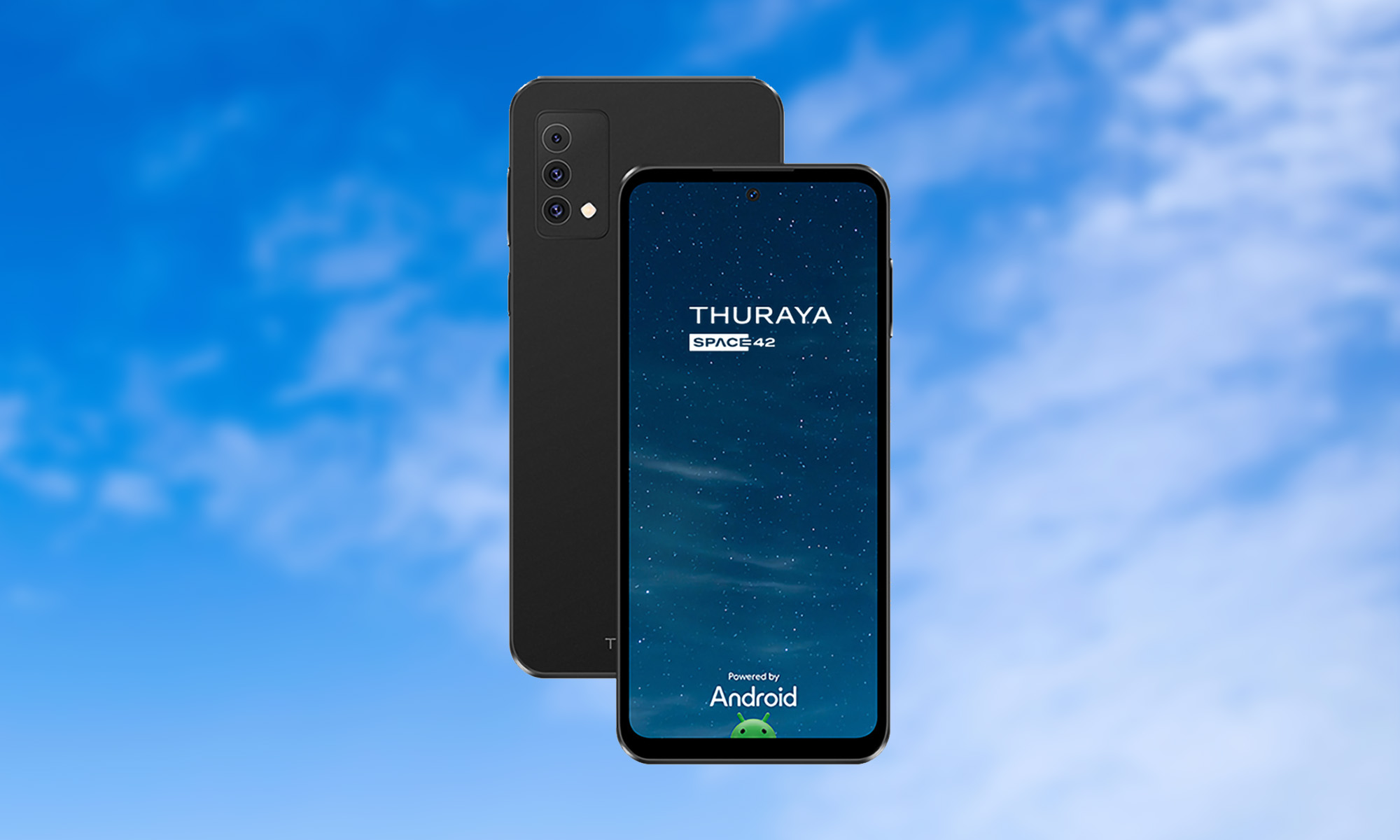
Thuraya, the satellite communications division of Space42, has revealed its new Thuraya One smartphone — an Android 14 device with integrated satellite capabilities. Announced at Mobile World Congress (MWC) 2025, the phone is designed to keep users connected even in areas beyond traditional cellular coverage. Utilizing 5G and 4G, combined with Thuraya’s satellite infrastructure (including the newly launched Thuraya 4 satellite) the device offers reliable and secure connectivity in practically any environment.
Space42 is currently showcasing the Thuraya One at its stand during MWC in Barcelona, running from March 3-6, 2025. As one of the largest global connectivity events, MWC serves as the perfect stage for the big reveal of this next-generation smartphone that allows travelers and professionals to stay connected without having to carry extra satellite communication gear.
As well as satellite connectivity, the Thuraya One has dual-SIM slots, allowing users to switch between networks effortlessly. The phone supports SIM cards from over 370 Thuraya Roaming Partners worldwide, and customers can use a single number for both cellular and satellite communication.
Ali Al Hashemi, CEO of Yahsat Space Services, Space42, stated, “Staying connected is no longer a convenience, it is a necessity. Thuraya One delivers seamless, secure, and reliable connectivity anywhere, pushing what is possible in mobile communication. With this advanced capability, we are accelerating our position as a Non-Terrestrial Networks operator and executing our Direct-to-Device strategy to bring uninterrupted connectivity to billions of people and devices worldwide”.
Also Read: Dubai Teams Up With Elon Musk’s Boring Company For “Dubai Loop”
The Thuraya One doesn’t just offer reliable connectivity; it also packs high-end hardware. Featuring a 6.67” AMOLED display for vivid visuals, a Qualcomm Octa-core Kryo processor for smooth performance, and a robust triple-camera system with a 50MP main lens, the smartphone is built to handle a variety of needs. Its IP67 rating ensures durability against dust and water, while a fast-charging battery provides up to 26 hours of talk time on 5G—making it ideal for field professionals and adventurers alike.
Thuraya One is now available through Thuraya’s extensive network of over 140 service partners and distributors worldwide.




News
Microsoft Plans $10 Billion-Plus Gulf Expansion Despite Iran Conflict
Security is shaping Microsoft’s approach, from resilience work with governments to what it will say about how the money splits by country.
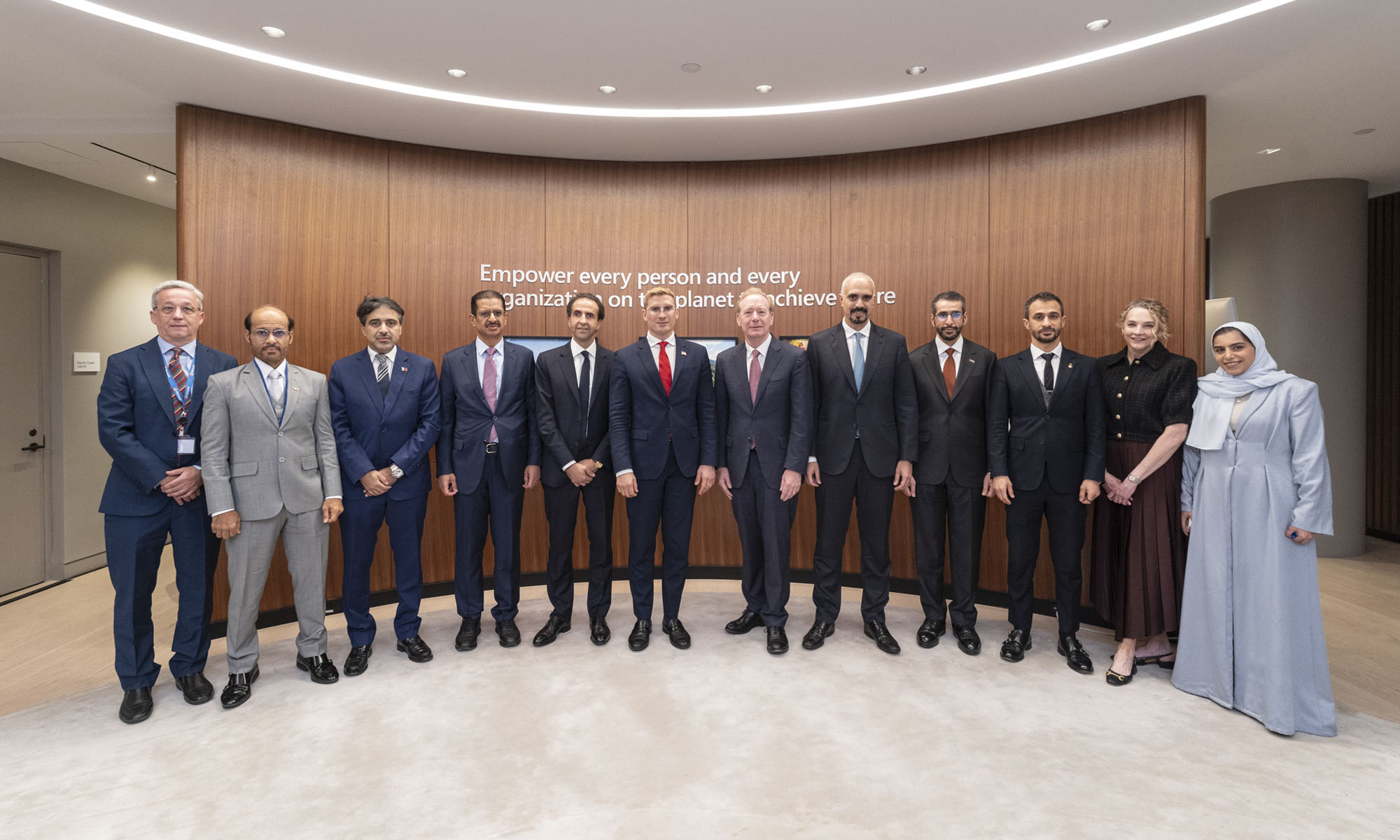
Microsoft is planning more than $10 billion of investment across the UAE, Saudi Arabia, Qatar and Kuwait through 2030, Vice Chair and President Brad Smith told Reuters, calling the spending schedule aggressive. The Iranian conflict that began on February 28 has not persuaded the company to scale back.
“We’re sustaining all the investments we planned to make before this conflict started, and we are in fact adding to them,” Smith said. The $10 billion-plus total does not, however, show how large those additions are.
The investment, which Smith described as part of Microsoft’s continued infrastructure expansion, is aimed at cloud and AI infrastructure and at the company’s growing regional operations. Microsoft also intends to put more than $400 million into subsea and terrestrial connectivity across the Middle East by 2030.
The spending fits the region’s own ambitions too. Gulf governments have been investing heavily in AI infrastructure as part of a push to diversify their economies beyond oil and gas and turn themselves into global technology hubs. Major cloud and AI providers have been drawn in part by the land and relatively low-cost energy on offer.
Microsoft is widening its partnerships with regional AI companies, though not on identical terms. In 2024, it invested $1.5 billion in Abu Dhabi-based G42 for a minority stake, and Smith currently sits on G42’s board. Saudi Arabia’s Humain and Qatar’s Qai are working with Microsoft on selected priority areas, but Smith said the company does not plan to make capital investments in either.
Also Read: Egypt’s Mobile Wallets Are Booming, But Cash Still Has Power
The conflict has added another strand to Microsoft’s work in the region. Since it began, Smith said, the company has supported regional partners with digital resilience assessments, and it is now working with Gulf countries through a digital resilience initiative focused on preparedness and the protection of critical data.
So far, the company has given no country-by-country breakdown of the investment, citing security among other factors. So while the headline figure is public, how Microsoft divides the spending among the four countries is not.

Microsoft Plans $10 Billion-Plus Gulf Expansion Despite Iran Conflict

In Kuwait, Your Surgeon Might Be Operating From Another Country

Qatar Folds 45 State Companies Into A Single Investment Platform

Trip.com Is Betting An AI Agent Will Book Your Next Vacation

Meta’s New $499 Plan Puts A Price On Reaching A Real Person

Apple’s First Folding iPhone Arrives Late To A Shrinking Market
Trip.com Is Betting An AI Agent Will Book Your Next Vacation

Egypt’s Mobile Wallets Are Booming, But Cash Still Has Power

OKX Bets Streaming Perks Can Take Crypto Mainstream Across MENA

Musk’s Boring Company Wants To Dig 150 KM Of Tunnel Under The UAE


-
 News3 weeks ago
Apple’s First Folding iPhone Arrives Late To A Shrinking Market
-
 News2 weeks ago
Trip.com Is Betting An AI Agent Will Book Your Next Vacation
-
 News2 weeks ago
Egypt’s Mobile Wallets Are Booming, But Cash Still Has Power
-
 News2 weeks ago
OKX Bets Streaming Perks Can Take Crypto Mainstream Across MENA