
News
Yango Enhances Yasmina AI For Improved Conversations
The tech company has upgraded its AI assistant to deliver enhanced creativity, deeper conversations, and advanced bilingual translation.


Global technology company Yango Group has announced a significant upgrade to the large language model (LLM) powering its AI assistant, Yasmina. This enhancement allows Yasmina to deliver more accurate, nuanced, and context-aware responses in Arabic and English, improving interactions and user experience across the Middle East region.
The upgrade is part of a phased rollout of YangoAI, the company’s suite of advanced AI technologies specifically adapted to regional needs. As a result, Yasmina now offers 38% more accurate and timely responses in Arabic, made possible by an enhanced ability to analyze web documents. Additionally, unnecessary answer refusals have been reduced by almost 50%, ensuring smoother and more engaging conversational experiences.
One of the most notable new capabilities of Yasmina is its expanded bilingual translation skill. The improved assistant empowers bilingual users, educators, language learners, and content creators to seamlessly translate conversations between Arabic and English, facilitating better communication and understanding.
Beyond translation, Yasmina can now provide highly contextual recommendations for everyday activities and lifestyle choices. Users seeking personalized suggestions — for instance, how to spend a day in Dubai exploring both modern and traditional attractions — will experience enhanced clarity and precision from the assistant.
The assistant’s upgraded functionality also aids users with tasks such as real-time currency conversion, homework support that encourages independent thinking, creative brainstorming, poetry and storytelling, and even providing riddles suitable for children.
Also Read: ALJ & Joby Aviation To Bring Electric Air Taxis To Saudi Arabia
“With more precise and culturally aware responses, along with additional skills, Yasmina’s latest upgrade positions it as a trusted everyday companion,” said Rami Abu Arja, Senior Innovation Marketing Manager at Yasmina, Yango Middle East. “From creative storytelling to translation, we are enriching lives with human-centered AI and making innovation more accessible to all. As the region embraces digital transformation, we continue to enhance our AI assistant, aiming to make it even more helpful, versatile, and relevant”.
YangoAI’s continuous training on region-specific data ensures that Yasmina and other Yango services authentically reflect local culture and user expectations across the Middle East.


News
Abu Dhabi’s Robot Kitchen Is Serving Up Biryani, Not Burgers
Circus SE wants to put a tiny automated factory inside the buildings where Gulf residents live and work, bypassing part of last-mile delivery.
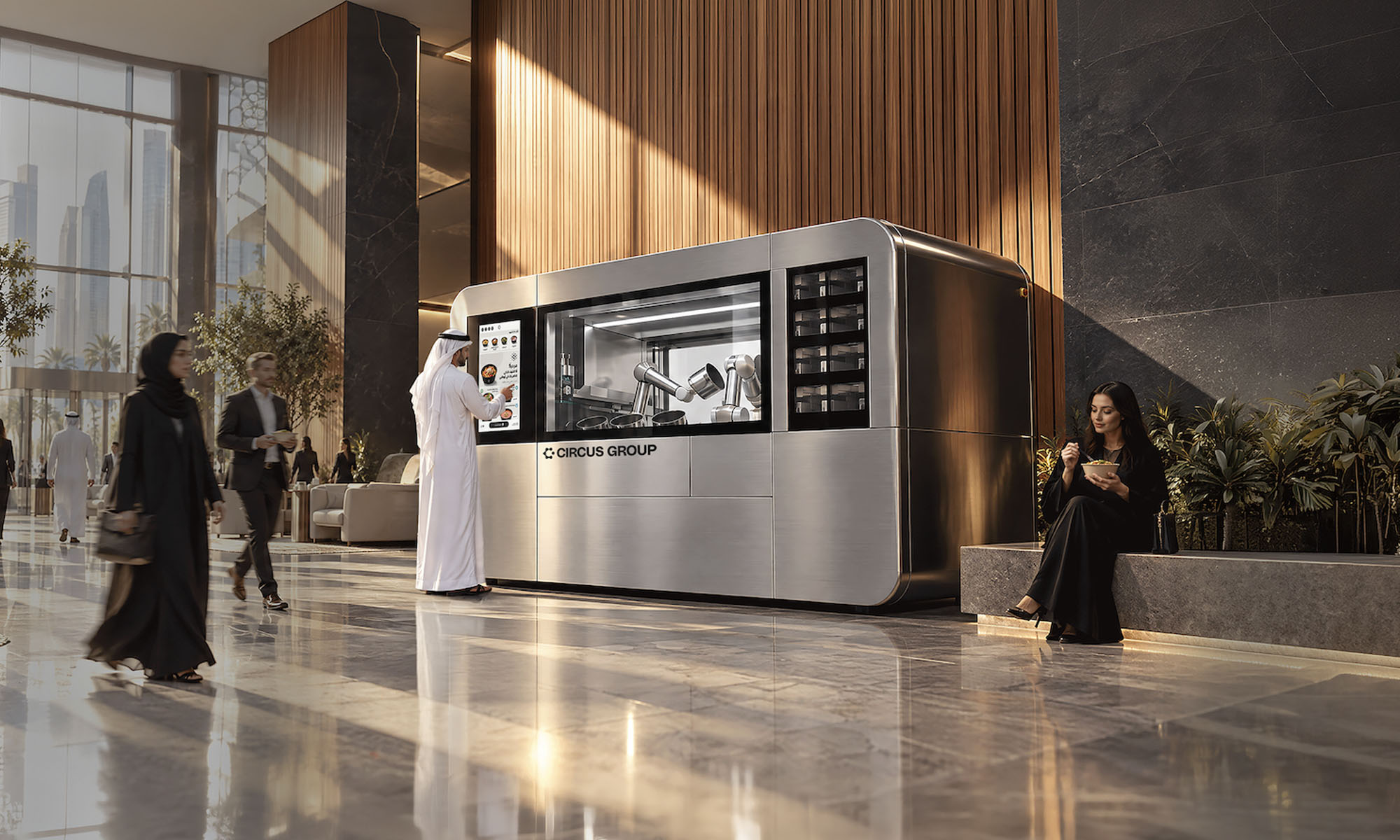
The most telling thing about a new autonomous kitchen now running in Abu Dhabi’s Marina Square is what it won’t cook:
“We don’t do fast food,” says Nikolas Bullwinkel, Founder and CEO of Circus SE. “We’ve actively decided not to build a machine that can only do burgers”.
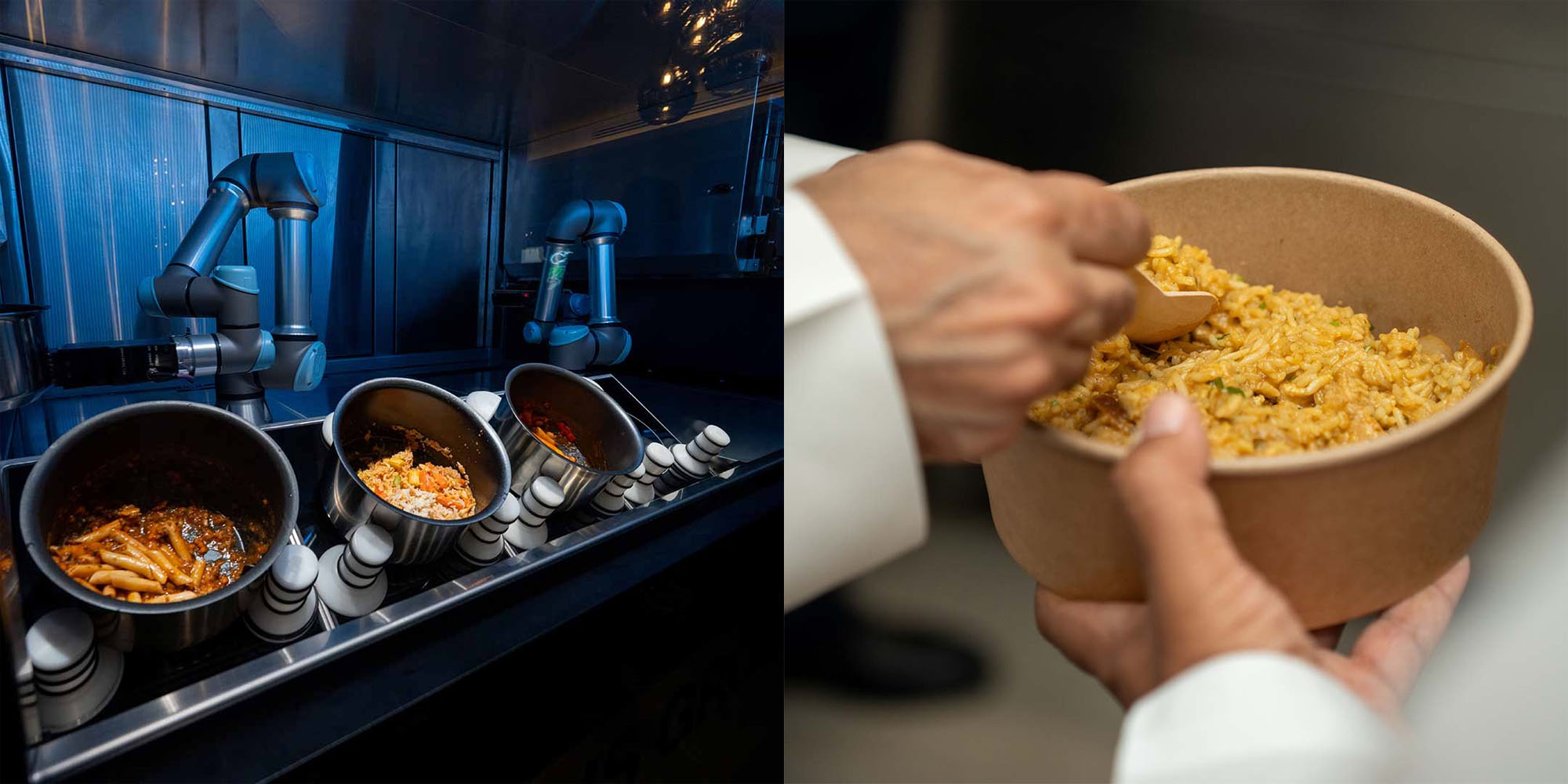
Instead, the CA-1 system is built around pot-based cooking: curries, pastas, soups and rice dishes. After experimenting with highly personalized recipes, Circus deliberately leaned back toward recognizable food. “We’re going with a chicken biryani because you know it,” Bullwinkel says of the AED 40 dish.
The Germany-based robotics and food technology company operates across eight countries, and Abu Dhabi is its first deployment outside Europe. More locations are expected there and in Dubai.
In Germany, its units can be placed in supermarkets, gas stations, airports and hospitals. In the Gulf, Bullwinkel wants them inside residential and office buildings, replacing some of the complexity of last-mile delivery. “We’re basically bringing a very tiny factory a few square meters into your building,” he says. Catering company Royal Prestige supplies the ingredients and knowledge of local tastes.
The CA-1 manages up to 36 refrigerated ingredient silos alongside automated induction cooking, robotic plating and a self-cleaning dishwasher. Two robotic arms move ingredients through the system with minimal human intervention. It can produce up to 120 hot meals an hour, and a meal such as rice and curry can take around three to four minutes.
Also Read: Ooredoo Qatar’s 5G+ Network Is Built For Machines As Much As People
Five cameras and multiple sensors monitor heat, temperature and consistency, an attempt to approximate what a chef perceives. “You can hear something gets burned, you can smell it, you can see it at some point,” Bullwinkel says. CircusOS, the company’s operating system, adjusts recipes in real time.
You might think of the platform as a threat to kitchen staff, but Bullwinkel frames Circus as a way for chefs to develop recipes and distribute them at scale. With that being said, rising labor costs and shortages are also part of his case for automation.

Abu Dhabi’s Robot Kitchen Is Serving Up Biryani, Not Burgers

Sennheiser’s MOMENTUM 5 Series Bets On Batteries You Can Swap

UAE’s 3-Minute University Registration Runs On Government Data

How Online Ads Became A Delivery System For Zero-Click Spyware

Shokz OpenDots 2 Review: Clip-On Audio Gets A Bass-Heavy Makeover

Dubai Says Its Deepfake Detector Needs Just 7 Seconds Of Video

New Disney+ Streaming App Has Officially Launched In The UAE

NEOPAY Wants To Follow Merchants Across Channels And Borders

RØDE’s Low-Profile Studio Arm Is Designed To Stay Out Of Shot

G42’s Inception42 Wants AI To Show Its Work Before Investors Commit


-
 News3 weeks ago
Dubai Says Its Deepfake Detector Needs Just 7 Seconds Of Video
-
 News2 weeks ago
New Disney+ Streaming App Has Officially Launched In The UAE
-
 News3 weeks ago
NEOPAY Wants To Follow Merchants Across Channels And Borders
-
 News4 weeks ago
RØDE’s Low-Profile Studio Arm Is Designed To Stay Out Of Shot