
News
Adobe Teases New AI Editing Tools And Updates In Premiere Pro
The video editing app will be enhanced with a generative extend tool, text-to-video, improved timeline waveforms, and more.

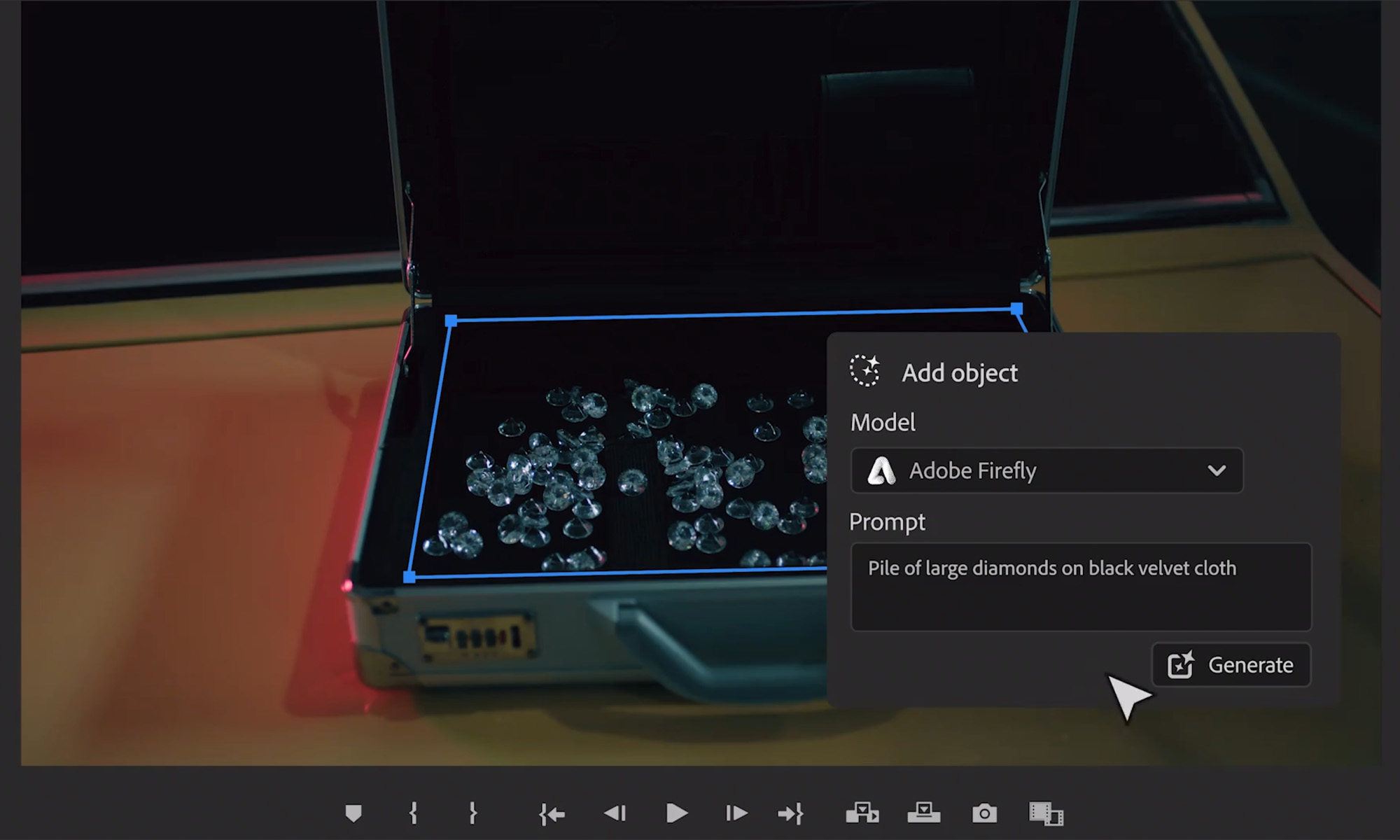
After launching the generative AI model Firefly last year, Adobe is now showcasing how the technology will be used in upcoming versions of the editing app Premiere Pro. In an early sneak peek, the company demonstrated several new features, including Object Addition and Removal, Generative Extend, and Text to Video.
The first new feature, Generative Extend, targets a common video editing problem by using AI to “Seamlessly add frames to make clips longer, so it’s easier to perfectly time edits and add smooth transitions”.
Meanwhile, Premiere Pro’s Object Addition & Removal tool will leverage Firefly’s generative AI to “Simply select and track objects, then replace them. Remove unwanted items, change an actor’s wardrobe or quickly add set dressings such as a painting or photorealistic flowers on a desk,” Adobe states.
Adobe also showcased another new feature that can automatically generate new film clips using a text prompt. To use the content creation tool, editors can “Simply type text into a prompt or upload reference images. These clips can be used to ideate and create storyboards, or to create B-roll for augmenting live action footage,” Adobe explained. The company seems to be commercializing this particular feature extremely quickly, considering generative AI video only appeared a few months ago.
Also Read: UGREEN Unveils Nexode RG 65W Charger For Middle East
The new additions to Premiere Pro will be added later this year, but Adobe is also introducing smaller improvements to the editing app in May. The changes include interactive fade handles to enable easier transitions, an Essential Sound badge that uses AI to “automatically tag audio clips as dialogue, music, sound effects or ambience, and add a new icon so editors get one-click, instant access to the right controls for the job”, along with effect badges and a new look for waveforms in the timeline.






News
Ooredoo Qatar’s 5G+ Network Is Built For Machines As Much As People
Built on 5G Standalone and 5G Advanced, the upgrade lays the groundwork for Qatar’s 2030 digital ambitions.


Ooredoo Qatar has launched what it calls the country’s first 5G+ mobile network. Customers get faster connections, but much of what the operator is promising is aimed at machines.
5G+ isn’t a new generation of mobile technology so much as a layering of upgrades, building on 5G Standalone and 5G Advanced. The result is the familiar trio of higher speeds, greater capacity and lower latency.
For consumers, Ooredoo promises smoother streaming, more responsive gaming and steadier connections on the move. The service is commercially available through mobile broadband in 5G+ coverage areas, and the operator is aiming it at campers during the camping season. The network has been deployed at locations across Qatar, but the announcement doesn’t name them, say whether smartphone plans are included or put figures on the speed and latency gains.
The business case is more detailed: Greater capacity lets more devices connect and exchange data efficiently, while shorter response times support real-time equipment monitoring and automated processes. Network slicing tailors connectivity to specific uses, and 5G Advanced combined with edge computing targets mission-critical applications that require rapid responses. Expanded IoT capabilities cover industrial sensors, asset trackers and utility meters, the building blocks for automation and future smart city services. The company also cites AI-enabled services and complex digital workloads.
Also Read: WHOOP Goes Arabic, Betting On The Gulf’s Appetite For Health Data
“With the 5G+ network, we are enhancing everyday digital experiences for our consumers, enabling innovation, and strengthening the competitiveness of businesses across the country,” said Sheikh Ali bin Jabor bin Mohammad Al Thani, chief executive officer of Ooredoo Qatar.
“From launching the world’s first 5G network in 2018 to deploying Qatar’s first 5G Standalone core network, we have consistently advanced connectivity,” he added.
Ooredoo ties the rollout to Qatar National Vision 2030 and the Digital Agenda 2030, framing it as part of the country’s effort to strengthen its position as a leading regional digital hub. For that ambition, the devices that matter most may be the ones without screens.

Shokz OpenDots 2 Review: Clip-On Audio Gets A Bass-Heavy Makeover

Ooredoo Qatar’s 5G+ Network Is Built For Machines As Much As People

G42’s Inception42 Wants AI To Show Its Work Before Investors Commit

WHOOP Goes Arabic, Betting On The Gulf’s Appetite For Health Data

New Disney+ Streaming App Has Officially Launched In The UAE

In Kuwait, Your Surgeon Might Be Operating From Another Country

Microsoft Plans $10 Billion-Plus Gulf Expansion Despite Iran Conflict

Qatar Folds 45 State Companies Into A Single Investment Platform

NEOPAY Wants To Follow Merchants Across Channels And Borders

RØDE’s Low-Profile Studio Arm Is Designed To Stay Out Of Shot


-
 News3 weeks ago
In Kuwait, Your Surgeon Might Be Operating From Another Country
-
 News3 weeks ago
Microsoft Plans $10 Billion-Plus Gulf Expansion Despite Iran Conflict
-
 News4 weeks ago
Qatar Folds 45 State Companies Into A Single Investment Platform
-
 News2 weeks ago
NEOPAY Wants To Follow Merchants Across Channels And Borders