News
Dubai-Based Smart Bricks Secures $5M To Automate Property Deals
Andreessen Horowitz backs the startup building AI software to speed underwriting and cross-border real-estate investing.


Smart Bricks has closed a $5 million pre-seed round led by Andreessen Horowitz’s a16z Speedrun fund, bringing Silicon Valley capital into a Dubai-based push to rebuild how property deals are sourced and executed.
The 18-month-old company is developing an AI-native software layer for real-estate investing. Instead of brokers, spreadsheets and weeks of back-and-forth diligence, it runs autonomous systems that scan markets, score assets and handle much of the paperwork. Smart Bricks says that its platform can shrink a process that often takes months down to mere minutes.

Real estate remains one of the few trillion-dollar asset classes without a modern data stack. Information is scattered across local registries, listings and private networks. Smaller investors still piece together decisions from partial data while large funds rely on proprietary tools.
“Global real estate is one of the largest asset classes in the world, yet most individual and cross-border investors are still operating with PDFs, WhatsApp threads, incomplete data, and opaque fees,” said founder and CEO Mohamed Mohamed. “Institutions have proprietary data, AI underwriting, and integrated execution. Everyone else is effectively flying blind. Smart Bricks closes that gap”.
The platform pulls from more than one million public and proprietary feeds and continuously models supply, pricing, liquidity, regulation and risk. It then surfaces what it ranks as the top 0.1% of opportunities and automates valuation, underwriting, due diligence, negotiation and financing workflows.
Smart Bricks is not positioning itself as a marketplace. It pitches itself as plumbing — infrastructure for capital deploying across cities including Dubai, London, New York and Miami.
“Capital and talent have already gone global; the tooling for real-estate investing has not,” Mohamed said. “Smart Bricks is building the intelligence layer that finally allows real estate to operate at the speed, transparency, and scale modern markets demand”.
Also Read: Saudi Digital Payments Reach 80% As Cash Use Shrinks
Backers alongside a16z include Techstars, 500 Global, Cornerstone VC, South Loop Ventures, Harvard Business School Alumni Angels and Cento Ventures, plus angels from OpenAI, Anthropic, DeepMind, Airbnb and Blackstone.
For Dubai, the deal adds another AI and proptech startup to a growing roster as the emirate tries to anchor global capital and digitize core sectors. Property is central to that story. If software can make cross-border deals faster and less opaque, the region stands to capture more of that flow.



News
Lebanon Ministers Meet Visa Over National Digital Payment Platform
Finance and technology ministers say a comparative study and roadmap will follow before any decision on adopting a model.


Lebanon’s finance and technology ministers met representatives from Visa last week to discuss a proposed unified national digital payment platform for government services, according to a readout from the Ministry of Finance.
The meeting brought together Finance Minister Yassin Jaber, Minister of State for Technology and Artificial Intelligence Kamal Shehadeh, a Visa delegation, and experts from both ministries. Discussion focused on whether Lebanon could establish a single platform through which citizens and institutions would pay taxes, fees, fines and other official transactions electronically, using mobile phones and other digital channels.
The Visa delegation presented examples from countries that have adopted unified government payment platforms, including the United Arab Emirates, Singapore, Estonia and Jordan. According to the readout, the examples were presented as having increased collection rates and expanded financial inclusion.
Talks covered settlement mechanisms, direct transfer to the treasury account, financial reconciliation, risk management, cybersecurity, fees, and an operational model that would involve the private sector. The parties agreed to continue technical and institutional consultations, prepare a comparative study, and develop an implementation roadmap before any decision on adopting a model for Lebanon.
Jaber said the Ministry of Finance had already enabled citizens to pay using credit cards and e-wallets through transfer companies, but described the proposed platform as a further step. He framed the development of electronic payment and collection systems as a priority within the ministry’s modernization plan.
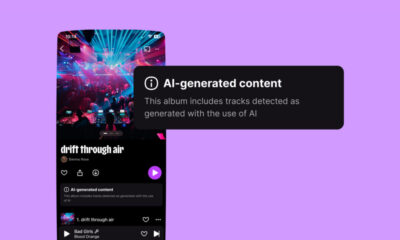
Also Read: Deezer Says AI Tracks Now Make Up 44% Of Uploads
Shehadeh outlined the citizen-facing concept as a single mobile application through which users could settle obligations to ministries, government institutions and other bodies.
“The idea, in short, is that any citizen downloads an application on their mobile phone, through which they can pay all service obligations for all ministries, government institutions, or those owned by the Lebanese state, and others as well, as the platform is not limited only to state institutions,” he said.
Shehadeh added that the platform would not displace banks and money transfer companies that currently provide collection services to the state, calling it complementary to their work.

Lebanon Ministers Meet Visa Over National Digital Payment Platform

AltoVolo Releases Sigma Footage & Sets Date For Demonstrator

Careem Launches Lebanon Aid Drive With WFP

United Arab Emirates To Quit OPEC After 59 Years

YouTube Tests Conversational AI Search Tool

Deezer Says AI Tracks Now Make Up 44% Of Uploads

Yango Ride Introduces In-Chat Trip Planning In ChatGPT

NVIDIA Puts GPT-5.5 Codex In Hands Of 10,000 Staff
YouTube Tests Conversational AI Search Tool