
News
Dubai’s Food Tech Valley & ReFarm Plan Hi-Tech Gigafarm
The “vertical farm” venture is expected to be operational by 2026 and will be capable of replacing 1% of UAE fresh produce imports.

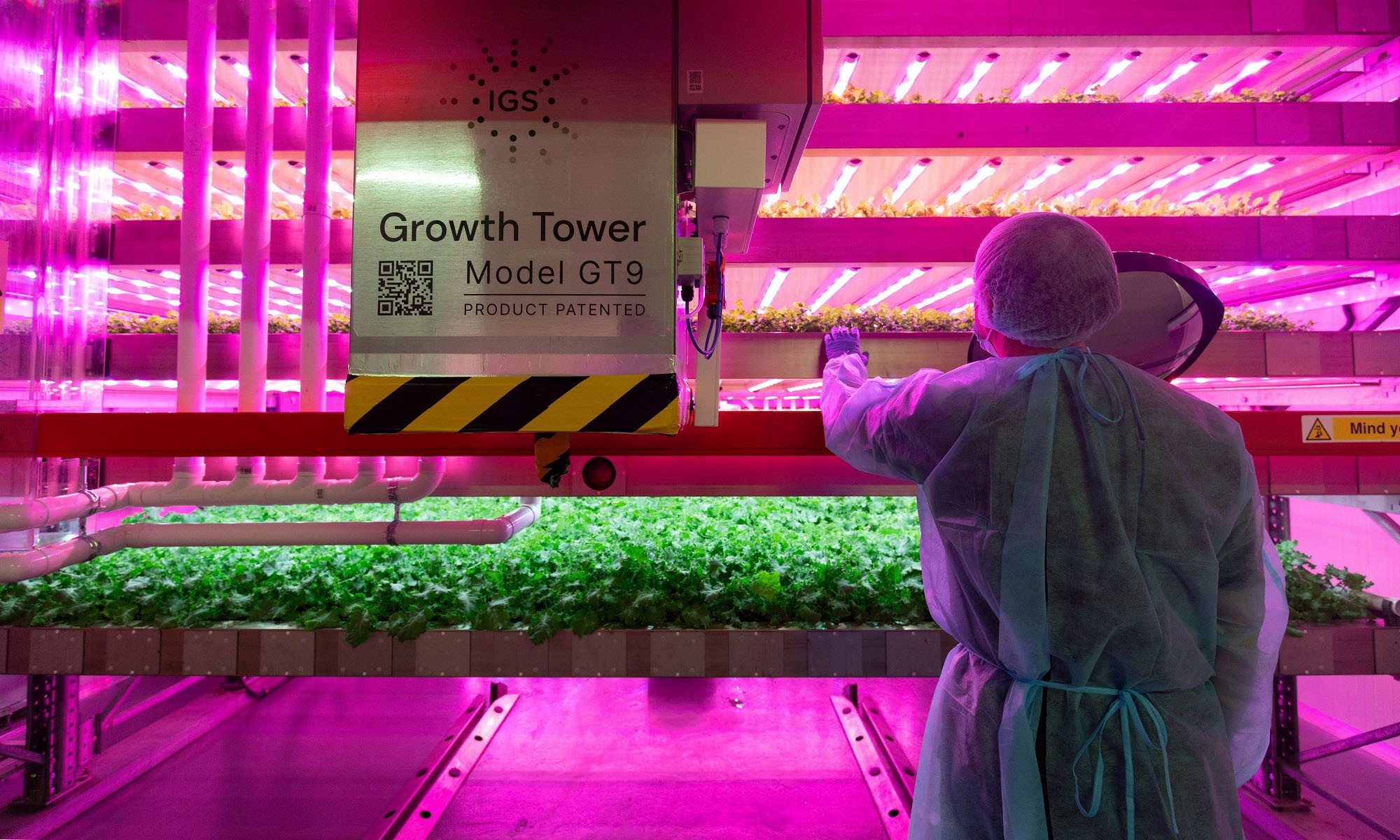
Food Tech Valley, a Dubai-based technology center designed to address food security, has entered a partnership with the ReFarm group to build a gigafarm capable of growing over three million kilograms of produce annually.
The project, which starts in mid-2024, aims to help decarbonize UAE food production, replacing 1% of the country’s fresh produce imports. Both parties signed an agreement at this year’s COP28, which should see the 83,612-square-meter farm becoming fully operational by 2026.
As well as producing vast quantities of food, the high-tech farm will be capable of recycling over 50,000 tons of food waste each year while growing two billion plants.
“Rethinking our food production systems is a clear priority, and the decision of ReFarm to launch a facility in Dubai’s Food Tech Valley is a significant step forward for the development of a technologically advanced, low-carbon agricultural sector,” said Dr Thani Al Zeyoudi, UAE Minister of State for Foreign Trade.
The gigafarm will be split into four zones: Agritech and engineering, food innovation, research and development, and smart food logistics. In addition, the site will become a closed-loop circular waste-to-value system, maximizing resources and preventing waste from entering landfills by creating organic compost.
Also Read: Abu Dhabi’s Hub71 To Help Climate Technology Startups
“This is one of many transformative projects which is set to be part of Food Tech Valley, which will have a significant impact on the UAE’s food security, maximizing the use of precious resources and decarbonizing the food supply chain,” explained Hesham Al Qassim, chief executive of Wasl Asset Management Group, which is developing the project alongside the Ministry of Food and Water Security.
Technologies used at the gigafarm are expected to recover 90% of the ammonia sulfate from wastewater, and no mains or groundwater connection will be required for the vertical farm to produce fresh produce. Developers claim the site will be 98% more efficient than traditional field-based farming.





News
Microsoft Plans $10 Billion-Plus Gulf Expansion Despite Iran Conflict
Security is shaping Microsoft’s approach, from resilience work with governments to what it will say about how the money splits by country.
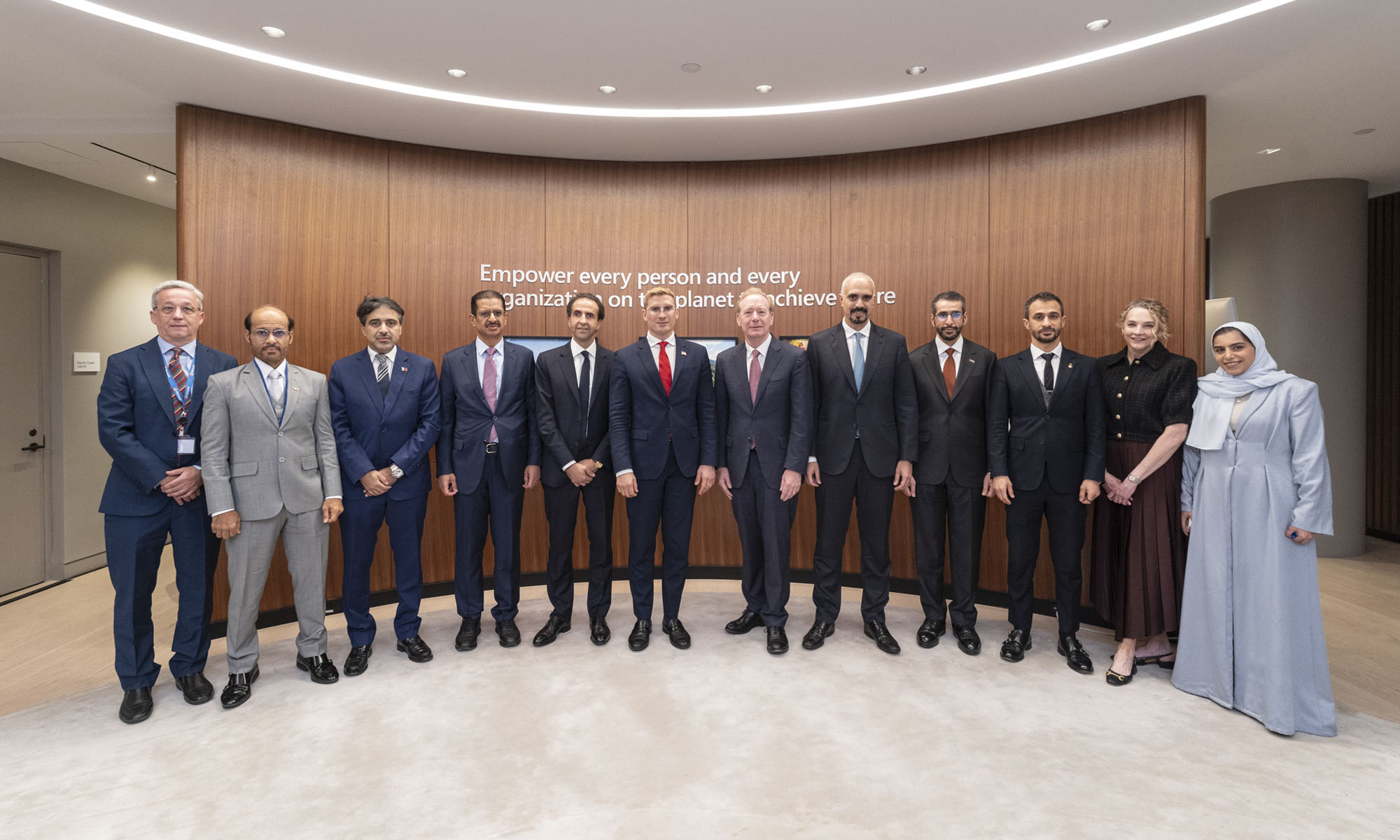
Microsoft is planning more than $10 billion of investment across the UAE, Saudi Arabia, Qatar and Kuwait through 2030, Vice Chair and President Brad Smith told Reuters, calling the spending schedule aggressive. The Iranian conflict that began on February 28 has not persuaded the company to scale back.
“We’re sustaining all the investments we planned to make before this conflict started, and we are in fact adding to them,” Smith said. The $10 billion-plus total does not, however, show how large those additions are.
The investment, which Smith described as part of Microsoft’s continued infrastructure expansion, is aimed at cloud and AI infrastructure and at the company’s growing regional operations. Microsoft also intends to put more than $400 million into subsea and terrestrial connectivity across the Middle East by 2030.
The spending fits the region’s own ambitions too. Gulf governments have been investing heavily in AI infrastructure as part of a push to diversify their economies beyond oil and gas and turn themselves into global technology hubs. Major cloud and AI providers have been drawn in part by the land and relatively low-cost energy on offer.
Microsoft is widening its partnerships with regional AI companies, though not on identical terms. In 2024, it invested $1.5 billion in Abu Dhabi-based G42 for a minority stake, and Smith currently sits on G42’s board. Saudi Arabia’s Humain and Qatar’s Qai are working with Microsoft on selected priority areas, but Smith said the company does not plan to make capital investments in either.
Also Read: Egypt’s Mobile Wallets Are Booming, But Cash Still Has Power
The conflict has added another strand to Microsoft’s work in the region. Since it began, Smith said, the company has supported regional partners with digital resilience assessments, and it is now working with Gulf countries through a digital resilience initiative focused on preparedness and the protection of critical data.
So far, the company has given no country-by-country breakdown of the investment, citing security among other factors. So while the headline figure is public, how Microsoft divides the spending among the four countries is not.

Microsoft Plans $10 Billion-Plus Gulf Expansion Despite Iran Conflict

In Kuwait, Your Surgeon Might Be Operating From Another Country

Qatar Folds 45 State Companies Into A Single Investment Platform

Trip.com Is Betting An AI Agent Will Book Your Next Vacation

Meta’s New $499 Plan Puts A Price On Reaching A Real Person

Apple’s First Folding iPhone Arrives Late To A Shrinking Market
Trip.com Is Betting An AI Agent Will Book Your Next Vacation

Egypt’s Mobile Wallets Are Booming, But Cash Still Has Power

OKX Bets Streaming Perks Can Take Crypto Mainstream Across MENA

Apple’s Latest Product Releases Make The Headlines


-
 News3 weeks ago
Apple’s First Folding iPhone Arrives Late To A Shrinking Market
-
 News2 weeks ago
Trip.com Is Betting An AI Agent Will Book Your Next Vacation
-
 News2 weeks ago
Egypt’s Mobile Wallets Are Booming, But Cash Still Has Power
-
 News2 weeks ago
OKX Bets Streaming Perks Can Take Crypto Mainstream Across MENA