
News
Google And Samsung Unveil $1,800 Galaxy XR Headset
Android’s first XR device is half the price of Apple’s Vision Pro, marking Google’s first serious commercial move into spatial tech.


Samsung has launched the Galaxy XR, the first extended reality headset built on Google’s Android XR platform. Priced at $1,800, it’s available now in the US and South Korea — roughly half the cost of Apple’s Vision Pro — and signals Google’s entry into the spatial computing race.
The headset runs on Qualcomm’s Snapdragon XR2+ Gen 2 chip and uses a 3,552 x 3,840 micro-OLED display with 29 million pixels. It carries dual passthrough cameras, eye-tracking sensors, and iris recognition for secure access. At 545 grams, it’s lighter than the Vision Pro, with an external battery adding 302 grams. Samsung says the “ergonomically balanced frame distributes pressure across the forehead and the back of the head, minimizing facial discomfort while providing steady support”.
Controls include hand gestures, eye tracking, or standard peripherals like keyboards and mice. Audio runs through dual Dolby Atmos speakers and six microphones. Battery life tops out at around two hours for general use, 2.5 for video playback. Wi-Fi 7 and Bluetooth 5.4 are built in, with optional prescription lens inserts.
The device runs Android XR, Google’s new operating system built for spatial computing and AI. “Android XR is the first Android platform built entirely for the Gemini era,” said Sameer Samat, Google’s president of Android Ecosystem. Gemini, Google’s AI assistant, is embedded across the interface, handling navigation, search, and multitasking. Users can ask for 3D routes in Maps, turn 2D photos into spatial images, or identify real-world objects through the headset’s cameras.
Most Google Play apps work on launch, while re-engineered versions of Chrome, Google TV, and Meet have been adapted for mixed reality. Multiple apps can be pinned or resized within a virtual workspace.
Also Read: X To Sell Rare Usernames For Up To Seven Figures
For entertainment, users can stream 4K video in a virtual theater, browse 180- and 360-degree clips, or play titles like NFL Pro Era and Inside [JOB]. Adobe’s Project Pulsar brings 3D video editing into the mix, and sports apps from MLB and Fox Sports offer multi-view feeds.
Early buyers get a year of Google AI Pro, YouTube Premium, and Google Play Pass, plus bundled access to Calm, Project Pulsar, and other apps. Samsung also confirmed it’s working with Warby Parker on Android XR smart glasses, hinting at a broader push beyond headsets.
No regional release has been set, but XR developers in the Middle East — particularly in retail and tourism — are likely watching closely. The Galaxy XR positions Android as a new heavyweight in spatial tech.




News
Microsoft Plans $10 Billion-Plus Gulf Expansion Despite Iran Conflict
Security is shaping Microsoft’s approach, from resilience work with governments to what it will say about how the money splits by country.
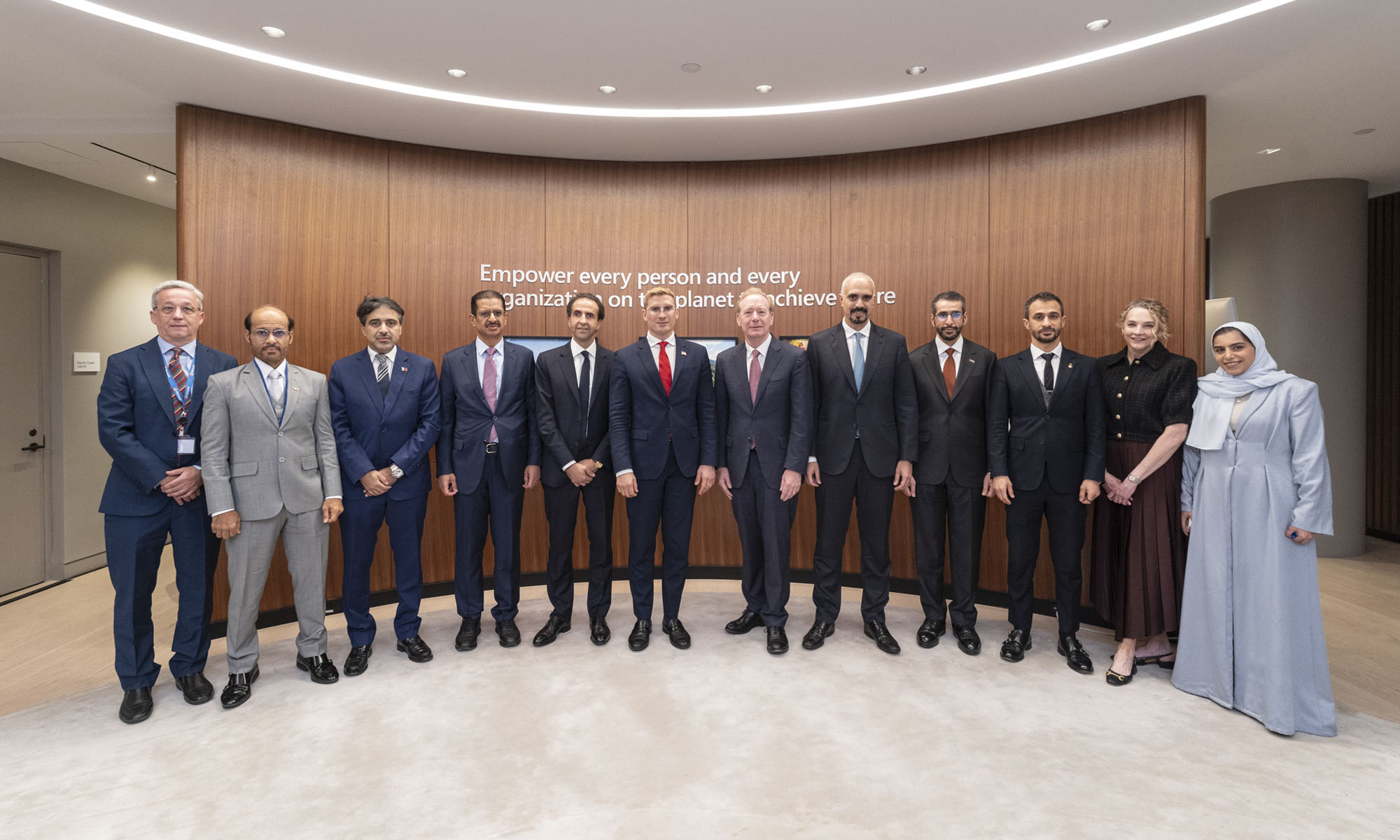
Microsoft is planning more than $10 billion of investment across the UAE, Saudi Arabia, Qatar and Kuwait through 2030, Vice Chair and President Brad Smith told Reuters, calling the spending schedule aggressive. The Iranian conflict that began on February 28 has not persuaded the company to scale back.
“We’re sustaining all the investments we planned to make before this conflict started, and we are in fact adding to them,” Smith said. The $10 billion-plus total does not, however, show how large those additions are.
The investment, which Smith described as part of Microsoft’s continued infrastructure expansion, is aimed at cloud and AI infrastructure and at the company’s growing regional operations. Microsoft also intends to put more than $400 million into subsea and terrestrial connectivity across the Middle East by 2030.
The spending fits the region’s own ambitions too. Gulf governments have been investing heavily in AI infrastructure as part of a push to diversify their economies beyond oil and gas and turn themselves into global technology hubs. Major cloud and AI providers have been drawn in part by the land and relatively low-cost energy on offer.
Microsoft is widening its partnerships with regional AI companies, though not on identical terms. In 2024, it invested $1.5 billion in Abu Dhabi-based G42 for a minority stake, and Smith currently sits on G42’s board. Saudi Arabia’s Humain and Qatar’s Qai are working with Microsoft on selected priority areas, but Smith said the company does not plan to make capital investments in either.
Also Read: Egypt’s Mobile Wallets Are Booming, But Cash Still Has Power
The conflict has added another strand to Microsoft’s work in the region. Since it began, Smith said, the company has supported regional partners with digital resilience assessments, and it is now working with Gulf countries through a digital resilience initiative focused on preparedness and the protection of critical data.
So far, the company has given no country-by-country breakdown of the investment, citing security among other factors. So while the headline figure is public, how Microsoft divides the spending among the four countries is not.

Microsoft Plans $10 Billion-Plus Gulf Expansion Despite Iran Conflict

In Kuwait, Your Surgeon Might Be Operating From Another Country

Qatar Folds 45 State Companies Into A Single Investment Platform

Trip.com Is Betting An AI Agent Will Book Your Next Vacation

Meta’s New $499 Plan Puts A Price On Reaching A Real Person

Apple’s First Folding iPhone Arrives Late To A Shrinking Market
Trip.com Is Betting An AI Agent Will Book Your Next Vacation

Egypt’s Mobile Wallets Are Booming, But Cash Still Has Power

OKX Bets Streaming Perks Can Take Crypto Mainstream Across MENA

Musk’s Boring Company Wants To Dig 150 KM Of Tunnel Under The UAE


-
 News3 weeks ago
Apple’s First Folding iPhone Arrives Late To A Shrinking Market
-
 News2 weeks ago
Trip.com Is Betting An AI Agent Will Book Your Next Vacation
-
 News2 weeks ago
Egypt’s Mobile Wallets Are Booming, But Cash Still Has Power
-
 News2 weeks ago
OKX Bets Streaming Perks Can Take Crypto Mainstream Across MENA