
News
Lucid Motors Launches Gravity Grand Touring In The UAE
The 828-HP SUV is making its debut in one of the Middle East’s most competitive luxury car markets.


Lucid Motors has launched the Gravity Grand Touring in the United Arab Emirates, bringing its first SUV to one of the Middle East’s most competitive luxury car markets. Orders are open through the Lucid Studio in Dubai and the company’s local website.
The all-wheel-drive Gravity Grand Touring delivers 828 horsepower and a projected range of more than 700 kilometers. Prices start at AED 435,855. Buyers can choose five or seven-seat layouts and several interior themes crafted from sustainable materials.

“The arrival of the Lucid Gravity Grand Touring in the UAE marks a significant milestone in our commitment to bringing world-class electric mobility to the region,” said Faisal Sultan, President of Lucid Middle East. “With this groundbreaking SUV, we’re expanding our product offering and providing more choice to customers who demand luxury, performance, and sustainability in one package”.
The Gravity builds on the same engineering principles that shaped Lucid’s Air sedan, combining a large interior with a compact footprint. Its structure allows the space of a full-size SUV without the bulk. The car reaches 100 km/h in 3.5 seconds and is expected to exceed 700 km on a single charge, pending official WLTP certification.
Also Read: RobyCam Stadium To Debut In MENA Under New Broadcast Deal
Buyers can select from six exterior colors and three wheel sizes, from 20 to 23 inches. Interior options draw from California’s landscapes — Mojave, Yosemite, Tahoe, Ojai, and Santa Monica — mixing bio-based fabrics, wood veneers, and premium leather.
Lucid opened its Dubai studio in 2022 and views the UAE as a key growth market. The country’s investment in charging infrastructure and its Net Zero 2050 strategy have drawn major EV makers to test demand for premium electric models.
With the Gravity, Lucid signals its intent to compete not just on technology but on design and finish — a full-size electric SUV built for distance, speed, and comfort in equal measure.


News
Abu Dhabi’s Robot Kitchen Is Serving Up Biryani, Not Burgers
Circus SE wants to put a tiny automated factory inside the buildings where Gulf residents live and work, bypassing part of last-mile delivery.
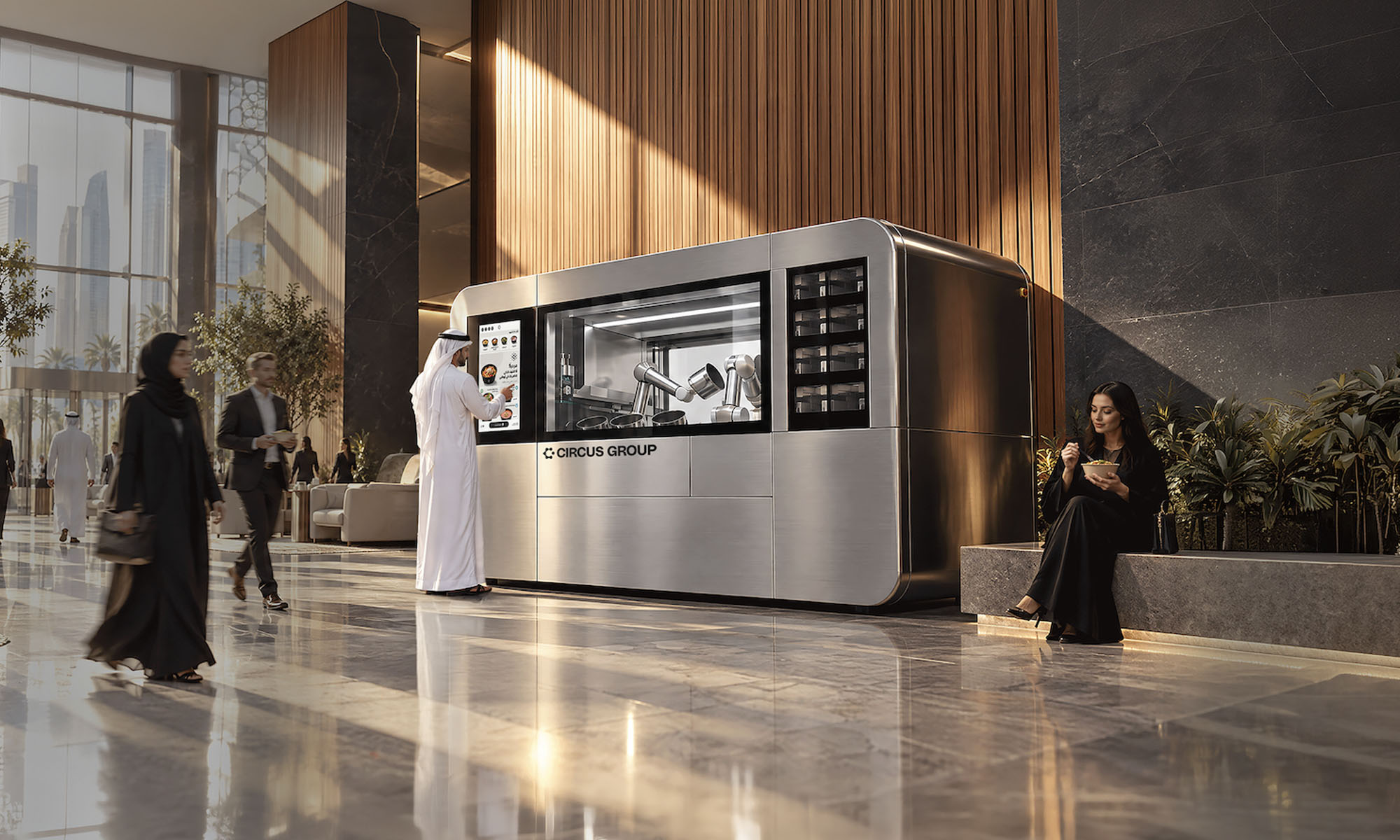
The most telling thing about a new autonomous kitchen now running in Abu Dhabi’s Marina Square is what it won’t cook:
“We don’t do fast food,” says Nikolas Bullwinkel, Founder and CEO of Circus SE. “We’ve actively decided not to build a machine that can only do burgers”.
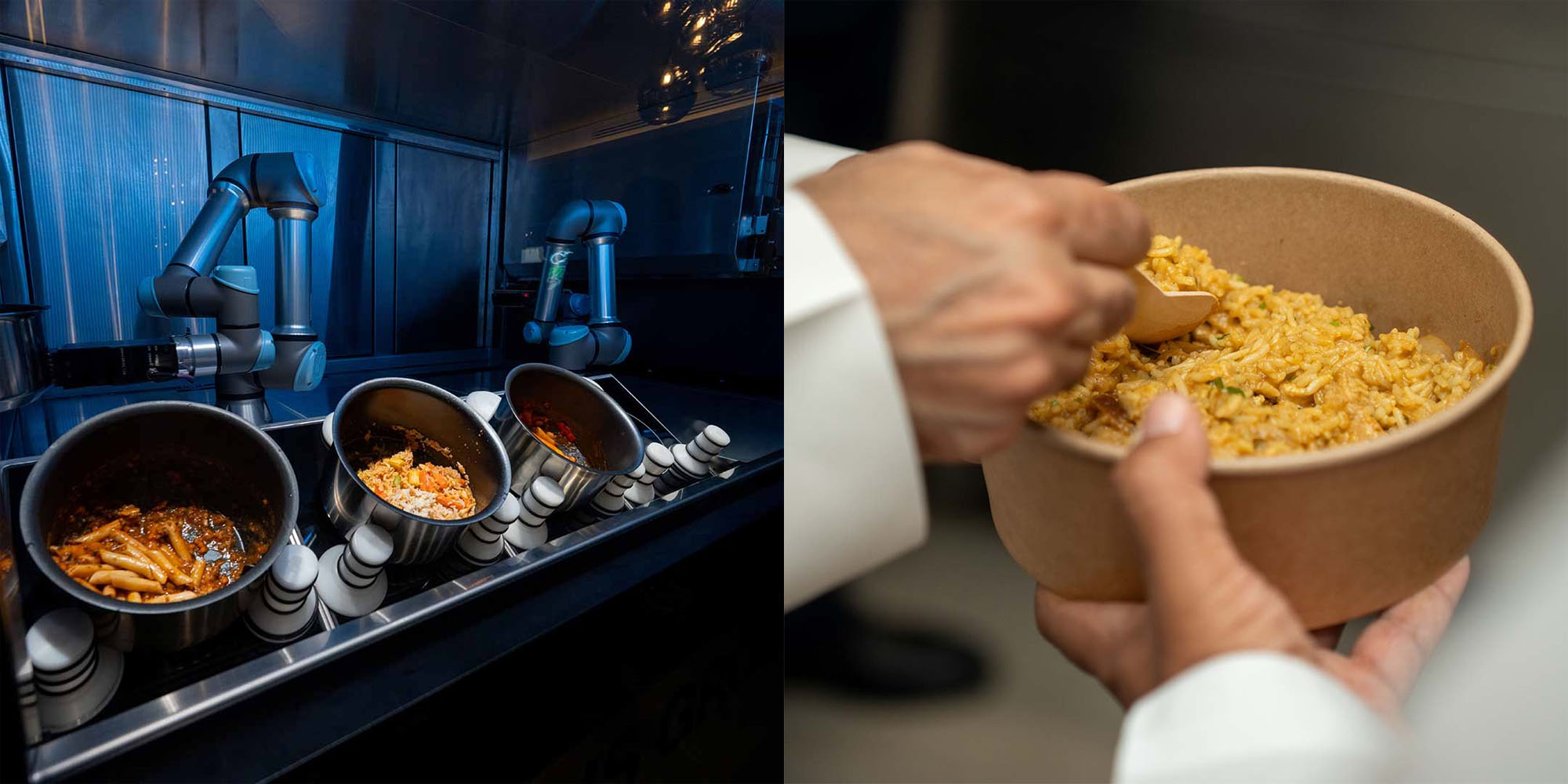
Instead, the CA-1 system is built around pot-based cooking: curries, pastas, soups and rice dishes. After experimenting with highly personalized recipes, Circus deliberately leaned back toward recognizable food. “We’re going with a chicken biryani because you know it,” Bullwinkel says of the AED 40 dish.
The Germany-based robotics and food technology company operates across eight countries, and Abu Dhabi is its first deployment outside Europe. More locations are expected there and in Dubai.
In Germany, its units can be placed in supermarkets, gas stations, airports and hospitals. In the Gulf, Bullwinkel wants them inside residential and office buildings, replacing some of the complexity of last-mile delivery. “We’re basically bringing a very tiny factory a few square meters into your building,” he says. Catering company Royal Prestige supplies the ingredients and knowledge of local tastes.
The CA-1 manages up to 36 refrigerated ingredient silos alongside automated induction cooking, robotic plating and a self-cleaning dishwasher. Two robotic arms move ingredients through the system with minimal human intervention. It can produce up to 120 hot meals an hour, and a meal such as rice and curry can take around three to four minutes.
Also Read: Ooredoo Qatar’s 5G+ Network Is Built For Machines As Much As People
Five cameras and multiple sensors monitor heat, temperature and consistency, an attempt to approximate what a chef perceives. “You can hear something gets burned, you can smell it, you can see it at some point,” Bullwinkel says. CircusOS, the company’s operating system, adjusts recipes in real time.
You might think of the platform as a threat to kitchen staff, but Bullwinkel frames Circus as a way for chefs to develop recipes and distribute them at scale. With that being said, rising labor costs and shortages are also part of his case for automation.

Abu Dhabi’s Robot Kitchen Is Serving Up Biryani, Not Burgers

Sennheiser’s MOMENTUM 5 Series Bets On Batteries You Can Swap

UAE’s 3-Minute University Registration Runs On Government Data

How Online Ads Became A Delivery System For Zero-Click Spyware

Shokz OpenDots 2 Review: Clip-On Audio Gets A Bass-Heavy Makeover

Dubai Says Its Deepfake Detector Needs Just 7 Seconds Of Video

New Disney+ Streaming App Has Officially Launched In The UAE

NEOPAY Wants To Follow Merchants Across Channels And Borders

RØDE’s Low-Profile Studio Arm Is Designed To Stay Out Of Shot

G42’s Inception42 Wants AI To Show Its Work Before Investors Commit


-
 News3 weeks ago
Dubai Says Its Deepfake Detector Needs Just 7 Seconds Of Video
-
 News3 weeks ago
New Disney+ Streaming App Has Officially Launched In The UAE
-
 News3 weeks ago
NEOPAY Wants To Follow Merchants Across Channels And Borders
-
 News4 weeks ago
RØDE’s Low-Profile Studio Arm Is Designed To Stay Out Of Shot