
News
Whish Money Gains Canadian Licenses In Global Expansion Push
The Lebanese fintech takes its first step beyond the MENA region with regulated entry into North America.


Lebanon’s Whish Money has been granted financial services licenses in Canada, its first regulatory approval outside the MENA region and the opening move in a wider expansion plan. The fintech is now seeking licenses in the US, UK, EU, and Australia, aiming to build fully regulated operations in each market rather than rely on agent networks or third-party partners.
The company said the Canadian approval gives it a regulated base for North America and confirms its strategy of direct, in-country licensing — a model it says ensures control over customer experience, compliance, and security. The approach contrasts with many regional money transfer operators that operate under lighter agent models or partner licenses.
“Securing our Canadian license is a monumental step that validates our compliant, customer-focused model and sets the foundation for our international expansion,” explained Toufic Koussa, chairman of the board at Whish Money. “This move is about more than just entering a new market; it’s about strategically connecting high-diaspora communities with reliable financial infrastructure, beginning with North America. We are committed to building a regulated, transparent global ecosystem that truly serves our users”.
Also Read: X To Sell Rare Usernames For Up To Seven Figures
Whish Money, headquartered in Beirut and regulated by the Central Bank of Lebanon, came to prominence during Lebanon’s financial collapse, providing digital payroll, transfer, and bill-payment tools when banks were paralyzed. It now counts more than 1.5 million users and operates through over 1,200 agents in Lebanon and 3,000 points of sale in the UAE, according to company figures.
The firm’s network includes partners such as Visa, Mastercard, Ria, and Terrapay, strengthening its cross-border payment system. With the Canadian licenses secured, Whish Money is positioning itself to shift from a regional payments player to a regulated global platform linking diaspora markets worldwide — a move that underlines the growing push by MENA fintechs to formalize their reach into mature, highly regulated markets.



News
Microsoft Plans $10 Billion-Plus Gulf Expansion Despite Iran Conflict
Security is shaping Microsoft’s approach, from resilience work with governments to what it will say about how the money splits by country.
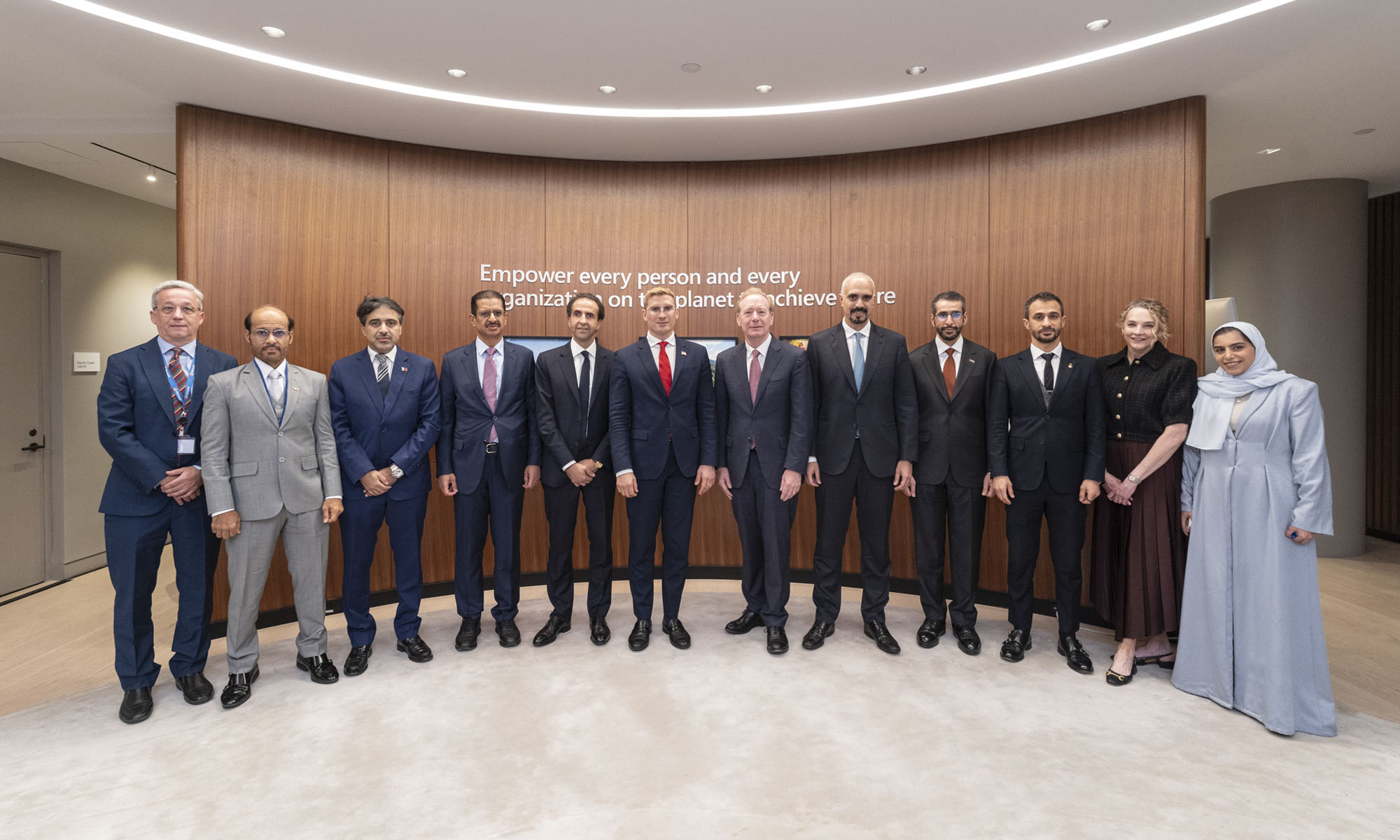
Microsoft is planning more than $10 billion of investment across the UAE, Saudi Arabia, Qatar and Kuwait through 2030, Vice Chair and President Brad Smith told Reuters, calling the spending schedule aggressive. The Iranian conflict that began on February 28 has not persuaded the company to scale back.
“We’re sustaining all the investments we planned to make before this conflict started, and we are in fact adding to them,” Smith said. The $10 billion-plus total does not, however, show how large those additions are.
The investment, which Smith described as part of Microsoft’s continued infrastructure expansion, is aimed at cloud and AI infrastructure and at the company’s growing regional operations. Microsoft also intends to put more than $400 million into subsea and terrestrial connectivity across the Middle East by 2030.
The spending fits the region’s own ambitions too. Gulf governments have been investing heavily in AI infrastructure as part of a push to diversify their economies beyond oil and gas and turn themselves into global technology hubs. Major cloud and AI providers have been drawn in part by the land and relatively low-cost energy on offer.
Microsoft is widening its partnerships with regional AI companies, though not on identical terms. In 2024, it invested $1.5 billion in Abu Dhabi-based G42 for a minority stake, and Smith currently sits on G42’s board. Saudi Arabia’s Humain and Qatar’s Qai are working with Microsoft on selected priority areas, but Smith said the company does not plan to make capital investments in either.
Also Read: Egypt’s Mobile Wallets Are Booming, But Cash Still Has Power
The conflict has added another strand to Microsoft’s work in the region. Since it began, Smith said, the company has supported regional partners with digital resilience assessments, and it is now working with Gulf countries through a digital resilience initiative focused on preparedness and the protection of critical data.
So far, the company has given no country-by-country breakdown of the investment, citing security among other factors. So while the headline figure is public, how Microsoft divides the spending among the four countries is not.

Microsoft Plans $10 Billion-Plus Gulf Expansion Despite Iran Conflict

In Kuwait, Your Surgeon Might Be Operating From Another Country

Qatar Folds 45 State Companies Into A Single Investment Platform

Trip.com Is Betting An AI Agent Will Book Your Next Vacation

Meta’s New $499 Plan Puts A Price On Reaching A Real Person

Apple’s First Folding iPhone Arrives Late To A Shrinking Market
Trip.com Is Betting An AI Agent Will Book Your Next Vacation

Egypt’s Mobile Wallets Are Booming, But Cash Still Has Power

OKX Bets Streaming Perks Can Take Crypto Mainstream Across MENA

Apple’s Latest Product Releases Make The Headlines


-
 News3 weeks ago
Apple’s First Folding iPhone Arrives Late To A Shrinking Market
-
 News2 weeks ago
Trip.com Is Betting An AI Agent Will Book Your Next Vacation
-
 News2 weeks ago
Egypt’s Mobile Wallets Are Booming, But Cash Still Has Power
-
 News2 weeks ago
OKX Bets Streaming Perks Can Take Crypto Mainstream Across MENA