News
HP Invests In Saudi Tech, AI, And Education To Boost Regional Growth
The tech giant is committed to expanding local manufacturing, AI R&D, and education initiatives, supporting the Kingdom’s Vision 2030 program.

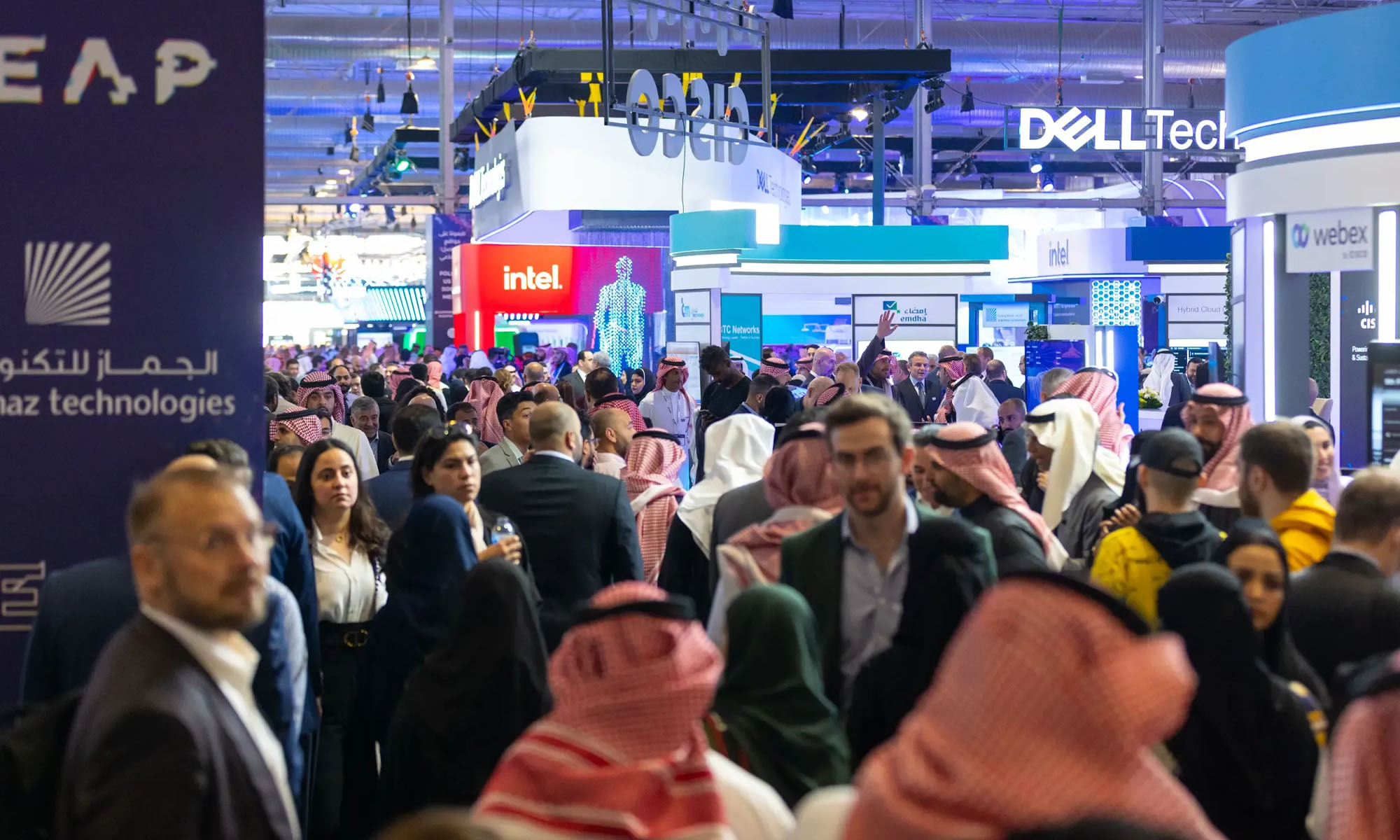
Global tech manufacturer HP is doubling down on its commitment to Saudi Arabia with a series of strategic initiatives known as “Made in Saudi”. The investments align with the Kingdom’s Vision 2030 and focus on technology manufacturing, artificial intelligence, research & development, and education.
One of the company’s key moves is the establishment of a large manufacturing facility in Riyadh, aimed at strengthening Saudi Arabia’s tech industry. Additionally, HP is launching an AI and R&D Center of Excellence (CoE) in Dhahran, designed to give the Kingdom a competitive edge in the global tech market. The center will drive advancements in data analysis, robotic process automation, and smarter decision-making.
HP is also prioritizing education, rolling out multiple programs to help develop the skills of young Saudis. By 2027, the company aims to create thousands of new jobs, giving local talent a vital role in the country’s economic transformation away from the oil sector.
“At HP, we see tremendous potential in the Kingdom of Saudi Arabia and have made strategic AI investments to fuel further growth in the region,” said Enrique Lores, President and CEO of HP Inc. “Building on our trusted brand and the strength of our portfolio, we are committing to manufacturing, education, and research initiatives that drive innovation and help expand HP’s global reach, bringing even greater opportunity to the MEA region”.
Also Read: Dubai’s RTA Unveils Solar-Powered “RailBus” Transit System
A strong network of government partnerships has also helped HP roll out several global education initiatives, such as the HP Cambridge EdTech Fellowship and HP IDEA. So far, the programs have benefited over 600,000 people, and by 2027, they are expected to reach more than 6 million students and teachers in Saudi Arabia.
HP also continues to back the Kingdom’s National Gaming and Esports Strategy (NGES). In June 2024, the company opened the HP Gaming Garage Lab at the Saudi Electronic University, shortly after, HP’s online courses earned micro-degree status from the National eLearning Centre (NeLC) and the Ministry of Communications and Information Technology (MCIT).
HP’s significant investments in Saudi Arabia show a considerable commitment to the Kingdom’s digital transformation, and will surely help to boost the company’s presence across the wider Middle East.



News
Lebanon Ministers Meet Visa Over National Digital Payment Platform
Finance and technology ministers say a comparative study and roadmap will follow before any decision on adopting a model.


Lebanon’s finance and technology ministers met representatives from Visa last week to discuss a proposed unified national digital payment platform for government services, according to a readout from the Ministry of Finance.
The meeting brought together Finance Minister Yassin Jaber, Minister of State for Technology and Artificial Intelligence Kamal Shehadeh, a Visa delegation, and experts from both ministries. Discussion focused on whether Lebanon could establish a single platform through which citizens and institutions would pay taxes, fees, fines and other official transactions electronically, using mobile phones and other digital channels.
The Visa delegation presented examples from countries that have adopted unified government payment platforms, including the United Arab Emirates, Singapore, Estonia and Jordan. According to the readout, the examples were presented as having increased collection rates and expanded financial inclusion.
Talks covered settlement mechanisms, direct transfer to the treasury account, financial reconciliation, risk management, cybersecurity, fees, and an operational model that would involve the private sector. The parties agreed to continue technical and institutional consultations, prepare a comparative study, and develop an implementation roadmap before any decision on adopting a model for Lebanon.
Jaber said the Ministry of Finance had already enabled citizens to pay using credit cards and e-wallets through transfer companies, but described the proposed platform as a further step. He framed the development of electronic payment and collection systems as a priority within the ministry’s modernization plan.
Also Read: Deezer Says AI Tracks Now Make Up 44% Of Uploads
Shehadeh outlined the citizen-facing concept as a single mobile application through which users could settle obligations to ministries, government institutions and other bodies.
“The idea, in short, is that any citizen downloads an application on their mobile phone, through which they can pay all service obligations for all ministries, government institutions, or those owned by the Lebanese state, and others as well, as the platform is not limited only to state institutions,” he said.
Shehadeh added that the platform would not displace banks and money transfer companies that currently provide collection services to the state, calling it complementary to their work.

Lebanon Ministers Meet Visa Over National Digital Payment Platform

AltoVolo Releases Sigma Footage & Sets Date For Demonstrator

Careem Launches Lebanon Aid Drive With WFP

United Arab Emirates To Quit OPEC After 59 Years

YouTube Tests Conversational AI Search Tool

Deezer Says AI Tracks Now Make Up 44% Of Uploads

Yango Ride Introduces In-Chat Trip Planning In ChatGPT

NVIDIA Puts GPT-5.5 Codex In Hands Of 10,000 Staff
YouTube Tests Conversational AI Search Tool