News
Meta Launches Ray-Ban Smart Glasses With Display & Neural Band
The company’s latest wearable adds a display for apps and alerts, paired with a Neural Band wrist controller. Launch is set for September 30 at $799.


Meta has revealed a new pair of Ray-Ban branded smart glasses featuring a built-in display and a wristband controller that reads hand gestures. CEO Mark Zuckerberg announced the device, called Meta Ray-Ban Display, at the Meta Connect 2025 conference, confirming it will go on sale September 30 for $799.
The glasses display apps, alerts and directions directly on the right lens. Control comes via the Meta Neural Band, a wristband using electromyography (EMG) to detect signals between the brain and hand during small movements. The band resembles a screenless Fitbit, offers 18 hours of battery life, and is water resistant.
Meta is pitching the device as its strongest consumer push so far toward hardware that doesn’t depend on Google’s or Apple’s ecosystems. While the company has invested heavily in VR, it now sees AI-powered smart glasses as a more direct way to reach users.
The Ray-Ban Display builds on Meta’s earlier smart glasses, developed with eyewear partner EssilorLuxottica, which have sold in the millions. Like those models, the new glasses include an AI assistant, plus cameras, speakers and microphones. The addition of a display broadens what the glasses can do: users can access Meta apps such as Instagram, WhatsApp and Facebook, see directions and live translations.
Also Read: Fiverr Cuts 250 Jobs In Shift To “AI-First Company” Strategy
Reports of the device surfaced earlier this week after a leak, with media outlets noting its internal codename Hypernova. The product is notably less advanced than Meta’s Orion prototype shown at Connect 2024, which featured full AR lenses and eye tracking. That device remains years away from consumer release.
Zuckerberg argued the advantage lies in being first to ship something consumers can actually buy, even if competitors like Apple and Google are expected to follow with their own smart glasses. Tight integration with existing mobile operating systems could give those rivals a significant edge despite Meta’s early move.




News
Lebanon Ministers Meet Visa Over National Digital Payment Platform
Finance and technology ministers say a comparative study and roadmap will follow before any decision on adopting a model.


Lebanon’s finance and technology ministers met representatives from Visa last week to discuss a proposed unified national digital payment platform for government services, according to a readout from the Ministry of Finance.
The meeting brought together Finance Minister Yassin Jaber, Minister of State for Technology and Artificial Intelligence Kamal Shehadeh, a Visa delegation, and experts from both ministries. Discussion focused on whether Lebanon could establish a single platform through which citizens and institutions would pay taxes, fees, fines and other official transactions electronically, using mobile phones and other digital channels.
The Visa delegation presented examples from countries that have adopted unified government payment platforms, including the United Arab Emirates, Singapore, Estonia and Jordan. According to the readout, the examples were presented as having increased collection rates and expanded financial inclusion.
Talks covered settlement mechanisms, direct transfer to the treasury account, financial reconciliation, risk management, cybersecurity, fees, and an operational model that would involve the private sector. The parties agreed to continue technical and institutional consultations, prepare a comparative study, and develop an implementation roadmap before any decision on adopting a model for Lebanon.
Jaber said the Ministry of Finance had already enabled citizens to pay using credit cards and e-wallets through transfer companies, but described the proposed platform as a further step. He framed the development of electronic payment and collection systems as a priority within the ministry’s modernization plan.
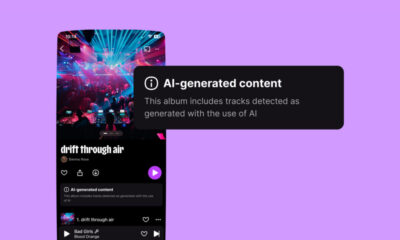
Also Read: Deezer Says AI Tracks Now Make Up 44% Of Uploads
Shehadeh outlined the citizen-facing concept as a single mobile application through which users could settle obligations to ministries, government institutions and other bodies.
“The idea, in short, is that any citizen downloads an application on their mobile phone, through which they can pay all service obligations for all ministries, government institutions, or those owned by the Lebanese state, and others as well, as the platform is not limited only to state institutions,” he said.
Shehadeh added that the platform would not displace banks and money transfer companies that currently provide collection services to the state, calling it complementary to their work.

Lebanon Ministers Meet Visa Over National Digital Payment Platform

AltoVolo Releases Sigma Footage & Sets Date For Demonstrator

Careem Launches Lebanon Aid Drive With WFP

United Arab Emirates To Quit OPEC After 59 Years

YouTube Tests Conversational AI Search Tool

Deezer Says AI Tracks Now Make Up 44% Of Uploads

Yango Ride Introduces In-Chat Trip Planning In ChatGPT

NVIDIA Puts GPT-5.5 Codex In Hands Of 10,000 Staff
YouTube Tests Conversational AI Search Tool