
News
New Tech Allows Faster Breast Cancer Detection In Middle East
Breast cancer is the most common form of the disease for women in the Arab world. But now, AI screening solutions, precision medicine and molecular imaging are fighting back.

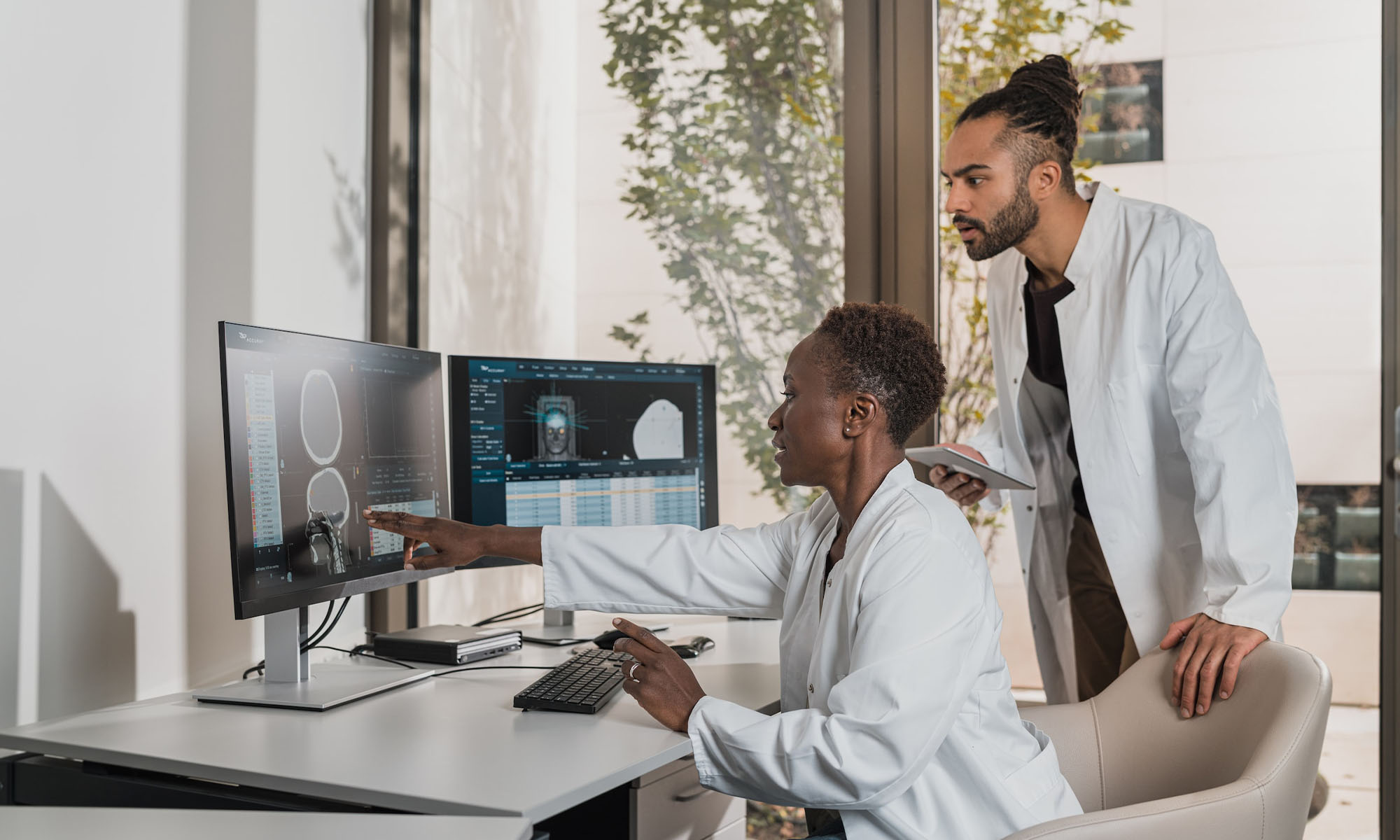
An estimated 2.26 million women worldwide are diagnosed with breast cancer each year. In the Arab world, nearly 20% of all new cases turn out to be breast cancer, making this form of the disease the most common for women in the region.
To tackle this problem, several medical tech companies have developed screening tests to avoid misdiagnosis and late diagnosis. From AI to 3D imaging, each solution strives to improve the screening process, making it more accessible and affordable to Middle Eastern patients.
Early Detection Improvements
Mammogram diagnostics have evolved dramatically over the years. 3D scanning allows oncologists to detect small masses in dense breast tissue much earlier than traditional imaging tools allow.
“Using 3D mammograms, we can see lumps hidden within breasts accurately. By limiting the effect of covering the breast tissue, 3D mammography can make tumor detection easier. Looking into various pictures has helped specialists discover a larger number of cancer growths which was not possible with 2D scans,” says Dr. Timor Al-Shee, Surgical Consultant of Breast Oncology, King Faisal Specialist Hospital and Research Center, Saudi Arabia.
Despite their advancements, 3D mammograms are costly and still risk the possibility of false-positive results. To minimize unnecessary biopsies and increase the accuracy of decisions, researchers from New York University and NYU Abu Dhabi have devised a method to identify cancers using AI.
Devised by a team led by Farah Shamout, Yiqiu Shen and Jamie Oliver, the AI tool offers “radiologist-level accuracy” and promises to improve the consistency and efficiency of ultrasound diagnosis.
So far, the findings have been promising, with AI able to play a complementary role as a decision-making tool during the early stages of screening, aiding clinicians when forming a diagnosis.
Genetic Testing And Molecular Imaging
As well as 3D imaging and AI, genetic testing can also achieve reliable and accurate results. Although most breast cancers are not thought to be caused by inherited mutations, the tests can be helpful for women with a family history of breast cancer.
“The UAE uses the latest technologies to drive innovation in healthcare. We are part of the DoH-led Personalized Precision Medicine Programme for oncology in the region that specifically targets breast cancer. The treatment is based on a patient’s genetic makeup and genetic changes in cancer cells,” says Dr. Fahed Al Marzooqi, COO of G42 Healthcare.
Molecular breast imaging, on the other hand, can be used alongside a mammogram and involves a radioactive tracer with a nuclear medicine scanner. The tracer is injected into a vein, and if cancer cells are detected, the tracer will light up.
As well as helping to diagnose cancers earlier, these new technologies could also be used to tailor precision medicines for treatment. Scientists already know that breast cancer is treatable if spotted early, so it seems that the future of cancer medicines is all about evaluation — from genes and environment to lifestyle factors. Meanwhile, technological advances are beginning to allow oncologists to tailor highly individual treatment plans for patients.




News
Syria Just Got Its First Super App Featuring Built-In Digital Payments
Built by UAE-based Syrian founders with the Ministry of Tourism’s backing, My Syria lands as visitor numbers more than double.

For most of the past decade, paying for anything in Syria with an international card was effectively impossible. Sanctions, a collapsed banking sector, and years of isolation left the country running on cash. That is what makes the launch of My Syria — the country’s first super app — more than a routine product announcement.
Developed by 121 Living, a company founded by four UAE-based Syrian entrepreneurs — Rami Kaiem, Feras Kaiem, Waseem Qudmani, and Kinan Madi — the app launched in Damascus on July 30 under the patronage of Minister of Tourism Mazen Al-Salhani. It bundles hotels, restaurants, transport, attractions, food delivery, and other lifestyle services into a single platform, currently offering eight services with plans to expand to more than 40 verified tourism and hospitality providers across the country.
Although the app already sounds enticing, the headline feature is its built-in payments. My Syria is the first platform in Syria to support cross-border digital payments through Apple Pay, Google Pay, Visa, Mastercard, and American Express — familiar tools for international visitors, and a route into the digital economy for local businesses that have long operated outside it.

The launch rides on a sharp rebound for the troubled country. Syria’s tourism sector recorded 3.52 million visitor arrivals in the first half of 2026, a 111 percent increase over the 1.67 million during the same period in 2025 — a mix of returning expatriates, regional visitors, and international tourists.
Also Read: This UAE Platform Wants To Replace Fashion Photo Shoots With AI
The Ministry of Tourism, which supported and supervised the app’s development, frames the launch as proof of concept for a wider strategy. “Digital transformation is one of the Ministry’s strategic priorities because it enables us to build a more competitive, connected and investment-ready tourism sector,” Al-Salhani said, inviting technology companies “globally, regionally and locally” to explore opportunities across the wider economy.
For 121 Living, this is phase one, with additional services and expanded geographic coverage planned. Whether a super app can flourish in a market still rebuilding its infrastructure is an open question, but for the first time in years, a visitor to Damascus can pay for dinner with their phone.

Syria Just Got Its First Super App Featuring Built-In Digital Payments

Shokz OpenFit Pro Review: Open-Ear Audio Finally Grows Up

This UAE Platform Wants To Replace Fashion Photo Shoots With AI

Nike And Hyperice’s New Slides Heat And Vibrate Your Feet

Samsung’s Fold Goes Wide, And The Whole Galaxy Range Gets Pricier

Meta’s New AI Tool Builds Images From Public Instagram Photos

TikTok Hopes Labels And Literacy Will Tame AI-Generated Content

Tamper With The Recording LED & Meta’s Glasses Kill Camera

YouTube Rolls Out Supervised Children’s Accounts Across MENA

Samsung’s Galaxy Watch 9 And Ultra 2 Specs Leak Ahead Of Unpacked


-

 News2 months ago
LUVED Is A New Curated Preloved Marketplace For The UAE
-
 News2 months ago
Instagram Now Lets You Tune Its Algorithm, But There’s One Big Catch
-

 News2 months ago
Max Fashion Brings AI Virtual Try-Ons To Gulf Online Shoppers
-

 News2 months ago
Deezer’s Free AI Detector Reveals What’s Hiding In Your Playlists