
News
Noble Announces Launch Of FoKus Apollo ANC Headphones
The new model features the world’s first dynamic/planar hybrid driver arrangement, offers 80 hours of playtime, and has a removable boom mic.

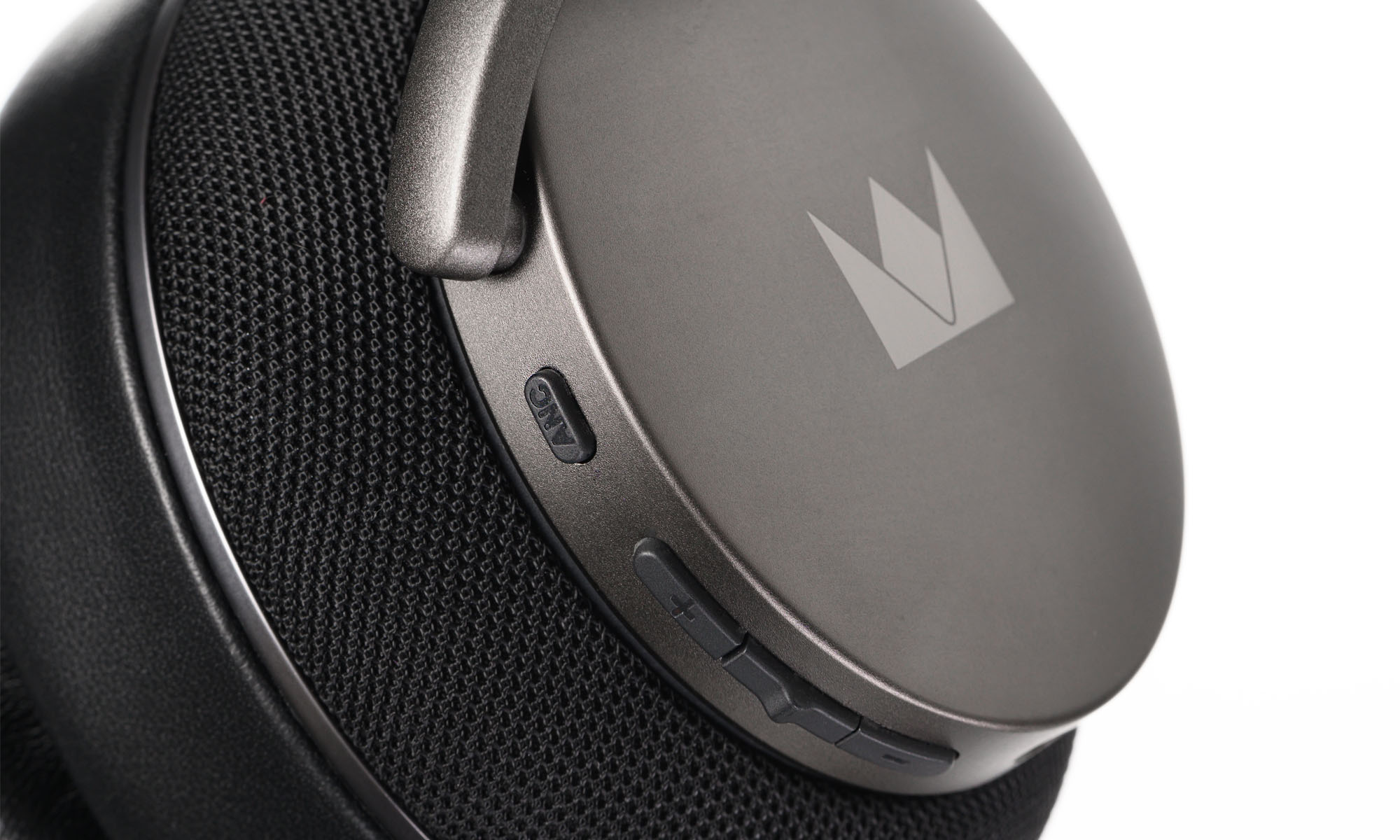
Leading in-ear monitor specialist Noble has stepped into the highly competitive world of wireless over-ear headphones after announcing a new model, the FoKus Apollo.
The premium device is not just a first for Noble but also the world’s only headphone to use a dynamic driver and planar magnetic hybrid speaker arrangement. According to the press release, the unique setup offers audio quality like “no other wireless headphone that has come before, utilizing the accuracy and top-end clarity of planar with the power and body achieved by dynamic drivers”.
Premium Features & Build Quality
The FoKus Apollo features a premium anodized aluminum frame, along with an Alcantara headband and replaceable leather earpads for maximum comfort and sound isolation.
As well as a unique speaker setup, the headphones also feature an integrated ADI chip combined with 3 microphones on each side for noise cancellation of up to -35db. Support for LDAC and aptX HD codecs means that the FoKus Apollo also delivers the best possible wireless audio fidelity.
Users will enjoy up to 80 hours of playtime (or 60 hours with noise cancellation active) while the accompanying FoKus app offers personalized EQ adjustments.
Also Read: Yango Group Unveils Yasmina AI-Enhanced Smart Speakers For UAE
Finally, Noble has bundled a removable boom mic with the FoKus Apollo to turn the headphones into a high-end communication device, along with a 3.5mm audio cable to enable gamers, streamers, and podcasters to benefit from their premium sound.
Specifications
- Driver Configuration: 1 x 40mm Dynamic Driver, 1 x 14.5mm Planar Magnetic Driver
- Communication Format: Bluetooth 5.3
- Frequency Response: 10-40kHz
- Codecs Supported: LDAC, aptX, aptX HD, SBC, AAC
- Continuous Playback: ANC ON: 60 hours. ANC OFF: 80 hours
- Charging Time: <3 hours
- Battery Capacity: 1000mAh
- Accessories Included: EVA carrying case, 3.5mm auxiliary cable, USB-C cable, two-prong airline adapter, 1/4″ adapter, detachable boom mic.
The Noble FoKus Apollo will be available from September 3rd, priced at $649 / £599 / €699.







News
Deezer Says AI Tracks Now Make Up 44% Of Uploads
The streamer says nearly 75,000 AI-made songs now hit its platform each day, even as those tracks account for just 1% to 3% of plays.

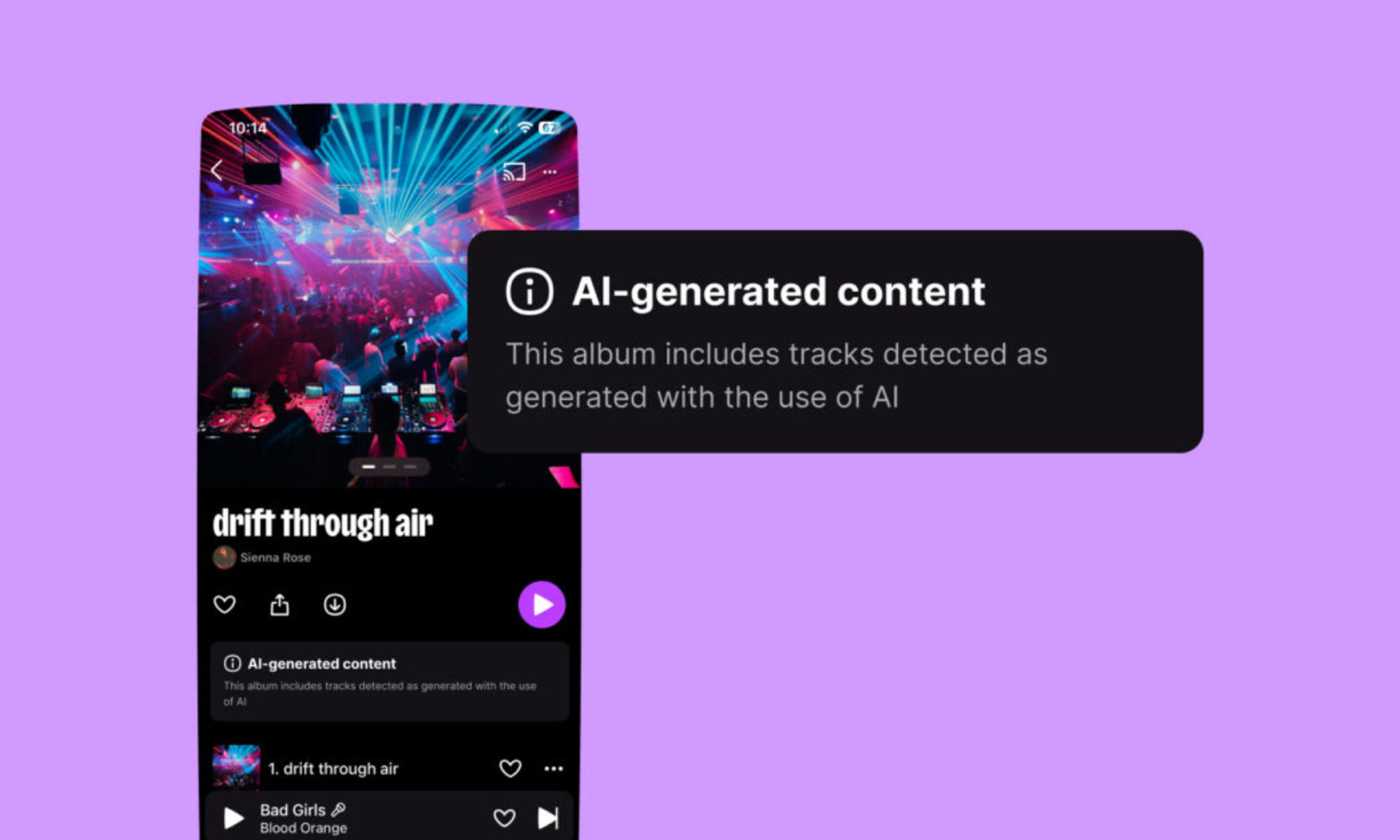
AI-generated music is becoming a real headache for music platforms, according to Deezer. The streaming service says it now receives nearly 75,000 AI-made tracks a day, equal to about 44% of all daily uploads to the platform.
The figure is up sharply from 10,000 daily AI uploads when Deezer launched its detection tool back in January 2025. The jump shows how quickly products such as Suno and Udio have made song creation cheap, fast, and easy to scale.
Despite the volume, Deezer says AI tracks still only account for 1% to 3% of total streams. The music gets few human listeners, but upload pressure is rising. The company says it is also seeing more “fraudulent” submissions.
Its response so far has been practical. Deezer has removed AI-generated songs from recommendation systems, demonetized them, and stopped storing high-resolution versions of those files.
The company also says it’s the only streaming platform currently tagging AI-generated tracks at scale, using that claim to position its moderation tools as a wider industry model.
“AI-generated music is now far from a marginal phenomenon and as daily deliveries keep increasing, we hope the whole music ecosystem will join us in taking action to help safeguard artist’s rights and promote transparency for fans,” CEO Alexis Lanternier said in a blog post.
Deezer has started licensing the detection technology to other companies, turning an internal control system into a commercial product. It says the tool can already identify music created with Suno and Udio, and can be extended to other generators if training data is available.
Also Read: Nano Banana 2 Arrives In MENA For Google Gemini Users
The company is also working on detection methods that would not require training datasets, a harder technical step that could widen coverage as new music models appear.
Rivals are taking mixed approaches. Spotify has rolled out policies aimed at curbing AI music. Apple Music is asking artists and labels to disclose AI-made tracks. Qobuz has begun automated labeling, while Bandcamp has banned AI music outright.
For now, Deezer’s numbers suggest the real issue is not listener demand. It’s supply.

Deezer Says AI Tracks Now Make Up 44% Of Uploads

Yango Ride Introduces In-Chat Trip Planning In ChatGPT

Nano Banana 2 Arrives In MENA For Google Gemini Users

GluCare Rebrands To Metabolic, Dropping Diabetes-Only Identity


