
News
Oura’s Fourth-Generation Ring Becomes Sleeker And Smarter
The Finnish tech company’s fourth-gen Ring offers a sleeker design, improved sensors, and smarter health insights, along with a revamped app.

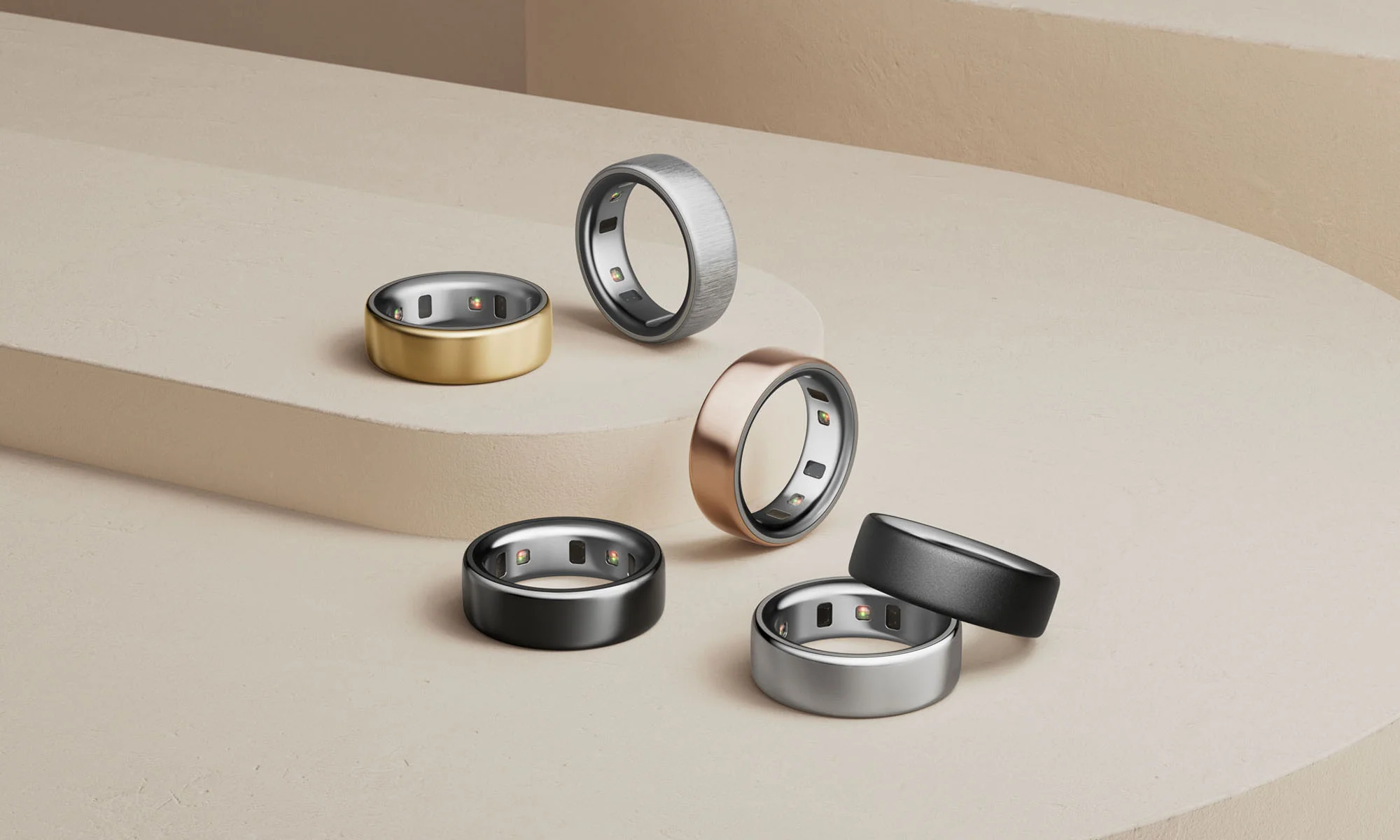
Oura, the Finnish company known for pioneering smart rings, has just revealed its fourth-generation Ring. The updated version features a refined design, improved battery life, and upgraded sensors that provide more detailed health insights.
One of the biggest changes in the Ring 4 are the sensors, which now sit flush with the surface, making it smoother and sleeker. The improvements go beyond just aesthetics, with Oura stating that the Ring 4 now has 18 signal pathways, a significant increase from the 8 found in the previous generation.
The company claims that the updated sensors improve blood oxygen data accuracy by 30%, while gaps in nighttime heart rate are reduced by 31%, and daytime gaps are cut by 7%. Although the exact battery capacity hasn’t been revealed, the sensor optimizations should also allow the Ring 4 to last up to eight days on a single charge.
The Ring 4 is available in 12 sizes (4-15) and six colors: Silver, Brushed Silver, Gold, Rose Gold, Stealth, and Black. All options except Stealth are coated in titanium with a physical vapor deposition finish, while Stealth features a diamond-like carbon coating.
The Ring is also water-resistant up to 100 meters, making it suitable for swimming and sauna use, though not for dedicated deep-sea divers.
In addition to hardware upgrades, Oura is rolling out a redesigned mobile app. The app organizes health data into three sections: Today, Vitals, and My Health. These sections help wearers monitor their daily vital signs and long-term health metrics, such as cardiovascular age and sleep patterns. The app update is available for all users, regardless of which generation of Ring they own.
Also Read: Meta Reveals Orion AR Glasses, Offering A Glimpse Into The Future
As with the previous model, Oura continues to offer some features behind a membership paywall, priced at $5.99 per month or $70 per year. New to the Ring 4 are automatic activity and heart-rate detection for up to 40 different activities. The app will also now provide better insights for menstrual tracking, specifically around fertility windows.
The Oura Ring 4 is available for pre-order starting today, with prices beginning at $349. Shipping is expected to start on October 15, 2024.







News
Abu Dhabi’s Robot Kitchen Is Serving Up Biryani, Not Burgers
Circus SE wants to put a tiny automated factory inside the buildings where Gulf residents live and work, bypassing part of last-mile delivery.

The most telling thing about a new autonomous kitchen now running in Abu Dhabi’s Marina Square is what it won’t cook:
“We don’t do fast food,” says Nikolas Bullwinkel, Founder and CEO of Circus SE. “We’ve actively decided not to build a machine that can only do burgers”.
Instead, the CA-1 system is built around pot-based cooking: curries, pastas, soups and rice dishes. After experimenting with highly personalized recipes, Circus deliberately leaned back toward recognizable food. “We’re going with a chicken biryani because you know it,” Bullwinkel says of the AED 40 dish.
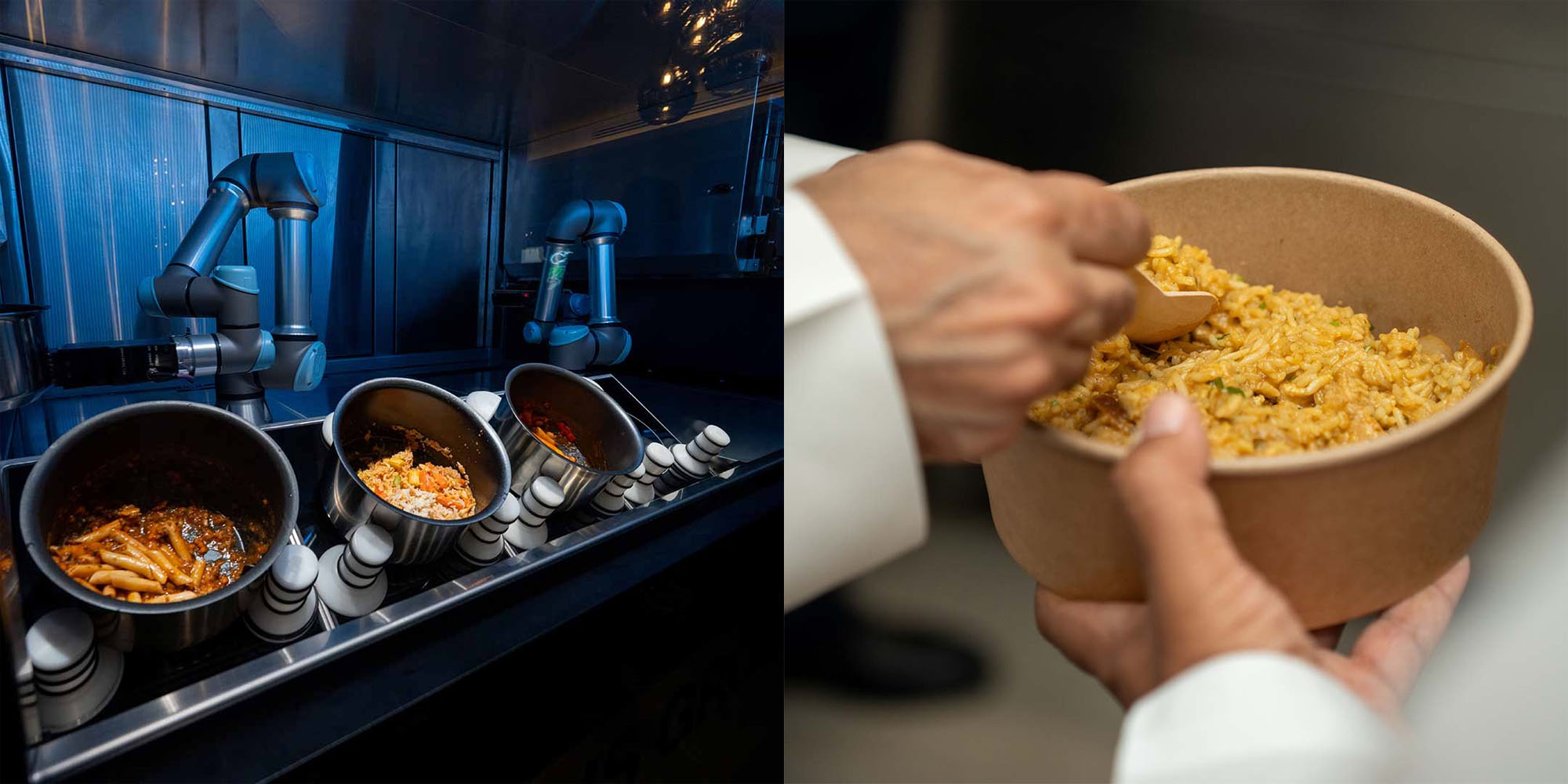
The Germany-based robotics and food technology company operates across eight countries, and Abu Dhabi is its first deployment outside Europe. More locations are expected there and in Dubai.
In Germany, its units can be placed in supermarkets, gas stations, airports and hospitals. In the Gulf, Bullwinkel wants them inside residential and office buildings, replacing some of the complexity of last-mile delivery. “We’re basically bringing a very tiny factory a few square meters into your building,” he says. Catering company Royal Prestige supplies the ingredients and knowledge of local tastes.
The CA-1 manages up to 36 refrigerated ingredient silos alongside automated induction cooking, robotic plating and a self-cleaning dishwasher. Two robotic arms move ingredients through the system with minimal human intervention. It can produce up to 120 hot meals an hour, and a meal such as rice and curry can take around three to four minutes.
Also Read: Ooredoo Qatar’s 5G+ Network Is Built For Machines As Much As People
Five cameras and multiple sensors monitor heat, temperature and consistency, an attempt to approximate what a chef perceives. “You can hear something gets burned, you can smell it, you can see it at some point,” Bullwinkel says. CircusOS, the company’s operating system, adjusts recipes in real time.
You might think of the platform as a threat to kitchen staff, but Bullwinkel frames Circus as a way for chefs to develop recipes and distribute them at scale. With that being said, rising labor costs and shortages are also part of his case for automation.

Abu Dhabi’s Robot Kitchen Is Serving Up Biryani, Not Burgers

Sennheiser’s MOMENTUM 5 Series Bets On Batteries You Can Swap

UAE’s 3-Minute University Registration Runs On Government Data

How Online Ads Became A Delivery System For Zero-Click Spyware

Shokz OpenDots 2 Review: Clip-On Audio Gets A Bass-Heavy Makeover

Dubai Says Its Deepfake Detector Needs Just 7 Seconds Of Video

New Disney+ Streaming App Has Officially Launched In The UAE

NEOPAY Wants To Follow Merchants Across Channels And Borders

RØDE’s Low-Profile Studio Arm Is Designed To Stay Out Of Shot

G42’s Inception42 Wants AI To Show Its Work Before Investors Commit


-
 News3 weeks ago
Dubai Says Its Deepfake Detector Needs Just 7 Seconds Of Video
-
 News2 weeks ago
New Disney+ Streaming App Has Officially Launched In The UAE
-
 News3 weeks ago
NEOPAY Wants To Follow Merchants Across Channels And Borders
-
 News4 weeks ago
RØDE’s Low-Profile Studio Arm Is Designed To Stay Out Of Shot