
News
Password & Crypto-Stealing Trojan Targets UAE Users Via App Stores
The newly-discovered malware, named SparkCat, uses optical recognition to scan for sensitive data inside screenshots and photos.


Researchers at Kaspersky have identified a Trojan lurking in both the App Store and Google Play since at least March 2024. The malware is known as SparkCat, and it uses optical recognition to scan image galleries, stealing sensitive data like crypto wallet recovery phrases and passwords from user’s screenshots and photos.
How SparkCat Spreads
The malware is being distributed through both infected legitimate apps and cleverly disguised lures. These include messaging apps, AI assistants, food delivery services, and crypto-related applications. Some of the compromised apps have made their way into Google Play and the App Store, while others are circulating through unofficial sources.
Who’s At Risk?
Worryingly for our readers, the primary targets appear to be users in the United Arab Emirates. However, various countries in Europe and Asia have also been targeted, as SparkCat’s optical scanning can detect multiple languages.
How It Works
Once installed, SparkCat may request permission to access a user’s photo gallery. From there, it uses an optical character recognition (OCR) module to scan stored images for relevant keywords. If it detects sensitive data — particularly screenshots of recovery phrases for cryptocurrency wallets — it transmits the images to attackers. With this information, hackers can gain full access to a victim’s funds.
Who’s Behind It?
An analysis of the Android version of SparkCat revealed code comments written in Chinese, while the iOS variant included home directory names like qiongwu and quiwengjing. While these clues suggest a Chinese-speaking threat actor, there isn’t enough evidence to link the software to any known cybercriminal groups.
Sergey Puzan, a malware analyst at Kaspersky, noted, “This is the first known case of OCR-based Trojan to sneak into AppStore. In terms of both AppStore and Google Play, at the moment it’s unclear whether applications in these stores were compromised through a supply chain attack or through various other methods. Some apps, like food delivery services, appear legitimate, while others are clearly designed as lures”.
How To Protect Yourself
To minimize the risk of infection, Kaspersky recommends taking the following precautions:
- If you’ve installed an affected app, delete it immediately and avoid using it until a safe update is available.
- Avoid saving screenshots that contain sensitive information, such as crypto wallet recovery phrases. Instead, use secure password managers.
- Consider using reputable cybersecurity solutions like Kaspersky Premium to safeguard against malware threats.
As and mobile malware tactics evolve, staying cautious with app downloads and maintaining strong security practices can go a long way in keeping your data safe.






News
Abu Dhabi’s Robot Kitchen Is Serving Up Biryani, Not Burgers
Circus SE wants to put a tiny automated factory inside the buildings where Gulf residents live and work, bypassing part of last-mile delivery.

The most telling thing about a new autonomous kitchen now running in Abu Dhabi’s Marina Square is what it won’t cook:
“We don’t do fast food,” says Nikolas Bullwinkel, Founder and CEO of Circus SE. “We’ve actively decided not to build a machine that can only do burgers”.
Instead, the CA-1 system is built around pot-based cooking: curries, pastas, soups and rice dishes. After experimenting with highly personalized recipes, Circus deliberately leaned back toward recognizable food. “We’re going with a chicken biryani because you know it,” Bullwinkel says of the AED 40 dish.
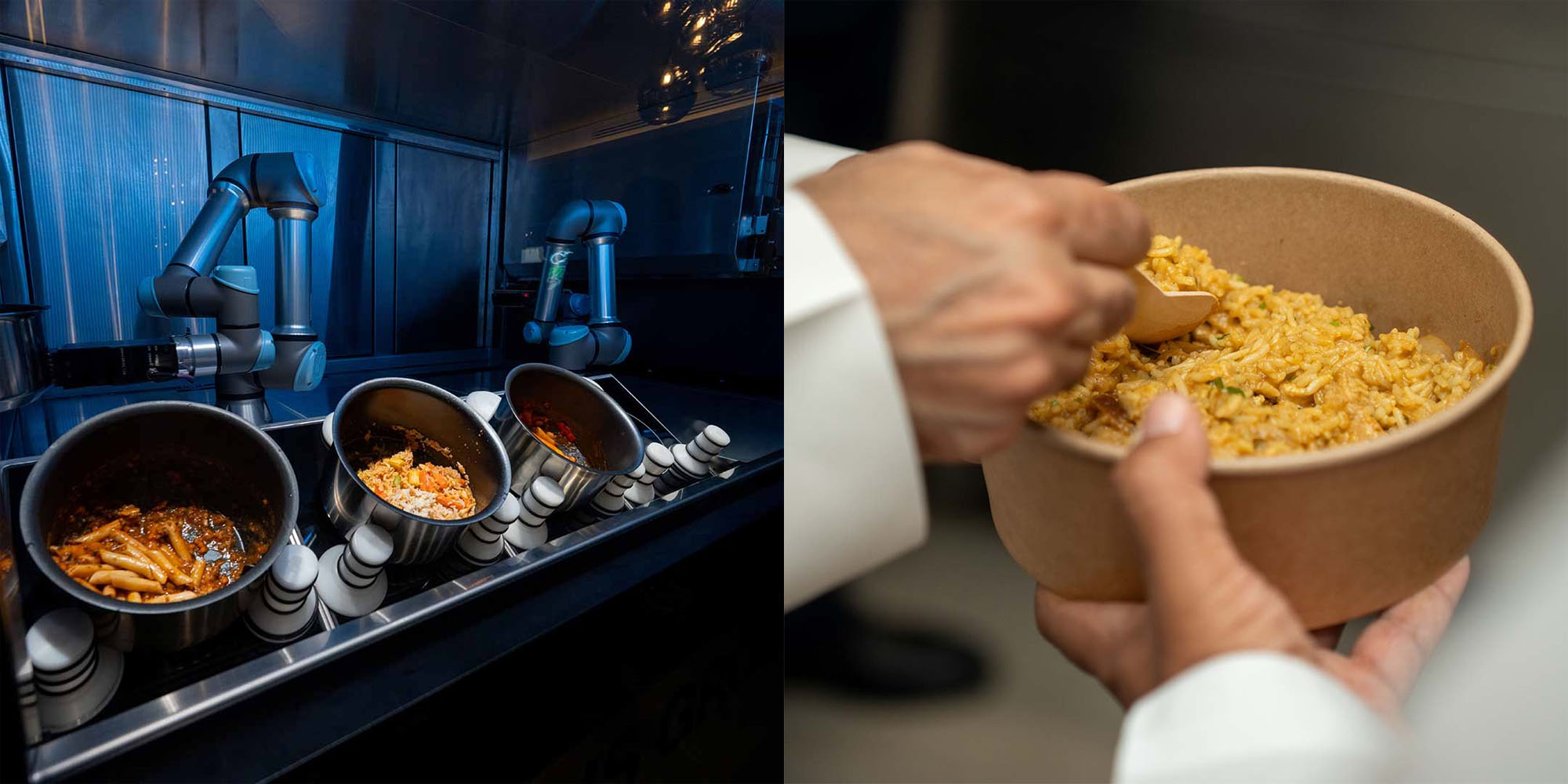
The Germany-based robotics and food technology company operates across eight countries, and Abu Dhabi is its first deployment outside Europe. More locations are expected there and in Dubai.
In Germany, its units can be placed in supermarkets, gas stations, airports and hospitals. In the Gulf, Bullwinkel wants them inside residential and office buildings, replacing some of the complexity of last-mile delivery. “We’re basically bringing a very tiny factory a few square meters into your building,” he says. Catering company Royal Prestige supplies the ingredients and knowledge of local tastes.
The CA-1 manages up to 36 refrigerated ingredient silos alongside automated induction cooking, robotic plating and a self-cleaning dishwasher. Two robotic arms move ingredients through the system with minimal human intervention. It can produce up to 120 hot meals an hour, and a meal such as rice and curry can take around three to four minutes.
Also Read: Ooredoo Qatar’s 5G+ Network Is Built For Machines As Much As People
Five cameras and multiple sensors monitor heat, temperature and consistency, an attempt to approximate what a chef perceives. “You can hear something gets burned, you can smell it, you can see it at some point,” Bullwinkel says. CircusOS, the company’s operating system, adjusts recipes in real time.
You might think of the platform as a threat to kitchen staff, but Bullwinkel frames Circus as a way for chefs to develop recipes and distribute them at scale. With that being said, rising labor costs and shortages are also part of his case for automation.

Abu Dhabi’s Robot Kitchen Is Serving Up Biryani, Not Burgers

Sennheiser’s MOMENTUM 5 Series Bets On Batteries You Can Swap

UAE’s 3-Minute University Registration Runs On Government Data

How Online Ads Became A Delivery System For Zero-Click Spyware

Shokz OpenDots 2 Review: Clip-On Audio Gets A Bass-Heavy Makeover

Dubai Says Its Deepfake Detector Needs Just 7 Seconds Of Video

New Disney+ Streaming App Has Officially Launched In The UAE

NEOPAY Wants To Follow Merchants Across Channels And Borders

RØDE’s Low-Profile Studio Arm Is Designed To Stay Out Of Shot

G42’s Inception42 Wants AI To Show Its Work Before Investors Commit


-
 News3 weeks ago
Dubai Says Its Deepfake Detector Needs Just 7 Seconds Of Video
-
 News3 weeks ago
New Disney+ Streaming App Has Officially Launched In The UAE
-
 News3 weeks ago
NEOPAY Wants To Follow Merchants Across Channels And Borders
-
 News4 weeks ago
RØDE’s Low-Profile Studio Arm Is Designed To Stay Out Of Shot