
News
UAE Residents Rank Third For Password Forgetfulness
A new study by password management company Psono highlights the challenges of managing numerous online accounts.


A recent study by Psono, an open-source password management platform, revealed that UAE residents rank third in the world for password forgetfulness.
To assess this ranking, researchers used a composite score that included metrics such as the average number of accounts per person, the average duration between password resets, and the percentage of individuals searching for password resets.
In addition to its third-place position, the UAE also had the shortest average time between password resets at just 24 months. In contrast, New Zealand topped the rankings with an average of 72 months between resets.
As for the platforms where users often forget their passwords, popular services such as Gmail, Microsoft, Facebook, and Xbox topped the list. For those in the UAE, Gmail was the most commonly forgotten password.
Understanding Password Forgetfulness
The phenomenon known as “password fatigue” plays a significant role in the forgetfulness of UAE residents.
With many online platforms requiring users to create accounts for access, the number of passwords individuals must remember keeps increasing. In the UAE, the average number of accounts per person stands at 55, which means users might need to manage and recall 55 unique passwords.
Also Read: The Top 10 Worst Cyberattacks In The Middle East Revealed
Moreover, the days of simple passwords like “qwerty” or “12345” are rapidly fading. Many companies now impose strict password requirements, mandating at least eight characters, one uppercase letter, one special character, and so on.
This shift towards more complex passwords, combined with the growing number of platforms that require unique passwords, leads to mental overload. As a result, users become more prone to forgetting their login details.
Strategies To Tackle The Issue
One effective solution to the problems mentioned above is to use a password manager. These encrypted containers allow users to store all their passwords securely in one location. This way, instead of remembering numerous passwords, you only need to recall one — the master password for the password manager itself.
Additionally, many users choose single sign-on (SSO) options for website access. This feature enables them to log in using their Gmail, Facebook, Twitter, or Apple accounts, thus removing the need to create individual passwords for each new platform. However, users should exercise caution and evaluate a platform’s safety before linking third-party accounts.







News
Microsoft Plans $10 Billion-Plus Gulf Expansion Despite Iran Conflict
Security is shaping Microsoft’s approach, from resilience work with governments to what it will say about how the money splits by country.
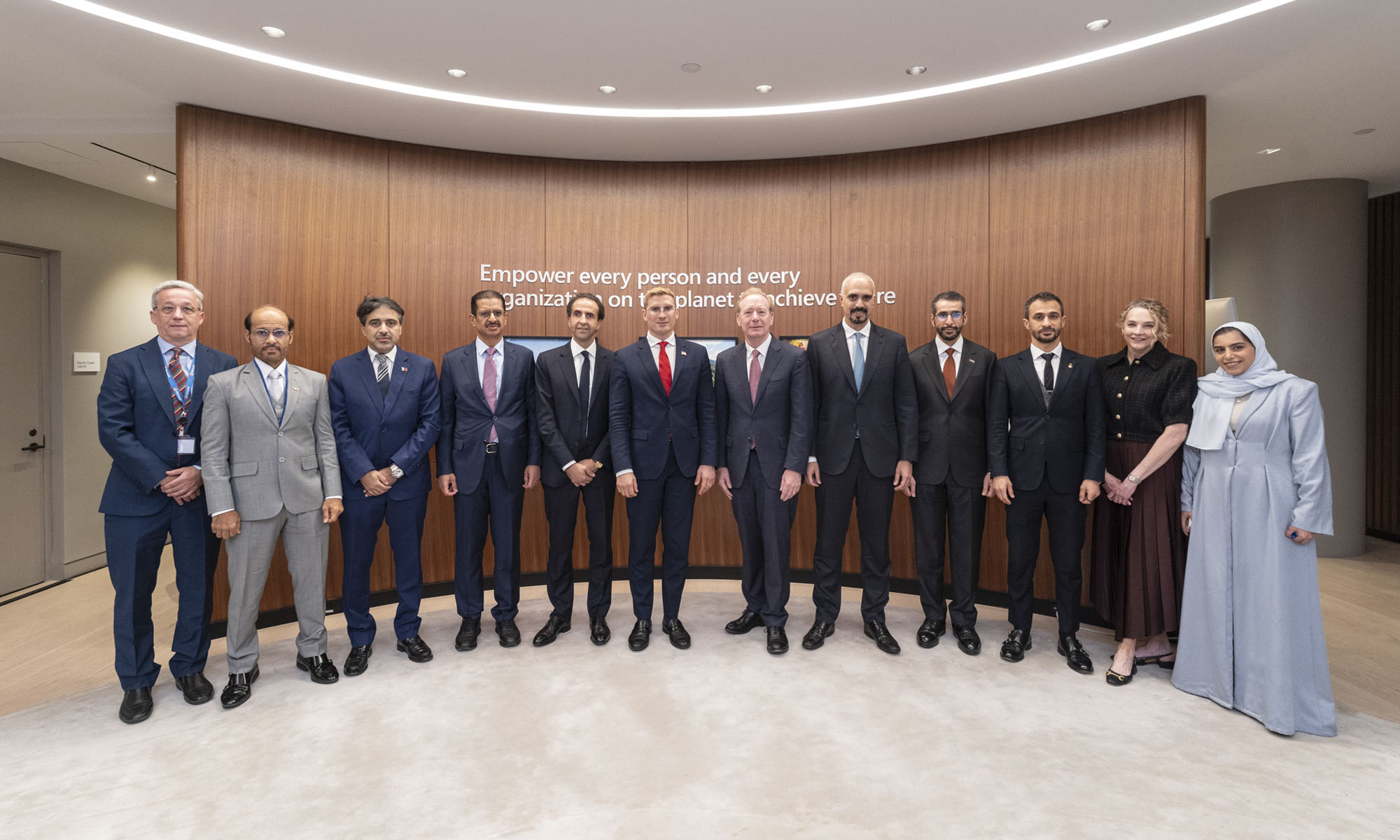
Microsoft is planning more than $10 billion of investment across the UAE, Saudi Arabia, Qatar and Kuwait through 2030, Vice Chair and President Brad Smith told Reuters, calling the spending schedule aggressive. The Iranian conflict that began on February 28 has not persuaded the company to scale back.
“We’re sustaining all the investments we planned to make before this conflict started, and we are in fact adding to them,” Smith said. The $10 billion-plus total does not, however, show how large those additions are.
The investment, which Smith described as part of Microsoft’s continued infrastructure expansion, is aimed at cloud and AI infrastructure and at the company’s growing regional operations. Microsoft also intends to put more than $400 million into subsea and terrestrial connectivity across the Middle East by 2030.
The spending fits the region’s own ambitions too. Gulf governments have been investing heavily in AI infrastructure as part of a push to diversify their economies beyond oil and gas and turn themselves into global technology hubs. Major cloud and AI providers have been drawn in part by the land and relatively low-cost energy on offer.
Microsoft is widening its partnerships with regional AI companies, though not on identical terms. In 2024, it invested $1.5 billion in Abu Dhabi-based G42 for a minority stake, and Smith currently sits on G42’s board. Saudi Arabia’s Humain and Qatar’s Qai are working with Microsoft on selected priority areas, but Smith said the company does not plan to make capital investments in either.
Also Read: Egypt’s Mobile Wallets Are Booming, But Cash Still Has Power
The conflict has added another strand to Microsoft’s work in the region. Since it began, Smith said, the company has supported regional partners with digital resilience assessments, and it is now working with Gulf countries through a digital resilience initiative focused on preparedness and the protection of critical data.
So far, the company has given no country-by-country breakdown of the investment, citing security among other factors. So while the headline figure is public, how Microsoft divides the spending among the four countries is not.

Microsoft Plans $10 Billion-Plus Gulf Expansion Despite Iran Conflict

In Kuwait, Your Surgeon Might Be Operating From Another Country

Qatar Folds 45 State Companies Into A Single Investment Platform

Trip.com Is Betting An AI Agent Will Book Your Next Vacation

Meta’s New $499 Plan Puts A Price On Reaching A Real Person

Apple’s First Folding iPhone Arrives Late To A Shrinking Market
Trip.com Is Betting An AI Agent Will Book Your Next Vacation

Egypt’s Mobile Wallets Are Booming, But Cash Still Has Power

OKX Bets Streaming Perks Can Take Crypto Mainstream Across MENA

Apple’s Latest Product Releases Make The Headlines


-
 News3 weeks ago
Apple’s First Folding iPhone Arrives Late To A Shrinking Market
-
 News2 weeks ago
Trip.com Is Betting An AI Agent Will Book Your Next Vacation
-
 News2 weeks ago
Egypt’s Mobile Wallets Are Booming, But Cash Still Has Power
-
 News2 weeks ago
OKX Bets Streaming Perks Can Take Crypto Mainstream Across MENA