
News
How Motorsports Teams Use Big Data To Drive Innovation On The Racetrack
Discover how the best motorsports teams in the world use the vast volumes of data they generate to achieve an edge over the competition.


Motorsports — some may not view them as real sports, but nowhere else can you see man and machine working together in perfect harmony, pushing to the absolute limit of performance. While the best racing drivers in the world are battling it out on track, there’s another race going on behind the scenes: a battle of minds with some of the brightest engineers in the world working to extract every ounce of performance out of their machinery. Motorsports are as much a competition for the engineers and crew as it is for the drivers themselves.
At their very core, motorsports are all about finding an advantage over your competitors, however large or small, because every little bit counts. And the best way to gain a competitive edge over your rivals is to use data — tons and tons of it.
Using Data To Unlock On-Track Performance
Racing teams generate and analyze huge volumes of data per race; we’re talking tens of terabytes measuring every single aspect — even the most minute — of not only the vehicle’s performance but also the driver’s.
There are many different categories and classes of motorsports, ranging from road cars to purpose-built racing cars like in Formula One or bikes in the case of MotoGP. These two motorsports have the most popular championships in the world, but for simplicity’s sake, we’re going to stick with Formula One (F1), described as the very pinnacle of motorsports.
Teams collect data for three main reasons: to measure the vehicle’s performance on track, to measure the driver’s performance, and to help the engineers identify and understand key areas of improvement on the car.
F1 cars have thousands of sensors monitoring parameters such as tire temperature, brake temperatures, engine performance, component wear, and so on in real time (known as telemetry data). These teams can also use the data gathered, along with feedback they receive from the drivers, to make minor real-time adjustments to the car during the race, such as engine power settings. This telemetry, along with the weather information the teams gather, can also enable them to devise effective race strategies to decide exactly when to pit and change tires and what compound of tires to switch to, especially when weather conditions are unpredictable.
If this wasn’t impressive enough, the race engineers can also view the driver’s exact inputs: when they’re braking, accelerating, and turning into a corner, alongside a host of other information like heart rate and other biometric data. The engineers can then give them feedback on what is working and what isn’t, enabling the driver to adjust their approach to extract even more performance out of themselves and the car. It’s safe to say that in modern F1, even the cars are data-driven.
Data-Driven Development In The Factory
The petabytes of data gathered by racing teams on the track are then analyzed after the race to determine what areas of the car need improvement. Since F1 greatly restricts on-track testing, teams are forced to rely on incredibly complex simulations to develop the car. The more accurate data they use, the more accurate these simulations.
This data is also used by the team to develop F1 car simulators that are used by the drivers. These simulator rigs are much more accurate, complex, and unsurprisingly expensive compared to consumer simulator rigs. This simulator testing plays a major role in not only helping the engineers understand the characteristics of the car without having to perform on-track testing, but also in helping them set up the car for a race. Each track is different, and the car setup varies depending on the track and weather conditions during the race weekend.
Data Is King
In motorsports, every little advantage can make a difference. And with F1’s recently introduced budget cap, teams can no longer dump huge amounts of money to fix any issues with their cars, meaning data is now the most valuable currency in F1.
Big data analytics will only continue to play an increasingly prominent role in motorsports as has been the case since the early 80s. The most competitive teams are those that know how to effectively use the vast amounts of data at their disposal to drive innovation on the racetrack.




News
Microsoft Plans $10 Billion-Plus Gulf Expansion Despite Iran Conflict
Security is shaping Microsoft’s approach, from resilience work with governments to what it will say about how the money splits by country.

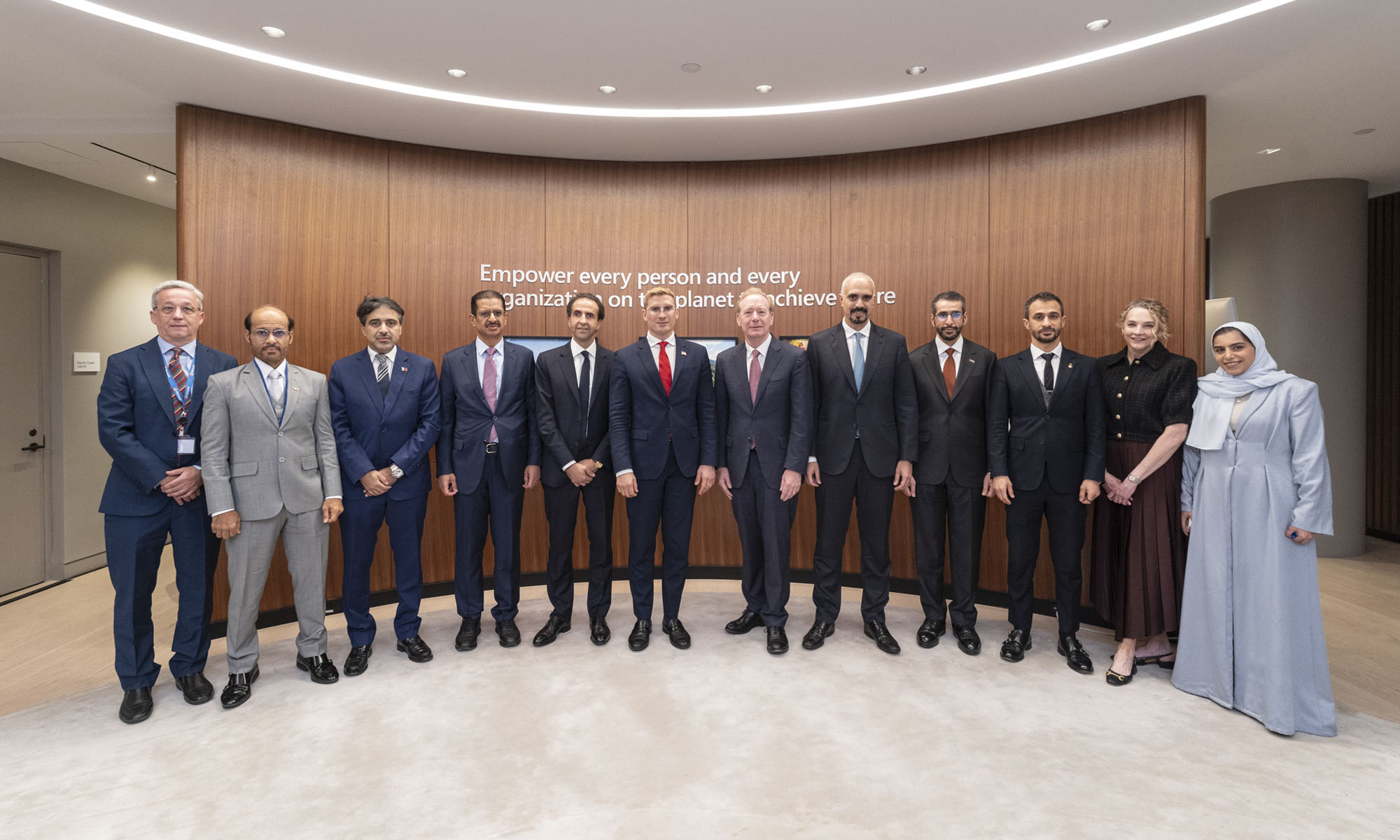
Microsoft is planning more than $10 billion of investment across the UAE, Saudi Arabia, Qatar and Kuwait through 2030, Vice Chair and President Brad Smith told Reuters, calling the spending schedule aggressive. The Iranian conflict that began on February 28 has not persuaded the company to scale back.
“We’re sustaining all the investments we planned to make before this conflict started, and we are in fact adding to them,” Smith said. The $10 billion-plus total does not, however, show how large those additions are.
The investment, which Smith described as part of Microsoft’s continued infrastructure expansion, is aimed at cloud and AI infrastructure and at the company’s growing regional operations. Microsoft also intends to put more than $400 million into subsea and terrestrial connectivity across the Middle East by 2030.
The spending fits the region’s own ambitions too. Gulf governments have been investing heavily in AI infrastructure as part of a push to diversify their economies beyond oil and gas and turn themselves into global technology hubs. Major cloud and AI providers have been drawn in part by the land and relatively low-cost energy on offer.
Microsoft is widening its partnerships with regional AI companies, though not on identical terms. In 2024, it invested $1.5 billion in Abu Dhabi-based G42 for a minority stake, and Smith currently sits on G42’s board. Saudi Arabia’s Humain and Qatar’s Qai are working with Microsoft on selected priority areas, but Smith said the company does not plan to make capital investments in either.
Also Read: Egypt’s Mobile Wallets Are Booming, But Cash Still Has Power
The conflict has added another strand to Microsoft’s work in the region. Since it began, Smith said, the company has supported regional partners with digital resilience assessments, and it is now working with Gulf countries through a digital resilience initiative focused on preparedness and the protection of critical data.
So far, the company has given no country-by-country breakdown of the investment, citing security among other factors. So while the headline figure is public, how Microsoft divides the spending among the four countries is not.

Microsoft Plans $10 Billion-Plus Gulf Expansion Despite Iran Conflict

In Kuwait, Your Surgeon Might Be Operating From Another Country

Qatar Folds 45 State Companies Into A Single Investment Platform

Trip.com Is Betting An AI Agent Will Book Your Next Vacation

Meta’s New $499 Plan Puts A Price On Reaching A Real Person

Apple’s First Folding iPhone Arrives Late To A Shrinking Market
Trip.com Is Betting An AI Agent Will Book Your Next Vacation

Egypt’s Mobile Wallets Are Booming, But Cash Still Has Power

OKX Bets Streaming Perks Can Take Crypto Mainstream Across MENA

Apple’s Latest Product Releases Make The Headlines


-
 News3 weeks ago
Apple’s First Folding iPhone Arrives Late To A Shrinking Market
-
 News2 weeks ago
Trip.com Is Betting An AI Agent Will Book Your Next Vacation
-
 News2 weeks ago
Egypt’s Mobile Wallets Are Booming, But Cash Still Has Power
-
 News2 weeks ago
OKX Bets Streaming Perks Can Take Crypto Mainstream Across MENA