
News
RØDE Adds Direct iPhone Pairing To Wireless GO And Pro Mics
Firmware update lets Wireless GO (Gen 3) and Wireless PRO mics link to iPhones via Bluetooth without the need for a separate receiver.


RØDE has pushed a free firmware update to its Wireless GO (Gen 3) and Wireless PRO microphones, enabling direct Bluetooth pairing with iPhones and meaning that receiver units are no longer required.
The feature, branded Direct Connect, works through the RØDE Capture app. Once paired, transmitters connect straight to an iOS device, cutting cables and extra hardware from a typical mobile rig.
“We’ve already witnessed the incredible impact Direct Connect has had on creators using the Wireless Micro,” said Damien Wilson, CEO of RØDE. “Since launch, feedback has been overwhelmingly positive, allowing creators more flexibility and versatility than ever before. It’s our duty as pioneers of the ultra-compact wireless microphone category to extend true wireless freedom to as many creators as possible. With Direct Connect now available on more RØDE systems, we’re delivering exactly that”.
Inside the app, users can record in merged mode — both transmitters combined into a single stereo file — or split mode, with each mic isolated on its own channel. Output gain is adjustable in-app. The pitch is simple: fewer components, faster setup, same audio standard.
The timing seems to be deliberate, as the Wireless GO (Gen 3) now sells for $199 after a 33% price cut, and the Wireless PRO has dropped 25% to $299. The latest firmware update can be downloaded completely free.
Wireless GO (Gen 3) runs on RØDE’s Series IV 2.4GHz digital transmission and supports 32-bit float on-board recording, GainAssist auto-leveling and 32GB of internal storage. Wireless PRO layers on timecode sync for post-production alignment and a 260-meter line-of-sight range, aimed at filmmakers who need more control without scaling up to bulkier systems.
Also Read: Dubai-Based Smart Bricks Secures $5M To Automate Property Deals
Both models sit within RØDE’s broader Series IV ecosystem, including the RØDECaster Pro II, RØDECaster Duo and RØDECaster Video.
Across the Gulf region, where smartphone-led production underpins everything from startup marketing to government-backed media ventures, lighter setups are becoming the norm. Direct-to-phone pairing narrows the gap between entry-level creators and professional workflows even further. RØDE is betting that fewer pieces of kit in creators’ bags will prove popular.
Direct Connect is live now through a firmware update in the RØDE Capture app.



News
Abu Dhabi’s Robot Kitchen Is Serving Up Biryani, Not Burgers
Circus SE wants to put a tiny automated factory inside the buildings where Gulf residents live and work, bypassing part of last-mile delivery.

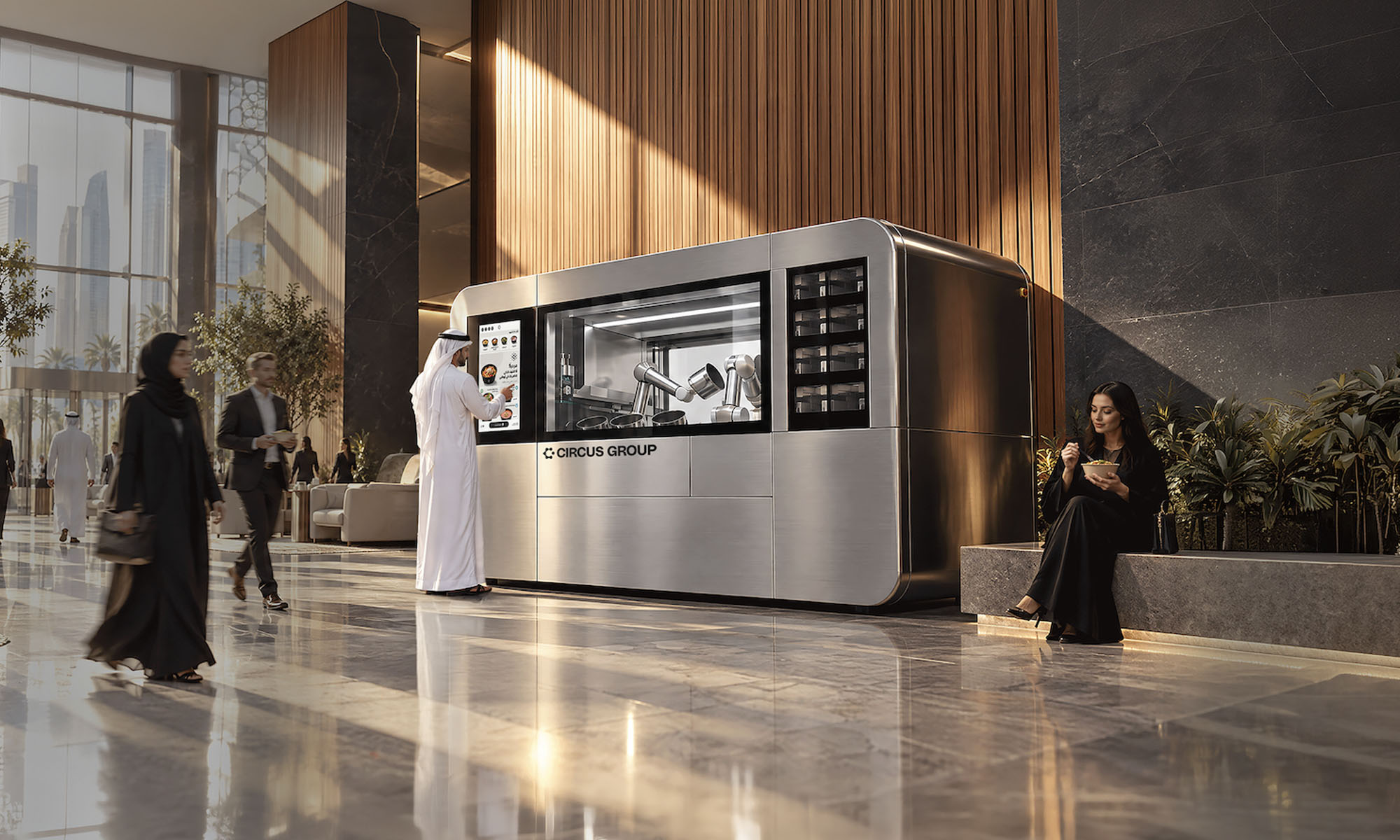
The most telling thing about a new autonomous kitchen now running in Abu Dhabi’s Marina Square is what it won’t cook:
“We don’t do fast food,” says Nikolas Bullwinkel, Founder and CEO of Circus SE. “We’ve actively decided not to build a machine that can only do burgers”.
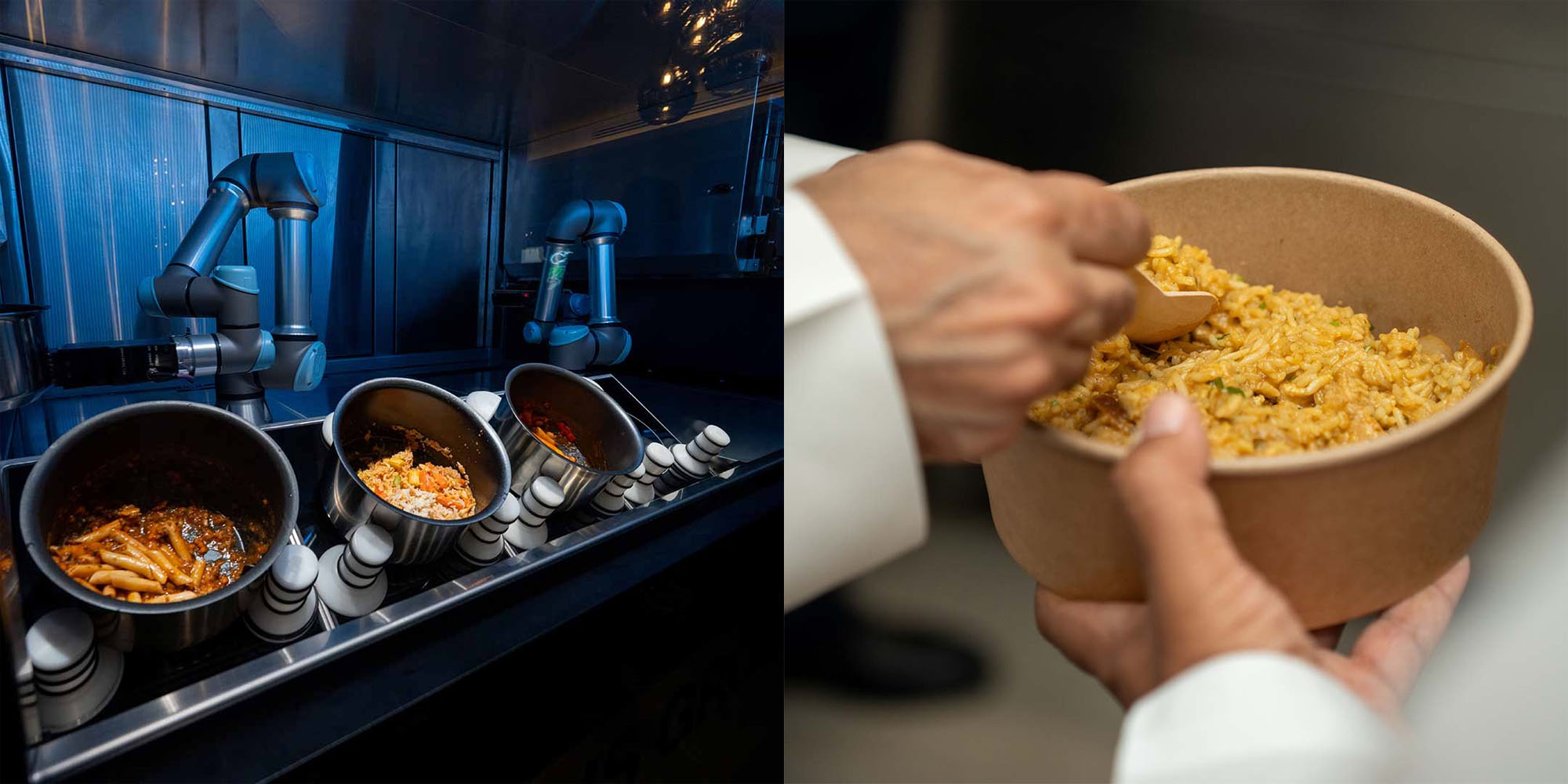
Instead, the CA-1 system is built around pot-based cooking: curries, pastas, soups and rice dishes. After experimenting with highly personalized recipes, Circus deliberately leaned back toward recognizable food. “We’re going with a chicken biryani because you know it,” Bullwinkel says of the AED 40 dish.
The Germany-based robotics and food technology company operates across eight countries, and Abu Dhabi is its first deployment outside Europe. More locations are expected there and in Dubai.
In Germany, its units can be placed in supermarkets, gas stations, airports and hospitals. In the Gulf, Bullwinkel wants them inside residential and office buildings, replacing some of the complexity of last-mile delivery. “We’re basically bringing a very tiny factory a few square meters into your building,” he says. Catering company Royal Prestige supplies the ingredients and knowledge of local tastes.
The CA-1 manages up to 36 refrigerated ingredient silos alongside automated induction cooking, robotic plating and a self-cleaning dishwasher. Two robotic arms move ingredients through the system with minimal human intervention. It can produce up to 120 hot meals an hour, and a meal such as rice and curry can take around three to four minutes.
Also Read: Ooredoo Qatar’s 5G+ Network Is Built For Machines As Much As People
Five cameras and multiple sensors monitor heat, temperature and consistency, an attempt to approximate what a chef perceives. “You can hear something gets burned, you can smell it, you can see it at some point,” Bullwinkel says. CircusOS, the company’s operating system, adjusts recipes in real time.
You might think of the platform as a threat to kitchen staff, but Bullwinkel frames Circus as a way for chefs to develop recipes and distribute them at scale. With that being said, rising labor costs and shortages are also part of his case for automation.

Abu Dhabi’s Robot Kitchen Is Serving Up Biryani, Not Burgers

Sennheiser’s MOMENTUM 5 Series Bets On Batteries You Can Swap

UAE’s 3-Minute University Registration Runs On Government Data

How Online Ads Became A Delivery System For Zero-Click Spyware

Shokz OpenDots 2 Review: Clip-On Audio Gets A Bass-Heavy Makeover

Dubai Says Its Deepfake Detector Needs Just 7 Seconds Of Video

New Disney+ Streaming App Has Officially Launched In The UAE

NEOPAY Wants To Follow Merchants Across Channels And Borders

RØDE’s Low-Profile Studio Arm Is Designed To Stay Out Of Shot

G42’s Inception42 Wants AI To Show Its Work Before Investors Commit


-
 News3 weeks ago
Dubai Says Its Deepfake Detector Needs Just 7 Seconds Of Video
-
 News2 weeks ago
New Disney+ Streaming App Has Officially Launched In The UAE
-
 News3 weeks ago
NEOPAY Wants To Follow Merchants Across Channels And Borders
-
 News3 weeks ago
RØDE’s Low-Profile Studio Arm Is Designed To Stay Out Of Shot