
News
Telecom Provider du Launches 5G+ Network At Sharjah Airport
Sharjah becomes the United Arab Emirate’s first airport with full 5G+ coverage, advancing the country’s smart infrastructure push.


Sharjah International Airport has switched on a next-generation 5G+ network in partnership with telecom provider du, becoming the first airport in the UAE to run the technology across its facilities. The announcement was made at GITEX Global 2025, signaling a step forward in the emirate’s plan to modernize aviation operations and strengthen national connectivity standards.
The network delivers high-speed, low-latency coverage through every terminal, enabling real-time data, cloud-based operations, and digital passenger services such as automated check-ins and interactive wayfinding. Designed for dense environments, the system offers stable performance even in areas that typically face signal drop-offs. It also lays the groundwork for upcoming applications like IoT-enabled logistics, predictive maintenance tools, and immersive travel experiences.
H.E. Ali Salem Al Midfa, Chairman of Sharjah Airport Authority, said the collaboration “represents an important step toward consolidating the airport’s position as a state-of-the-art hub for adopting the latest technologies,” in line with Sharjah’s wider digital transformation agenda.
Fahad Al Hassawi, CEO of du, added: “The achievement at Sharjah International Airport exemplifies our commitment to pushing the boundaries of what’s possible in telecommunications technology. We aim to enable a transformed travel experience while setting new global standards for airport network performance by deploying the UAE’s most advanced 5G+ indoor system. Our partnership with Sharjah Airport Authority highlights how strategic collaboration can drive innovation that benefits our customers, supports national digital transformation goals, and positions the UAE at the forefront of smart infrastructure development”.
Also Read: UAE Deploys First Fleet Of Driverless Electric Cargo Trucks
Du built the energy-efficient system using advanced network design and optimization tools, ensuring uniform connectivity while reducing power use. It supports ultra-low latency links essential for next-wave services such as augmented and virtual reality, and integrates with the airport’s smart management platforms.
The rollout supports the UAE’s national vision for smart cities and sustainable digital infrastructure. It positions Sharjah alongside other regional innovation hubs investing in connected transport, setting a benchmark for how telecom infrastructure can drive operational efficiency and enhance passenger experience.




News
Microsoft Plans $10 Billion-Plus Gulf Expansion Despite Iran Conflict
Security is shaping Microsoft’s approach, from resilience work with governments to what it will say about how the money splits by country.
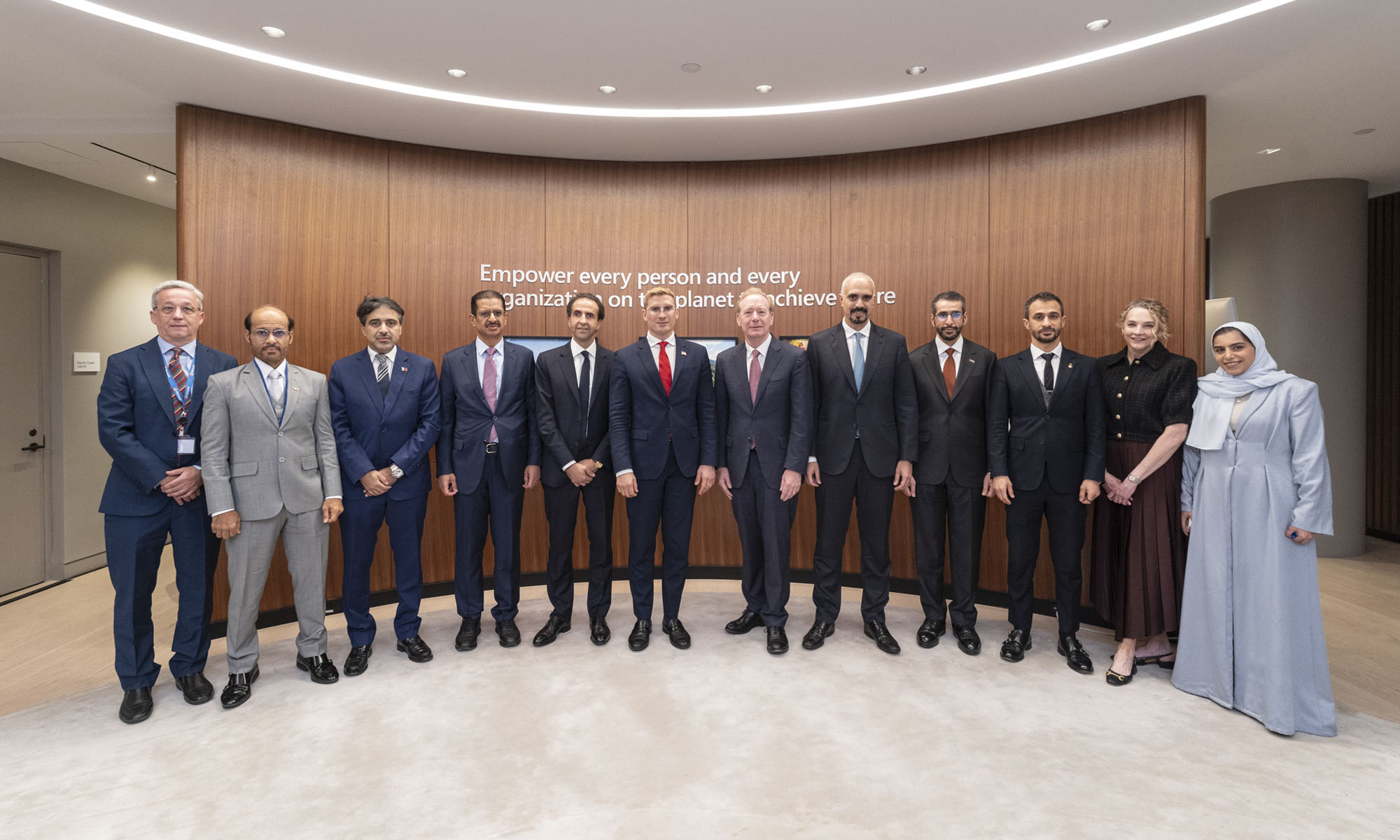
Microsoft is planning more than $10 billion of investment across the UAE, Saudi Arabia, Qatar and Kuwait through 2030, Vice Chair and President Brad Smith told Reuters, calling the spending schedule aggressive. The Iranian conflict that began on February 28 has not persuaded the company to scale back.
“We’re sustaining all the investments we planned to make before this conflict started, and we are in fact adding to them,” Smith said. The $10 billion-plus total does not, however, show how large those additions are.
The investment, which Smith described as part of Microsoft’s continued infrastructure expansion, is aimed at cloud and AI infrastructure and at the company’s growing regional operations. Microsoft also intends to put more than $400 million into subsea and terrestrial connectivity across the Middle East by 2030.
The spending fits the region’s own ambitions too. Gulf governments have been investing heavily in AI infrastructure as part of a push to diversify their economies beyond oil and gas and turn themselves into global technology hubs. Major cloud and AI providers have been drawn in part by the land and relatively low-cost energy on offer.
Microsoft is widening its partnerships with regional AI companies, though not on identical terms. In 2024, it invested $1.5 billion in Abu Dhabi-based G42 for a minority stake, and Smith currently sits on G42’s board. Saudi Arabia’s Humain and Qatar’s Qai are working with Microsoft on selected priority areas, but Smith said the company does not plan to make capital investments in either.
Also Read: Egypt’s Mobile Wallets Are Booming, But Cash Still Has Power
The conflict has added another strand to Microsoft’s work in the region. Since it began, Smith said, the company has supported regional partners with digital resilience assessments, and it is now working with Gulf countries through a digital resilience initiative focused on preparedness and the protection of critical data.
So far, the company has given no country-by-country breakdown of the investment, citing security among other factors. So while the headline figure is public, how Microsoft divides the spending among the four countries is not.

Microsoft Plans $10 Billion-Plus Gulf Expansion Despite Iran Conflict

In Kuwait, Your Surgeon Might Be Operating From Another Country

Qatar Folds 45 State Companies Into A Single Investment Platform

Trip.com Is Betting An AI Agent Will Book Your Next Vacation

Meta’s New $499 Plan Puts A Price On Reaching A Real Person

Apple’s First Folding iPhone Arrives Late To A Shrinking Market
Trip.com Is Betting An AI Agent Will Book Your Next Vacation

Egypt’s Mobile Wallets Are Booming, But Cash Still Has Power

OKX Bets Streaming Perks Can Take Crypto Mainstream Across MENA

Musk’s Boring Company Wants To Dig 150 KM Of Tunnel Under The UAE


-
 News3 weeks ago
Apple’s First Folding iPhone Arrives Late To A Shrinking Market
-
 News2 weeks ago
Trip.com Is Betting An AI Agent Will Book Your Next Vacation
-
 News2 weeks ago
Egypt’s Mobile Wallets Are Booming, But Cash Still Has Power
-
 News2 weeks ago
OKX Bets Streaming Perks Can Take Crypto Mainstream Across MENA