
News
UAE Hope Probe To Go Into Orbit Around Mars This Week

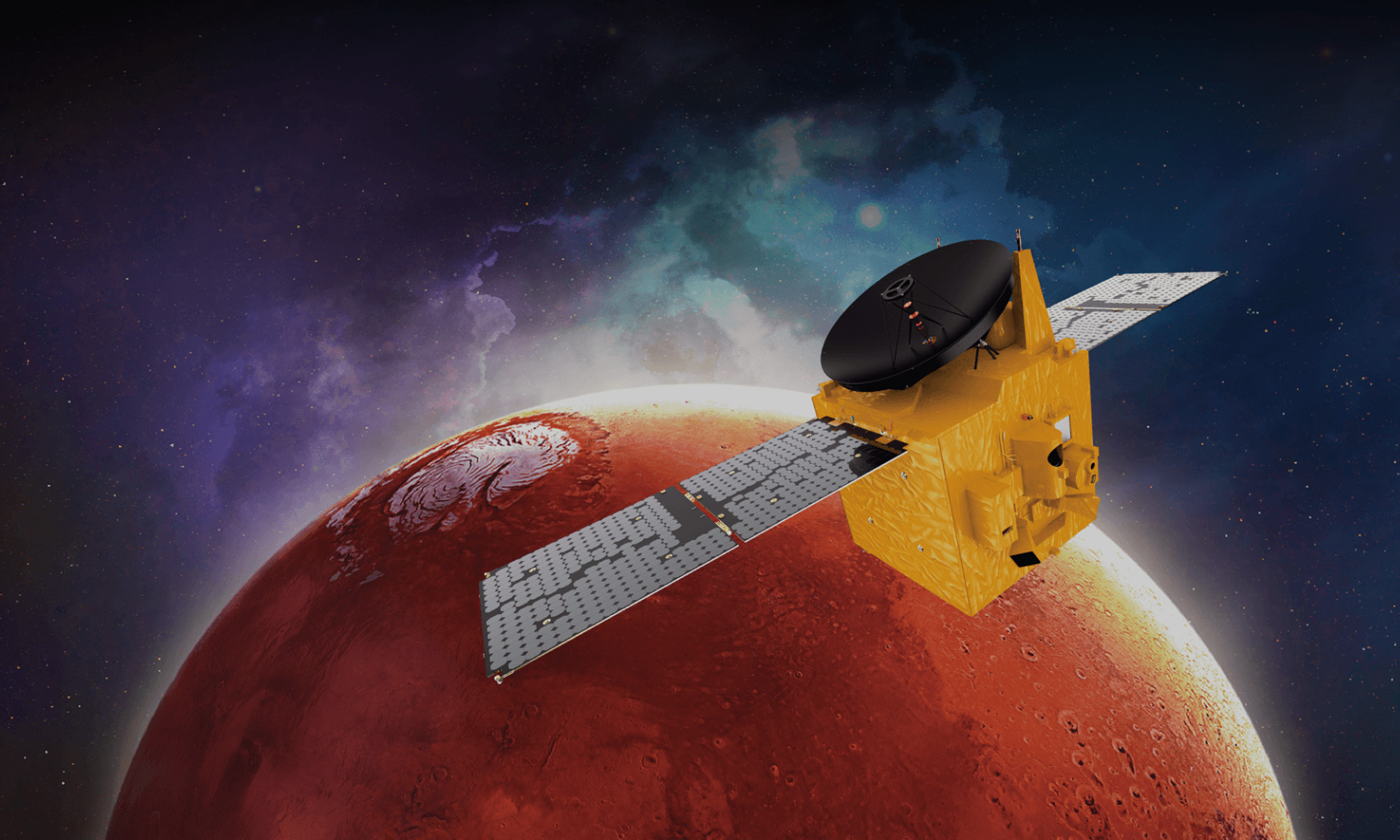
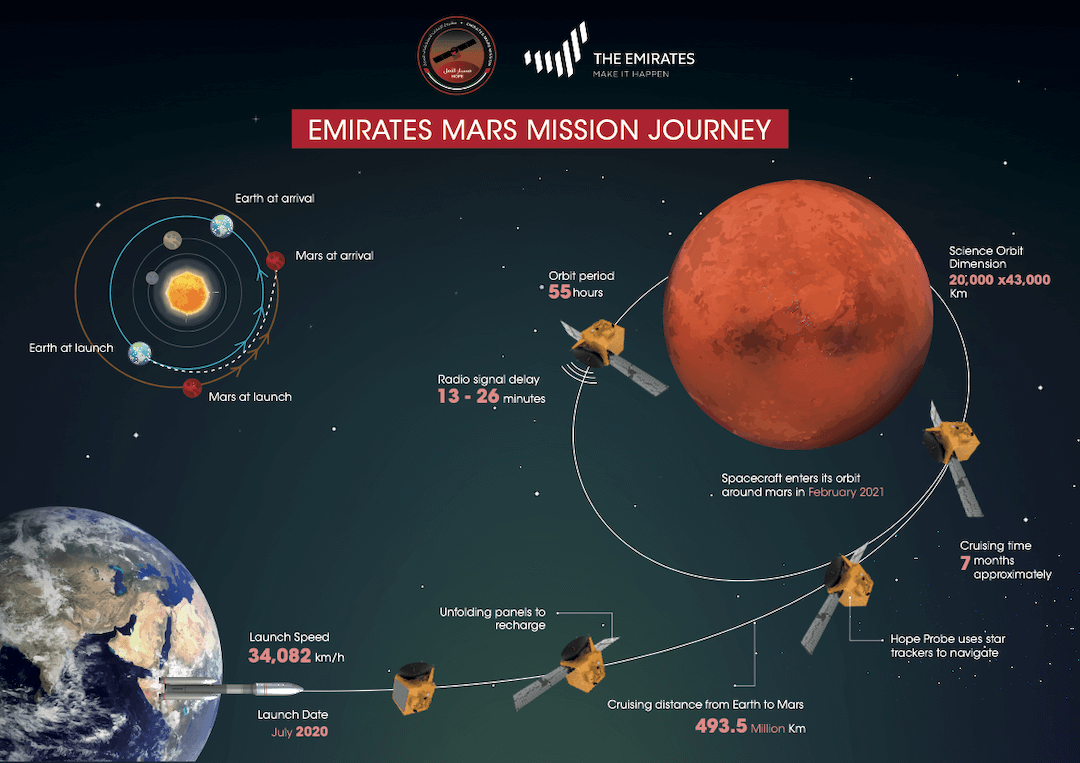
After nearly seven months in space, the Emirates Mars Mission’s Hope Probe (Arabic: مسبار الأمل, Al Amal) will make its orbital insertion on February 9, 2021. The objective of the probe is to provide the first complete portrait of the Martian atmosphere, helping scientists understand the climate dynamics of the Red Planet.
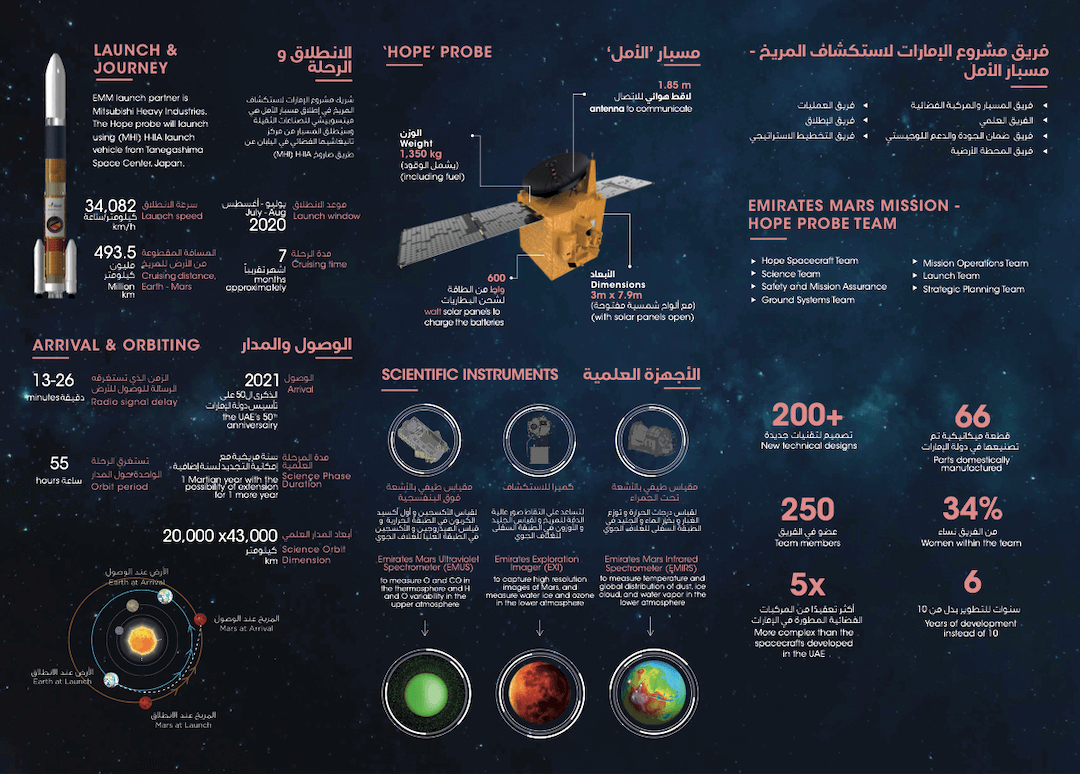
The Hope Probe was developed by the Mohammed bin Rashid Space Centre (MBRSC) and the Laboratory for Atmospheric and Space Physics (LASP) at the University of Colorado Boulder, and it will be the first of the three spacecraft that took advantage of the July 2020 Mars launch window, with the other two being Tianwen-1 (China) and Mars 2020 (USA).
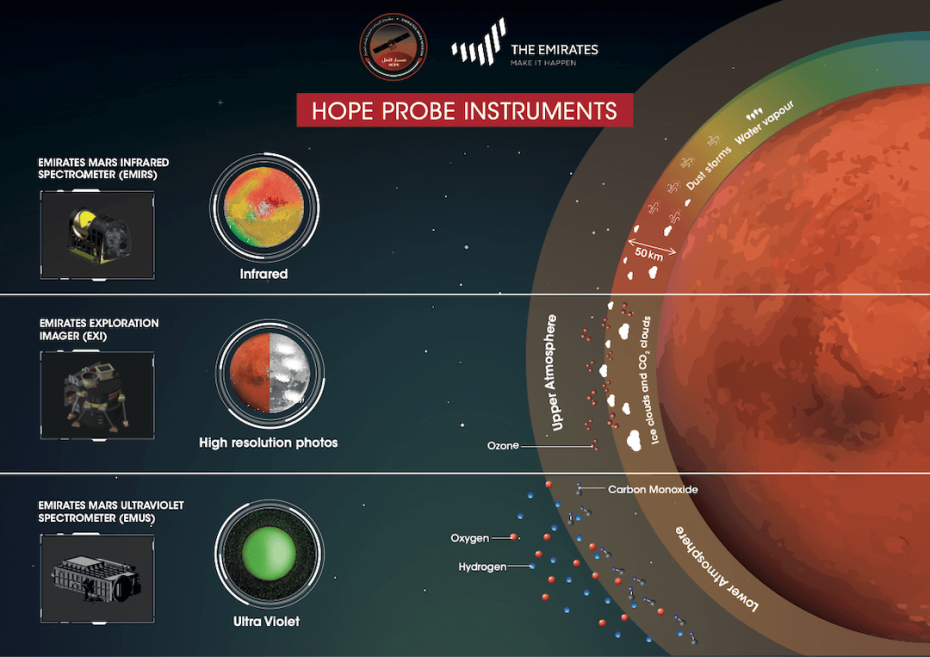
Before Hope Probe can use its three scientific instruments to answer important questions about the loss of hydrogen and oxygen from Mars into space, it must first successfully perform a complex and risky maneuver to enter a Mars orbit, using all of its six thrusters to slow down from 121,000 km/h to 18,000 km/h.
Emirates Mars Mission
If successful, the United Arab Emirates will become only the fifth nation to reach Mars. The occasion is timed to mark the 50th anniversary of the unification of the wealthy Gulf state, so the sense of anticipation is understandably sky-high — not just figuratively but also literary. Dubai’s Burj Khalifa, the world’s tallest skyscraper, currently shines red to signal the arrival of the Hope Probe to Mars.
Emirates Mars Mission
Regardless of how the Emirates Mars Mission ends, it has already completed its goal of stimulating young students to pursue STEM-related fields.
“We’ve seen a large shift with the mindset of students, first and foremost, within the Emirates” said Her Excellency Sarah bint Yousef Al Amiri, chairperson at the UAE Space Agency and minister of state for advanced sciences in the UAE. “But we’ve also seen a lot of keen engagement within the region, a region that is typically known to be unstable, and that has triggered a lot of thoughts with regards to what is possible” she added.
Emirates Mars Mission
Also Read: Hyperloop Video Provides A Peek At The Future Of Transportation
According to the world’s richest person, Elon Musk, it should be possible to send 1 million people to Mars by 2050, and the data collected by probes such as the Hope Probe are vital for making this lofty plan happen.
You’ll be able to watch live coverage of the UAE Hope Probe reaching Mars on the UAE Space Agency website.






News
Microsoft Plans $10 Billion-Plus Gulf Expansion Despite Iran Conflict
Security is shaping Microsoft’s approach, from resilience work with governments to what it will say about how the money splits by country.

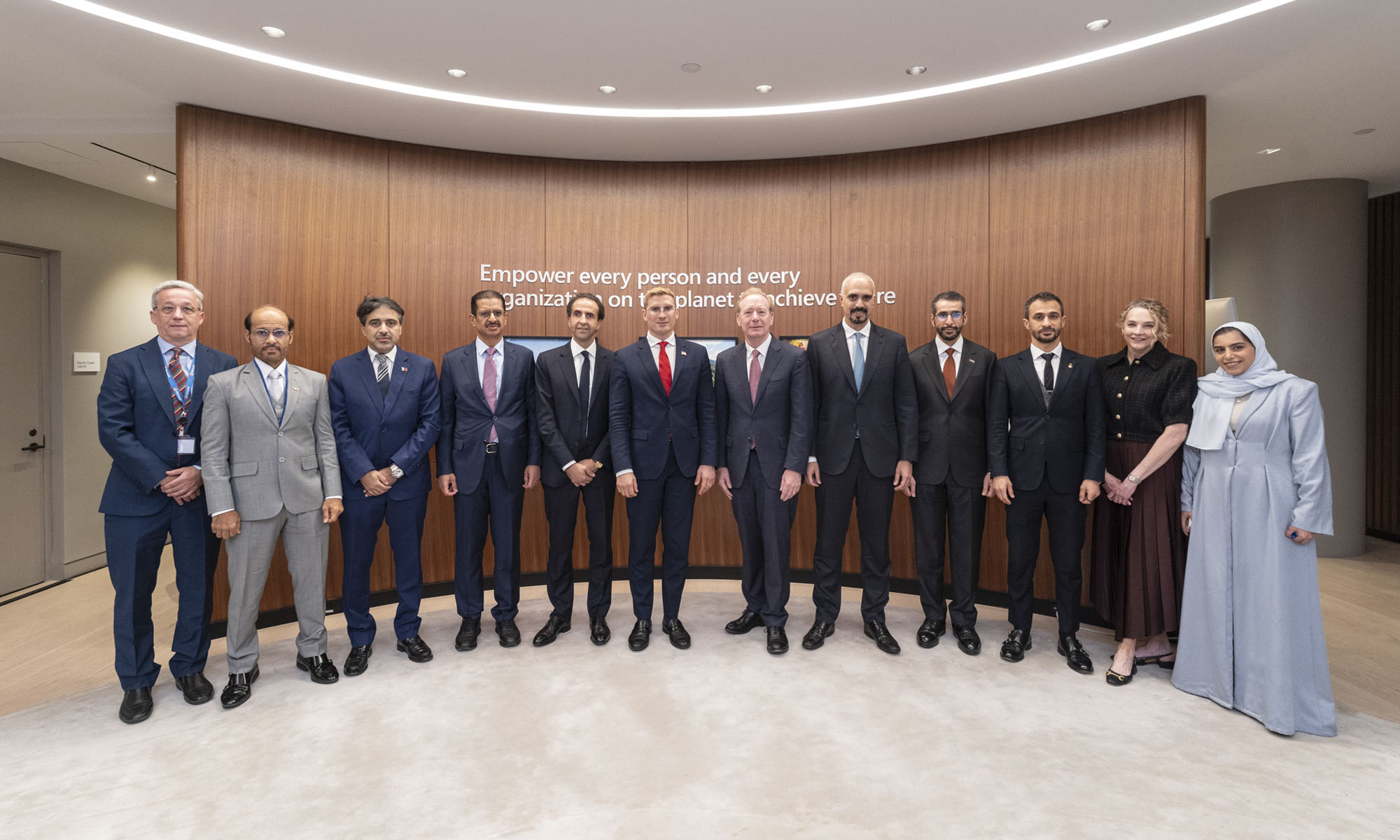
Microsoft is planning more than $10 billion of investment across the UAE, Saudi Arabia, Qatar and Kuwait through 2030, Vice Chair and President Brad Smith told Reuters, calling the spending schedule aggressive. The Iranian conflict that began on February 28 has not persuaded the company to scale back.
“We’re sustaining all the investments we planned to make before this conflict started, and we are in fact adding to them,” Smith said. The $10 billion-plus total does not, however, show how large those additions are.
The investment, which Smith described as part of Microsoft’s continued infrastructure expansion, is aimed at cloud and AI infrastructure and at the company’s growing regional operations. Microsoft also intends to put more than $400 million into subsea and terrestrial connectivity across the Middle East by 2030.
The spending fits the region’s own ambitions too. Gulf governments have been investing heavily in AI infrastructure as part of a push to diversify their economies beyond oil and gas and turn themselves into global technology hubs. Major cloud and AI providers have been drawn in part by the land and relatively low-cost energy on offer.
Microsoft is widening its partnerships with regional AI companies, though not on identical terms. In 2024, it invested $1.5 billion in Abu Dhabi-based G42 for a minority stake, and Smith currently sits on G42’s board. Saudi Arabia’s Humain and Qatar’s Qai are working with Microsoft on selected priority areas, but Smith said the company does not plan to make capital investments in either.
Also Read: Egypt’s Mobile Wallets Are Booming, But Cash Still Has Power
The conflict has added another strand to Microsoft’s work in the region. Since it began, Smith said, the company has supported regional partners with digital resilience assessments, and it is now working with Gulf countries through a digital resilience initiative focused on preparedness and the protection of critical data.
So far, the company has given no country-by-country breakdown of the investment, citing security among other factors. So while the headline figure is public, how Microsoft divides the spending among the four countries is not.

Microsoft Plans $10 Billion-Plus Gulf Expansion Despite Iran Conflict

In Kuwait, Your Surgeon Might Be Operating From Another Country

Qatar Folds 45 State Companies Into A Single Investment Platform

Trip.com Is Betting An AI Agent Will Book Your Next Vacation

Meta’s New $499 Plan Puts A Price On Reaching A Real Person

Apple’s First Folding iPhone Arrives Late To A Shrinking Market
Trip.com Is Betting An AI Agent Will Book Your Next Vacation

Egypt’s Mobile Wallets Are Booming, But Cash Still Has Power

OKX Bets Streaming Perks Can Take Crypto Mainstream Across MENA

Musk’s Boring Company Wants To Dig 150 KM Of Tunnel Under The UAE


-
 News3 weeks ago
Apple’s First Folding iPhone Arrives Late To A Shrinking Market
-
 News2 weeks ago
Trip.com Is Betting An AI Agent Will Book Your Next Vacation
-
 News2 weeks ago
Egypt’s Mobile Wallets Are Booming, But Cash Still Has Power
-
 News2 weeks ago
OKX Bets Streaming Perks Can Take Crypto Mainstream Across MENA