
News
Japan Sets A New Internet Speed Record With 319 Terabits Per Second
That’s around 7.6 million times faster than the internet connection you probably have at home.


Don’t you sometimes wish your internet speed was a bit faster when browsing the web, streaming online content, playing multiplayer games, or participating in a video conference? Most people do, including scientists at Japan’s National Institute of Information and Communications Technology (NICT). Recently, NICT set a new internet speed record when a group of its scientists successfully transferred data at 319 Terabits per second (Tbps) over a simulated 3,001-kilometer distance.
To put the record-breaking data transfer speed into perspective, the average fixed broadband download speed worldwide currently sits around 100 Mbps, which is around 3 million (yes, million) times slower. The new record is a significant achievement even as far as internet speed records go because it’s almost double the previous world record (179 Tbps), which was achieved by British and Japanese researchers in August 2020.
Transmitting data at such an unimaginably fast speed required plenty of innovation and cutting-edge technologies. Whereas typical fiber-optic cables have just one core designed for light transmission, the cable used by the team of Japanese researchers who set the new record had four cores. The transmitted data was fired using a 552-channel comb laser at multiple wavelengths and given a boost by rare earth amplifiers.
Since the entire test took place under laboratory conditions, you shouldn’t expect your local internet service provider to follow suit in the near future by implementing similar technologies due to their cost. The most likely real-world applications of the cutting-edge system involve high-speed backbone communication.
Also Read: Super Fast 6G Connectivity Is Closer Than You Think
“It is hoped that such fibers can enable practical high data-rate transmission in the near-term, contributing to the realization of the backbone communications system necessary for the spread of new communication services beyond 5G,” write NICT researchers.
Considering how much we’ve progressed since Caltech set its 186 Gbps internet speed record in 2011, we can’t help but imagine where we’ll be in another decade or two.



News
Egypt’s Mobile Wallets Are Booming, But Cash Still Has Power
Egypt’s telecom regulator says $57.6 billion moved through more than 57 million wallets in six months. And one operator handled 77% of the value.

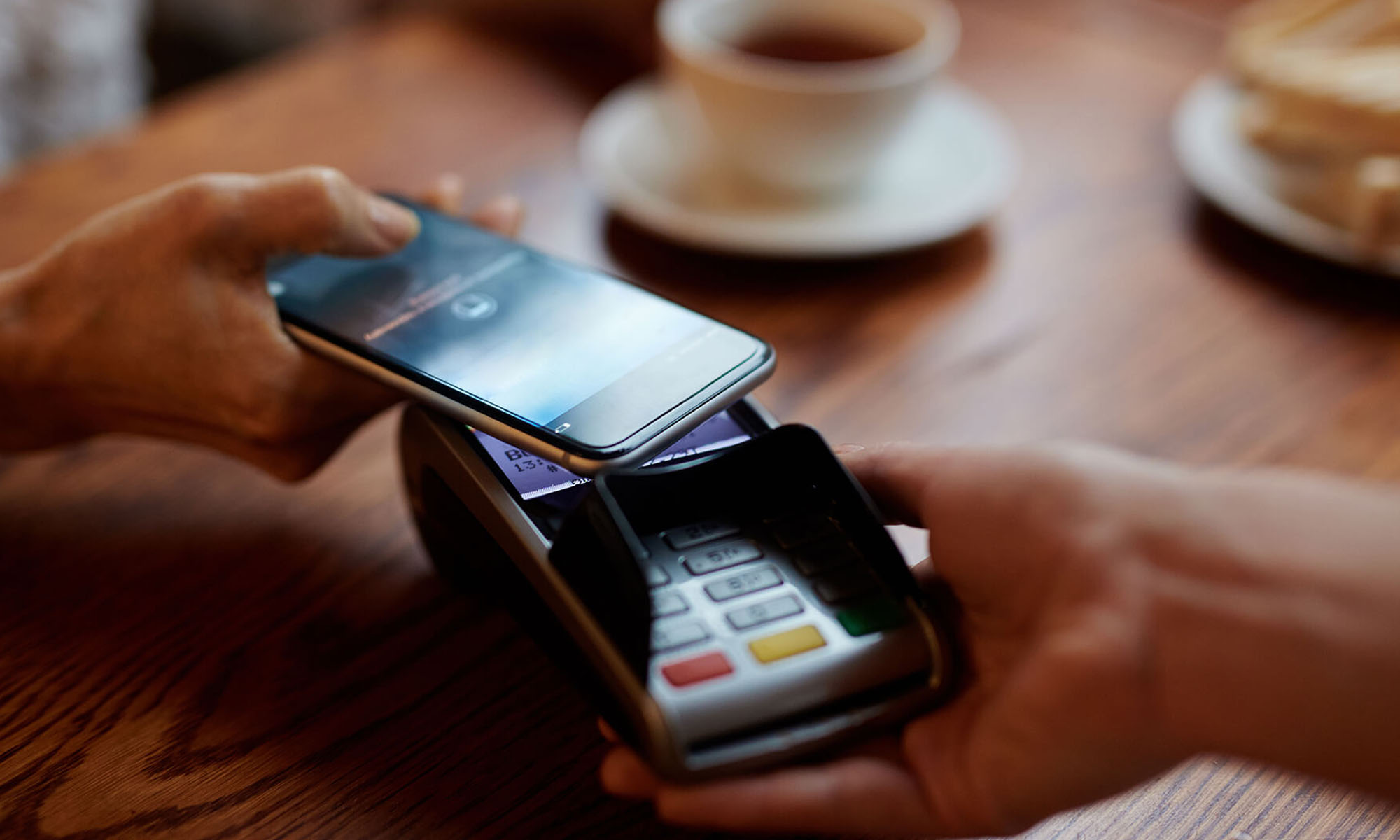
Egypt’s mobile wallets handled EGP 2.96 trillion ($57.6 billion) in transactions in the first half of 2026, according to the National Telecom Regulatory Authority – a 56% rise on the EGP 1.90 trillion ($36.9 billion) recorded a year earlier. Transactions grew faster still, up 62% to 2.22 billion, while registered wallets climbed 23% to 57.01 million.
On one reading, that is exactly what Egypt’s regulators have been pushing for: a payments system that runs through telecom-linked wallets rather than banknotes. But the same data shows how far cash still reaches into it. Cash withdrawals made up just 12% of the transactions taking money out of wallets, yet 75% of the value withdrawn or spent.
Money arrives mostly from bank accounts: transfers through InstaPay accounted for 78% of deposit transactions and 58% of the value deposited, while incoming remittances from abroad made up 3% of deposit transactions but 10% of their value. Once inside, it largely moves between wallets – wallet-to-wallet transfers accounted for 54% of all transactions and 67% of total value, with mobile and internet top-ups a distant second at 25% of volume. In effect, the wallet is serving as a transfer layer: the place money passes through between the bank account and the banknote.
That layer also runs predominantly through one operator. Vodafone Cash held 53% of registered wallets and 57% of active ones, but handled 69% of transactions and 77% of their value. Its nearest rival, e& money, held 23% of registered wallets but 14% of transaction value; Orange Cash 20% and 8%; WE Pay 4% of wallets. How many of the 57.01 million are active is not stated.
Also Read: Visa’s Return To Syria Starts With A Test And A Bank In Lebanon
Adoption is rather uneven in other respects. Men held 38 million wallets, or 67% of the total, against 19 million held by women. Users aged 26 to 45 accounted for half of all wallets, and Cairo alone had 10.6 million, or 19% of the national total, with Giza next at 6.5 million.
The NTRA says it is continuing to work with telecom operators on the regulatory framework for wallet services, part of a wider effort to expand electronic payments and financial inclusion. Its own figures show that effort succeeding on the way in. On the way out, three-quarters of the value still leaves as cash.

Egypt’s Mobile Wallets Are Booming, But Cash Still Has Power

Apple’s First Folding iPhone Arrives Late To A Shrinking Market

Apple’s Latest Product Releases Make The Headlines

Visa’s Return To Syria Starts With A Test And A Bank In Lebanon

RØDE’s New DS3 Studio Arm Is Built For Heavier Creator Setups

Anghami’s New Elite Program Starts With A Three-Decade Catalog

Dubai’s aradus Wants AI To Run The Back Office Of Physical Trade

Qatar Is Getting Its First EV Plant, Built To Cope With Gulf Heat

Qatar Airways Flies The World’s First Starlink-Equipped 787-9

Former Rockstar Director Dismisses GTA 6 Leaks As “Nothing Burger”


-
 News3 weeks ago
Former Rockstar Director Dismisses GTA 6 Leaks As “Nothing Burger”
-
 News3 weeks ago
RØDE’s New DS3 Studio Arm Is Built For Heavier Creator Setups
-

 News3 weeks ago
Dubai Turns AI On Its Own Civil Service To Measure Productivity
-
 News3 weeks ago
Visa’s Return To Syria Starts With A Test And A Bank In Lebanon