
News
Tesla Announces Upcoming Saudi Arabia Debut On April 10
The company is expanding its Gulf footprint despite recent sales declines in Europe and China.

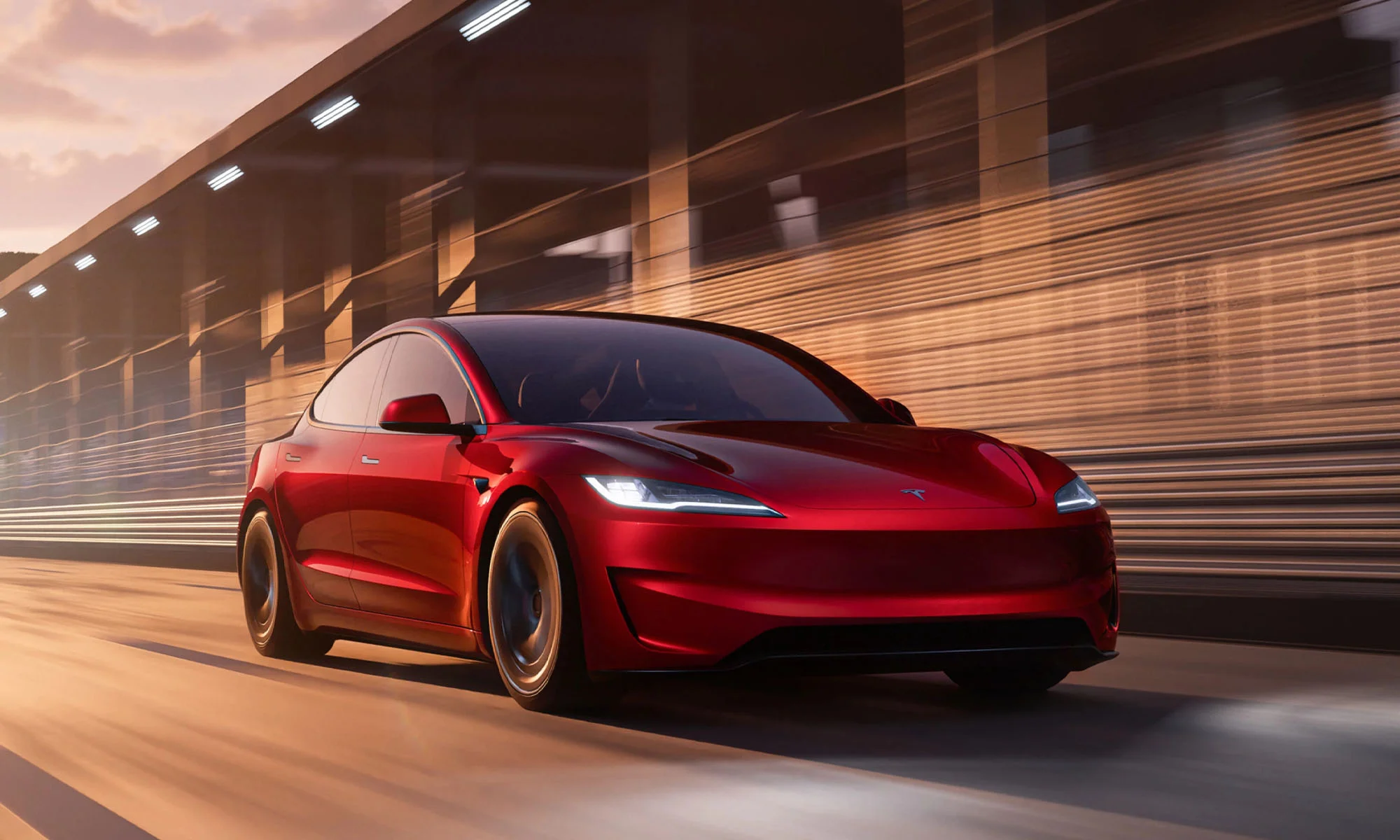
Tesla is expanding operations further across the Middle East with an upcoming move into Saudi Arabia. The company shared the news of the April 10 Riyadh debut on its website, hinting at a showcase of its latest innovations but leaving out key details about when its vehicles and energy products will be available for purchase.
“Explore our global bestselling lineup and step into a world powered by solar energy, sustained by batteries, and driven by electric vehicles. Experience the future of autonomous driving with Cybercab, and meet Optimus, our humanoid robot, as we showcase what’s next in AI and robotics,” Tesla stated in its announcement.
The Saudi launch comes at a time when Tesla is grappling with declining EV sales in key markets. Data from the European Automobile Manufacturers Association (ACEA) shows that Tesla’s European sales have dropped by 42.6% this year. In China, the company’s February sales of locally produced EVs fell by 49.2% year-over-year to 30,688 units — the lowest monthly figure since August 2022.
Beyond sales struggles, Tesla has also faced political backlash in the U.S. Protests erupted after CEO Elon Musk took on an advisory role in the administration of former U.S. President Donald Trump and supported sweeping federal government budget cuts.
Also Read: Warner Bros. Discovery Invests In OSN Streaming To Expand MENA Reach
Tesla’s presence in the Gulf region isn’t new: The company has operated in the UAE since 2017 and also has a dealership in Qatar. The Saudi launch follows another recent international push — Tesla signed a lease to open its first showroom in Mumbai as part of its strategy to enter the Indian market.
Saudi Arabia’s interest in Tesla aligns with the Kingdom’s broader push toward sustainability and economic diversification away from oil. The country aims to transition 30% of Riyadh’s vehicles to electric by 2030, contributing to a broader goal of reducing the capital’s emissions by 50%.
Saudi Arabia is also investing heavily in its own EV industry, with companies like CEER, Foxconn, and Lucid Motors playing key roles in its domestic manufacturing ambitions. The country’s sovereign wealth fund holds a majority stake in Lucid Group, positioning the startup as a potential Tesla rival in the years to come.




News
Abu Dhabi’s Robot Kitchen Is Serving Up Biryani, Not Burgers
Circus SE wants to put a tiny automated factory inside the buildings where Gulf residents live and work, bypassing part of last-mile delivery.
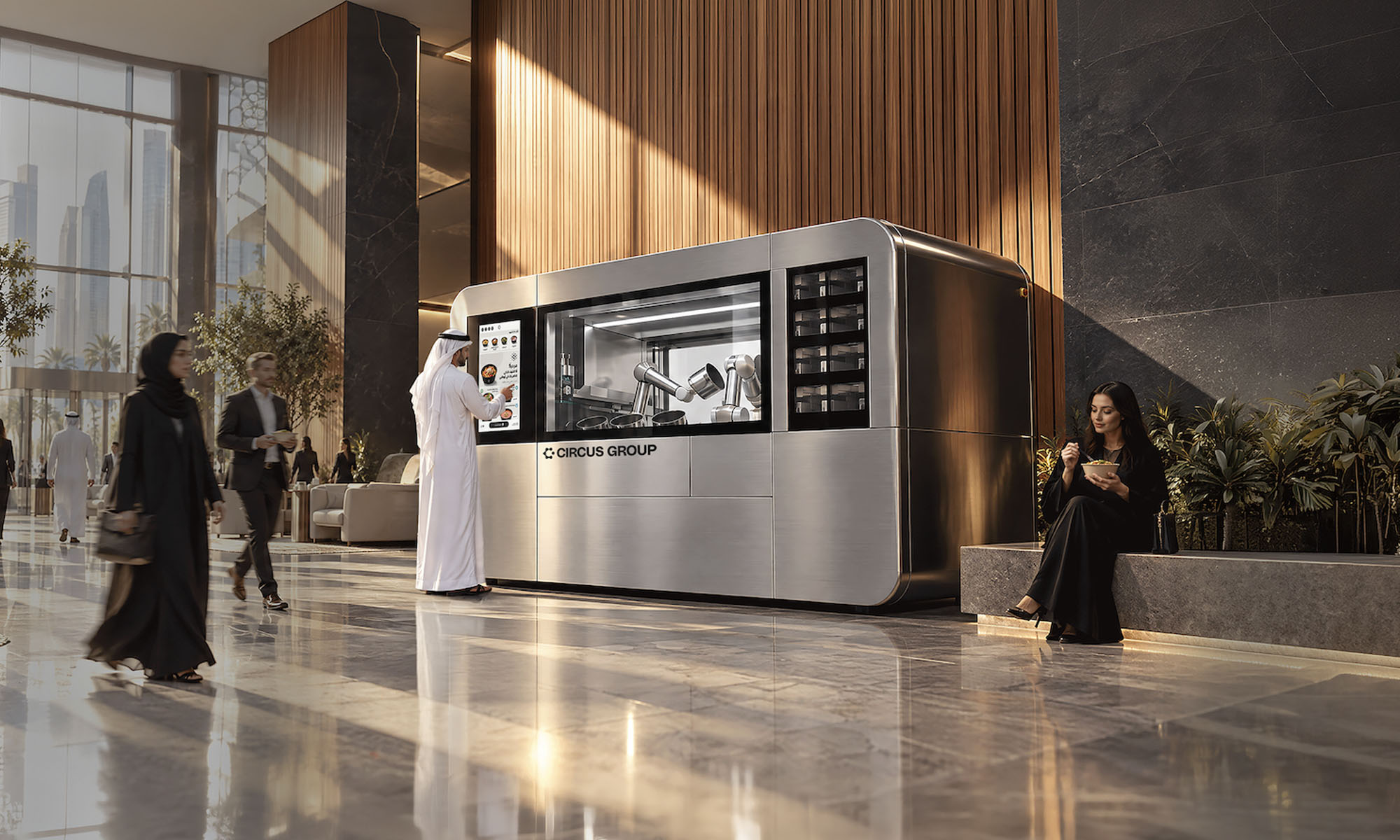
The most telling thing about a new autonomous kitchen now running in Abu Dhabi’s Marina Square is what it won’t cook:
“We don’t do fast food,” says Nikolas Bullwinkel, Founder and CEO of Circus SE. “We’ve actively decided not to build a machine that can only do burgers”.
Instead, the CA-1 system is built around pot-based cooking: curries, pastas, soups and rice dishes. After experimenting with highly personalized recipes, Circus deliberately leaned back toward recognizable food. “We’re going with a chicken biryani because you know it,” Bullwinkel says of the AED 40 dish.
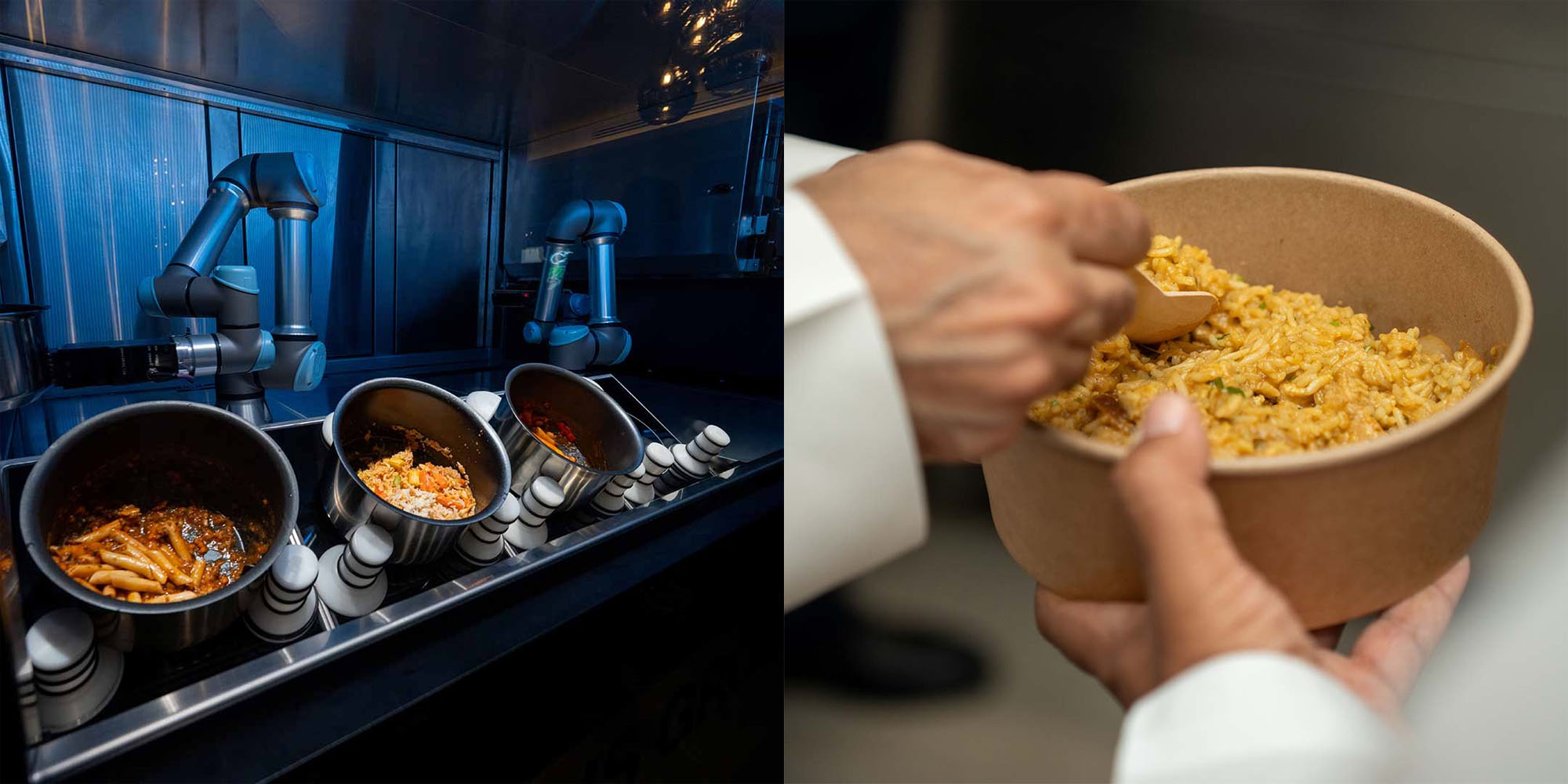
The Germany-based robotics and food technology company operates across eight countries, and Abu Dhabi is its first deployment outside Europe. More locations are expected there and in Dubai.
In Germany, its units can be placed in supermarkets, gas stations, airports and hospitals. In the Gulf, Bullwinkel wants them inside residential and office buildings, replacing some of the complexity of last-mile delivery. “We’re basically bringing a very tiny factory a few square meters into your building,” he says. Catering company Royal Prestige supplies the ingredients and knowledge of local tastes.
The CA-1 manages up to 36 refrigerated ingredient silos alongside automated induction cooking, robotic plating and a self-cleaning dishwasher. Two robotic arms move ingredients through the system with minimal human intervention. It can produce up to 120 hot meals an hour, and a meal such as rice and curry can take around three to four minutes.
Also Read: Ooredoo Qatar’s 5G+ Network Is Built For Machines As Much As People
Five cameras and multiple sensors monitor heat, temperature and consistency, an attempt to approximate what a chef perceives. “You can hear something gets burned, you can smell it, you can see it at some point,” Bullwinkel says. CircusOS, the company’s operating system, adjusts recipes in real time.
You might think of the platform as a threat to kitchen staff, but Bullwinkel frames Circus as a way for chefs to develop recipes and distribute them at scale. With that being said, rising labor costs and shortages are also part of his case for automation.

Abu Dhabi’s Robot Kitchen Is Serving Up Biryani, Not Burgers

Sennheiser’s MOMENTUM 5 Series Bets On Batteries You Can Swap

UAE’s 3-Minute University Registration Runs On Government Data

How Online Ads Became A Delivery System For Zero-Click Spyware

Shokz OpenDots 2 Review: Clip-On Audio Gets A Bass-Heavy Makeover

Dubai Says Its Deepfake Detector Needs Just 7 Seconds Of Video

New Disney+ Streaming App Has Officially Launched In The UAE

NEOPAY Wants To Follow Merchants Across Channels And Borders

RØDE’s Low-Profile Studio Arm Is Designed To Stay Out Of Shot

G42’s Inception42 Wants AI To Show Its Work Before Investors Commit


-
 News3 weeks ago
Dubai Says Its Deepfake Detector Needs Just 7 Seconds Of Video
-
 News3 weeks ago
New Disney+ Streaming App Has Officially Launched In The UAE
-
 News3 weeks ago
NEOPAY Wants To Follow Merchants Across Channels And Borders
-
 News4 weeks ago
RØDE’s Low-Profile Studio Arm Is Designed To Stay Out Of Shot