News
Bahrain Plans To Develop 300 Smart Factories By 2026
The iFactories initiative will adopt the top regional and global practices to ensure sustainability and raise productivity.


Bahrain has launched an initiative to support its manufacturing sector as the world moves closer towards the Fourth Industrial Revolution. The initiative is known as iFactories and will assess factories’ readiness and digital maturity while allowing businesses to invest in new infrastructure and manufacturing automation technologies.
Abdullah bin Abdel Fakhro, Bahrain’s Minister of Industry and Commerce, said the initiative aims to transform 300 manufacturing facilities into smart factories by 2026.
The initiative will use a four-step process:
- Evaluation by the ministry with technical assistance to conduct self-evaluation.
- Evaluation by a team of accredited evaluators.
- Empowerment, involving the factory creating a digital transformation plan.
- Development, with the ministry monitoring the transformation process.
Dr. Khaled Fahad Al Alawi, Assistant Undersecretary for Industrial Development, explained that smart factories would be evaluated using the SIRI index, an international standard based on applying practices and tools centered around the Fourth Industrial Revolution.
Also Read: Phoenix Group & Green Data City Plan Crypto Farm In Oman
The latest initiative is part of broader plans to drive growth by modernizing Bahrain’s industrial sector and encouraging businesses to automate and expand their operations.







News
Lebanon Ministers Meet Visa Over National Digital Payment Platform
Finance and technology ministers say a comparative study and roadmap will follow before any decision on adopting a model.


Lebanon’s finance and technology ministers met representatives from Visa last week to discuss a proposed unified national digital payment platform for government services, according to a readout from the Ministry of Finance.
The meeting brought together Finance Minister Yassin Jaber, Minister of State for Technology and Artificial Intelligence Kamal Shehadeh, a Visa delegation, and experts from both ministries. Discussion focused on whether Lebanon could establish a single platform through which citizens and institutions would pay taxes, fees, fines and other official transactions electronically, using mobile phones and other digital channels.
The Visa delegation presented examples from countries that have adopted unified government payment platforms, including the United Arab Emirates, Singapore, Estonia and Jordan. According to the readout, the examples were presented as having increased collection rates and expanded financial inclusion.
Talks covered settlement mechanisms, direct transfer to the treasury account, financial reconciliation, risk management, cybersecurity, fees, and an operational model that would involve the private sector. The parties agreed to continue technical and institutional consultations, prepare a comparative study, and develop an implementation roadmap before any decision on adopting a model for Lebanon.
Jaber said the Ministry of Finance had already enabled citizens to pay using credit cards and e-wallets through transfer companies, but described the proposed platform as a further step. He framed the development of electronic payment and collection systems as a priority within the ministry’s modernization plan.
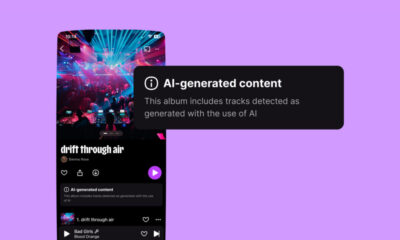
Also Read: Deezer Says AI Tracks Now Make Up 44% Of Uploads
Shehadeh outlined the citizen-facing concept as a single mobile application through which users could settle obligations to ministries, government institutions and other bodies.
“The idea, in short, is that any citizen downloads an application on their mobile phone, through which they can pay all service obligations for all ministries, government institutions, or those owned by the Lebanese state, and others as well, as the platform is not limited only to state institutions,” he said.
Shehadeh added that the platform would not displace banks and money transfer companies that currently provide collection services to the state, calling it complementary to their work.

Lebanon Ministers Meet Visa Over National Digital Payment Platform

AltoVolo Releases Sigma Footage & Sets Date For Demonstrator

Careem Launches Lebanon Aid Drive With WFP

United Arab Emirates To Quit OPEC After 59 Years

YouTube Tests Conversational AI Search Tool

Yango Ride Introduces In-Chat Trip Planning In ChatGPT

Deezer Says AI Tracks Now Make Up 44% Of Uploads

NVIDIA Puts GPT-5.5 Codex In Hands Of 10,000 Staff
United Arab Emirates To Quit OPEC After 59 Years