News
Dubai Has Launched An AI-Powered Digital Concierge
The new platform answers questions from residents and visitors about tourism, entertainment, aviation, healthcare, and education.


The United Arab Emirates is home to several cutting-edge AI initiatives, with Dubai already using the tech to power a smart police station and part of its healthcare system.
With the Emirate’s AI sector projected to make up 20% of the country’s GDP over the next decade, Dubai is rapidly becoming a global artificial intelligence hub. Now, forward-thinking government officials from the Dubai Digital project have launched a new AI-powered “digital concierge” system offering residents and visitors a wide range of services and information.
The AI-powered interactive concierge will be continuously updated with data from official sources. Acting as a personal digital assistant for users, queries can be answered in real-time, with a personalized, interactive dialogue presenting accurate results.
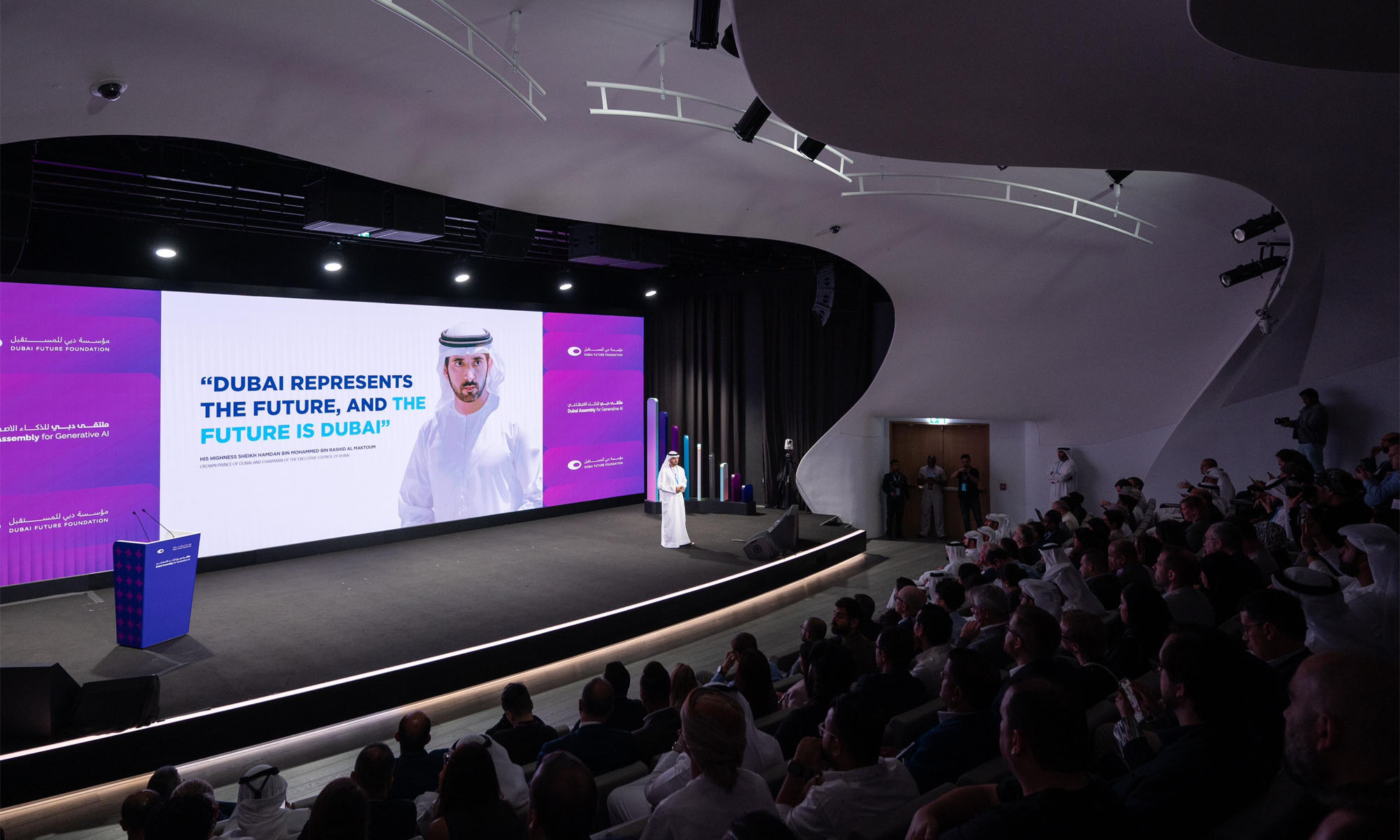
Users of the new platform can field questions about 15 sectors, including tourism, healthcare, entertainment, education, and aviation. Although functionally similar to tools like ChatGPT, Dubai AI is specifically trained to provide detailed information about the city.
During Wednesday’s Dubai Assembly for Generative AI, the Chief Executive of the Digital Dubai Government Establishment, Matar Al Hemeiri, described the new platform as a “unified, seamless channel” and shared plans to expand the service across the public and private sectors.
Meanwhile, Khalfan Belhoul, CEO of the Dubai Future Foundation, called for innovation to harmonize emerging technologies with government policy at a time when AI business opportunities are said to be worth nearly $4.5 trillion.
Also Read: Social Media Addiction Is Greatly Impacting Arab Youth
“Regulation is extremely important. We need to understand how we can regulate something as big as generative AI. But we need to get started now and look at the challenges and understand the risks,” Belhoul noted.
The CEO of Dubai’s Future Foundation was also keen to explain that developing AI and maximizing its potential could result in GCC countries enjoying over $23 billion in related economic benefits by 2030.



News
Lebanon Ministers Meet Visa Over National Digital Payment Platform
Finance and technology ministers say a comparative study and roadmap will follow before any decision on adopting a model.


Lebanon’s finance and technology ministers met representatives from Visa last week to discuss a proposed unified national digital payment platform for government services, according to a readout from the Ministry of Finance.
The meeting brought together Finance Minister Yassin Jaber, Minister of State for Technology and Artificial Intelligence Kamal Shehadeh, a Visa delegation, and experts from both ministries. Discussion focused on whether Lebanon could establish a single platform through which citizens and institutions would pay taxes, fees, fines and other official transactions electronically, using mobile phones and other digital channels.
The Visa delegation presented examples from countries that have adopted unified government payment platforms, including the United Arab Emirates, Singapore, Estonia and Jordan. According to the readout, the examples were presented as having increased collection rates and expanded financial inclusion.
Talks covered settlement mechanisms, direct transfer to the treasury account, financial reconciliation, risk management, cybersecurity, fees, and an operational model that would involve the private sector. The parties agreed to continue technical and institutional consultations, prepare a comparative study, and develop an implementation roadmap before any decision on adopting a model for Lebanon.
Jaber said the Ministry of Finance had already enabled citizens to pay using credit cards and e-wallets through transfer companies, but described the proposed platform as a further step. He framed the development of electronic payment and collection systems as a priority within the ministry’s modernization plan.
Also Read: Deezer Says AI Tracks Now Make Up 44% Of Uploads
Shehadeh outlined the citizen-facing concept as a single mobile application through which users could settle obligations to ministries, government institutions and other bodies.
“The idea, in short, is that any citizen downloads an application on their mobile phone, through which they can pay all service obligations for all ministries, government institutions, or those owned by the Lebanese state, and others as well, as the platform is not limited only to state institutions,” he said.
Shehadeh added that the platform would not displace banks and money transfer companies that currently provide collection services to the state, calling it complementary to their work.

Lebanon Ministers Meet Visa Over National Digital Payment Platform

AltoVolo Releases Sigma Footage & Sets Date For Demonstrator

Careem Launches Lebanon Aid Drive With WFP

United Arab Emirates To Quit OPEC After 59 Years

YouTube Tests Conversational AI Search Tool

Yango Ride Introduces In-Chat Trip Planning In ChatGPT

Deezer Says AI Tracks Now Make Up 44% Of Uploads

NVIDIA Puts GPT-5.5 Codex In Hands Of 10,000 Staff
United Arab Emirates To Quit OPEC After 59 Years