
News
Elon Musk Announces First Human Neuralink Implant
Although details are scarce, the Neuralink co-founder says initial results look promising.

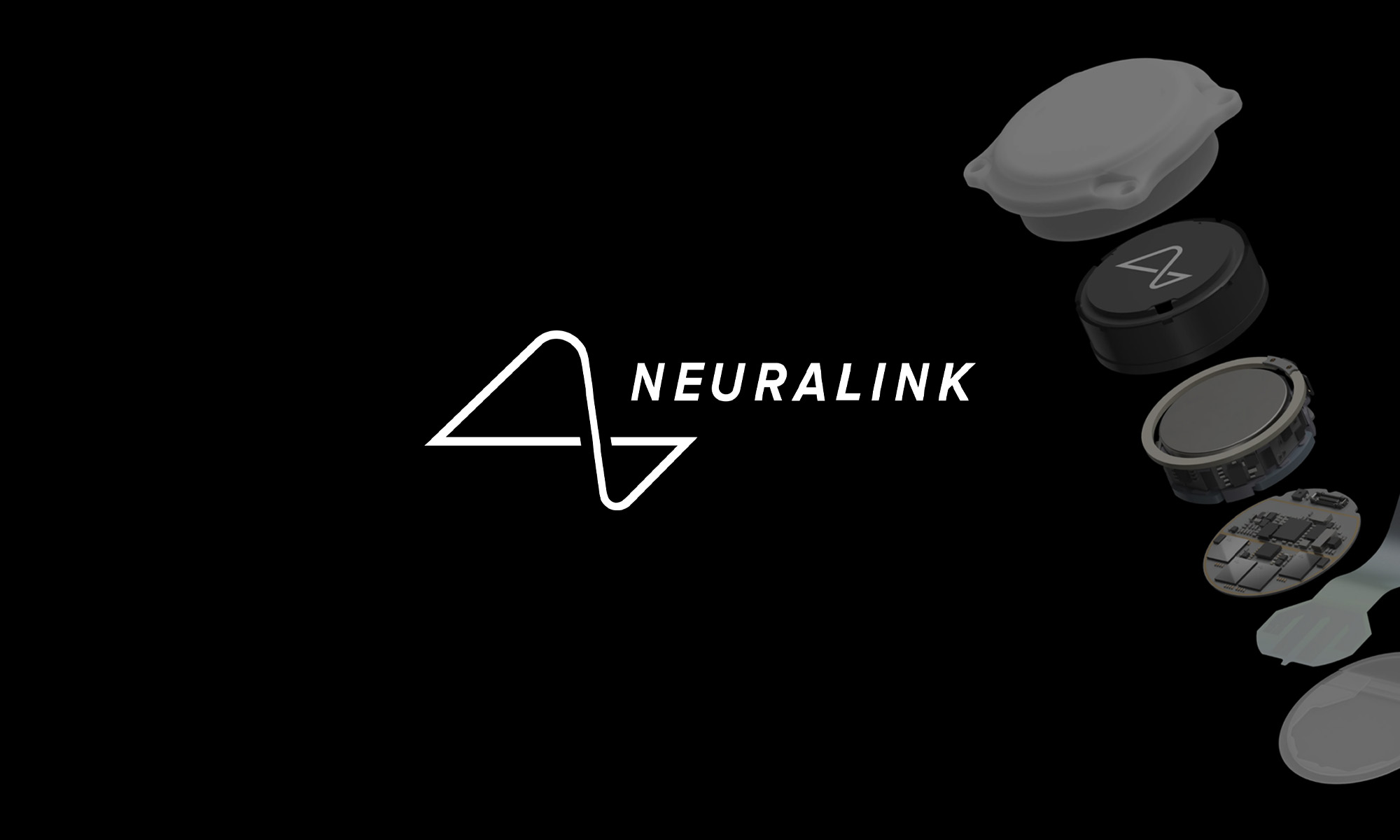
In a recent announcement on social media platform X, entrepreneur Elon Musk revealed a significant development in the field of brain-computer interfaces (BCIs). Musk disclosed that Neuralink, a company he founded, has successfully administered a brain implant to its first human patient.
The achievement follows a series of delays, as Neuralink commenced patient recruitment for a clinical trial in the autumn, subsequent to securing approvals from both the US Food and Drug Administration (FDA) and a hospital ethics board.
The primary objective of Neuralink’s research involves the creation of a brain-computer interface, a groundbreaking device intended to establish a connection between the human brain and computer technology.
While Musk’s vision is a symbiotic relationship between humanity and artificial intelligence, the initial phase focuses on a more modest goal: To empower individuals with paralysis, particularly those suffering from quadriplegia due to cervical spinal cord injury or amyotrophic lateral sclerosis (ALS), to regain control over a cursor or keyboard using their brain signals.
Eligible participants for the study must be at least 22 years old, and Neuralink expects its research to span a six-year duration.
Neuralink will employ a specialized surgical robot to precisely implant the device into the region of the brain responsible for controlling movement intention. This coin-sized implant is designed to capture and transmit neural signals wirelessly to an accompanying app, which can then decode them. The device uses 1,000 electrodes distributed across 64 threads, each finer than a human hair.
Also Read: Robot UAVs Set To Revolutionize Abu Dhabi Maritime Patrols
Elon Musk’s recent post highlighted that the patient was in a state of recovery and indicated promising results in the detection of neuron spikes. However, it may take several months to assess whether the patient can effectively utilize the implant to control computers or other devices.
While the specifics of the Neuralink surgical procedure are presently limited to Musk’s single tweet, the development represents a significant milestone in the evolution of brain-computer interfaces, even if it falls short of the ambitious goal of merging humans with AI.







News
Abu Dhabi’s Robot Kitchen Is Serving Up Biryani, Not Burgers
Circus SE wants to put a tiny automated factory inside the buildings where Gulf residents live and work, bypassing part of last-mile delivery.
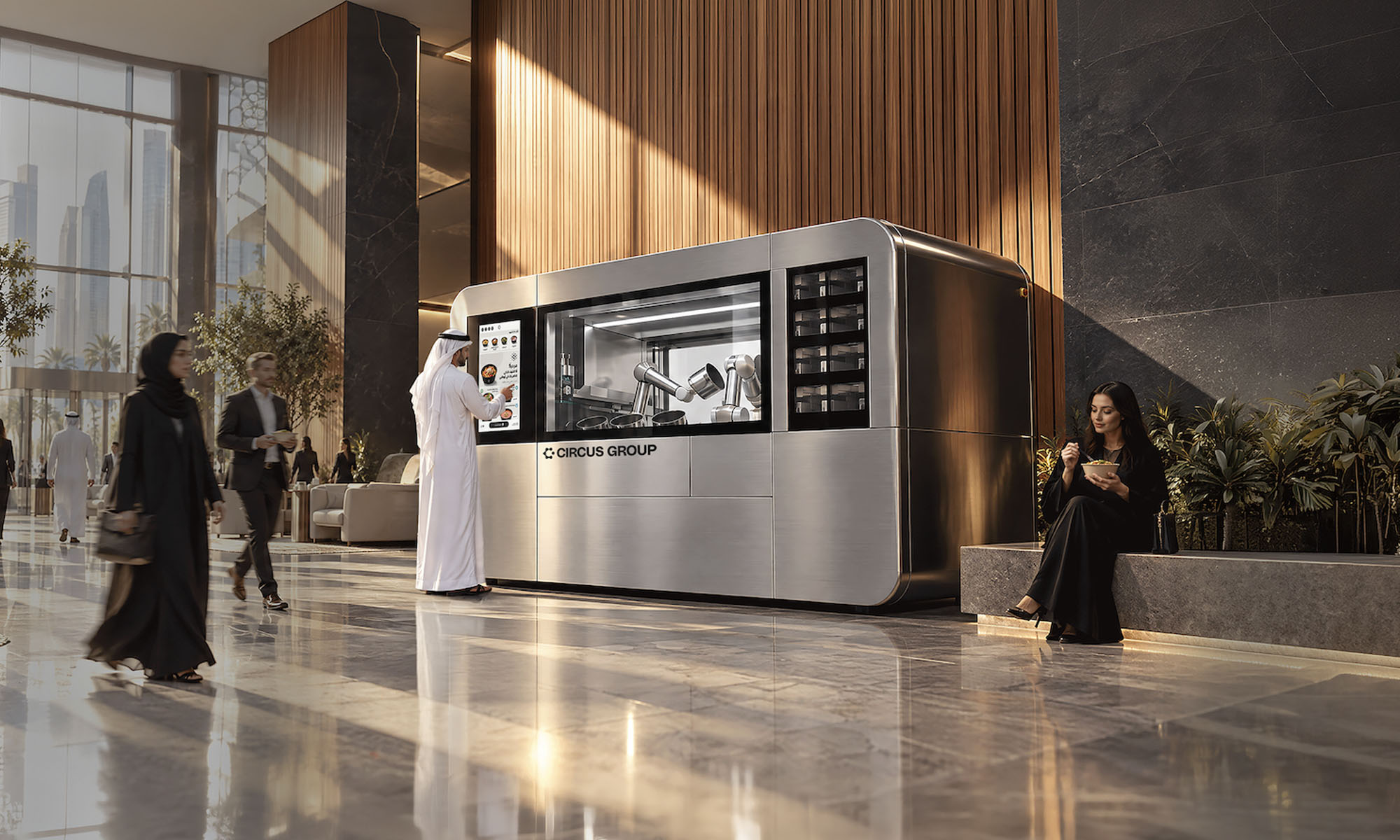
The most telling thing about a new autonomous kitchen now running in Abu Dhabi’s Marina Square is what it won’t cook:
“We don’t do fast food,” says Nikolas Bullwinkel, Founder and CEO of Circus SE. “We’ve actively decided not to build a machine that can only do burgers”.
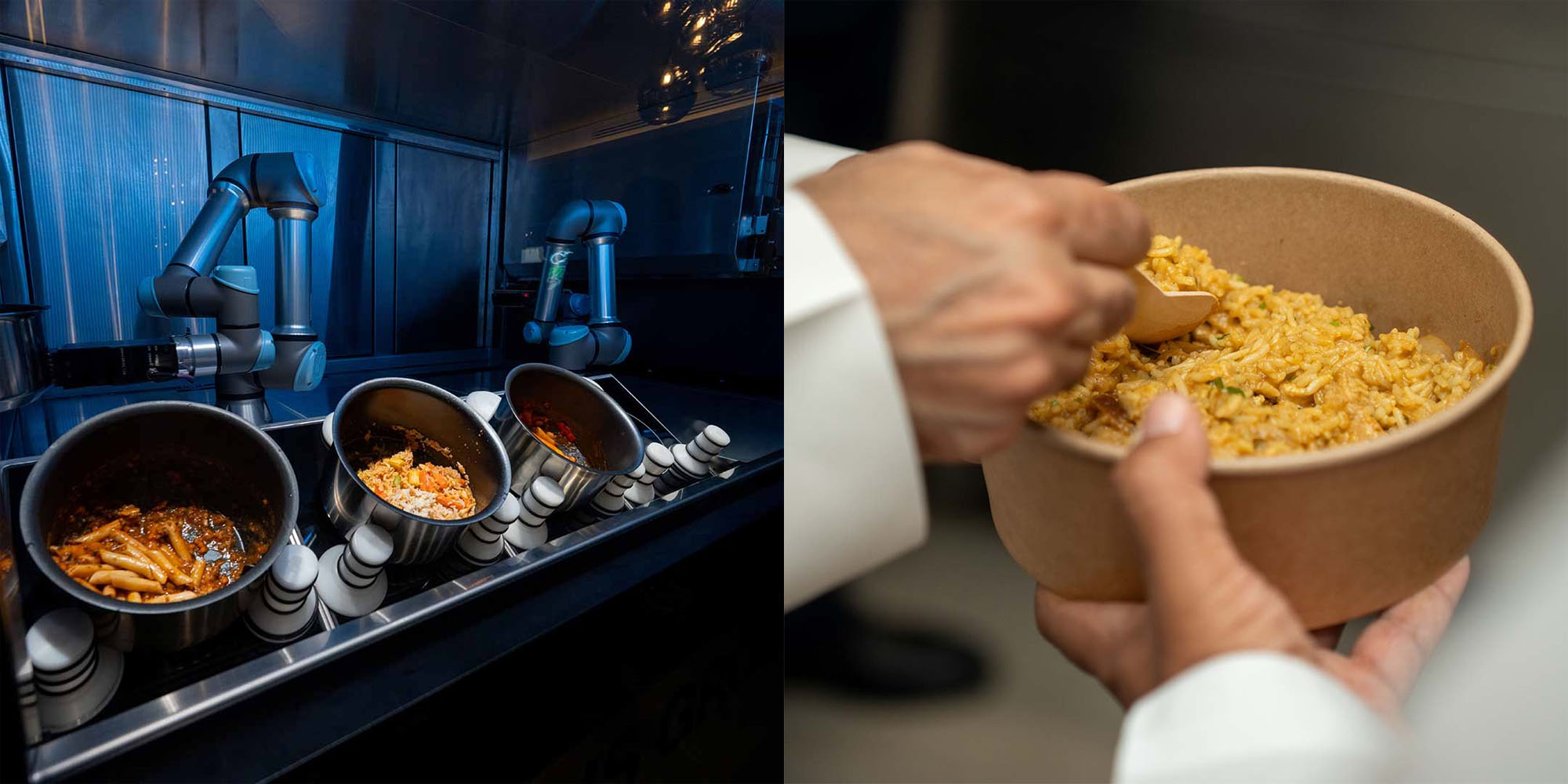
Instead, the CA-1 system is built around pot-based cooking: curries, pastas, soups and rice dishes. After experimenting with highly personalized recipes, Circus deliberately leaned back toward recognizable food. “We’re going with a chicken biryani because you know it,” Bullwinkel says of the AED 40 dish.
The Germany-based robotics and food technology company operates across eight countries, and Abu Dhabi is its first deployment outside Europe. More locations are expected there and in Dubai.
In Germany, its units can be placed in supermarkets, gas stations, airports and hospitals. In the Gulf, Bullwinkel wants them inside residential and office buildings, replacing some of the complexity of last-mile delivery. “We’re basically bringing a very tiny factory a few square meters into your building,” he says. Catering company Royal Prestige supplies the ingredients and knowledge of local tastes.
The CA-1 manages up to 36 refrigerated ingredient silos alongside automated induction cooking, robotic plating and a self-cleaning dishwasher. Two robotic arms move ingredients through the system with minimal human intervention. It can produce up to 120 hot meals an hour, and a meal such as rice and curry can take around three to four minutes.
Also Read: Ooredoo Qatar’s 5G+ Network Is Built For Machines As Much As People
Five cameras and multiple sensors monitor heat, temperature and consistency, an attempt to approximate what a chef perceives. “You can hear something gets burned, you can smell it, you can see it at some point,” Bullwinkel says. CircusOS, the company’s operating system, adjusts recipes in real time.
You might think of the platform as a threat to kitchen staff, but Bullwinkel frames Circus as a way for chefs to develop recipes and distribute them at scale. With that being said, rising labor costs and shortages are also part of his case for automation.

Abu Dhabi’s Robot Kitchen Is Serving Up Biryani, Not Burgers

Sennheiser’s MOMENTUM 5 Series Bets On Batteries You Can Swap

UAE’s 3-Minute University Registration Runs On Government Data

How Online Ads Became A Delivery System For Zero-Click Spyware

Shokz OpenDots 2 Review: Clip-On Audio Gets A Bass-Heavy Makeover

Dubai Says Its Deepfake Detector Needs Just 7 Seconds Of Video

New Disney+ Streaming App Has Officially Launched In The UAE

NEOPAY Wants To Follow Merchants Across Channels And Borders

RØDE’s Low-Profile Studio Arm Is Designed To Stay Out Of Shot

G42’s Inception42 Wants AI To Show Its Work Before Investors Commit


-
 News3 weeks ago
Dubai Says Its Deepfake Detector Needs Just 7 Seconds Of Video
-
 News3 weeks ago
New Disney+ Streaming App Has Officially Launched In The UAE
-
 News3 weeks ago
NEOPAY Wants To Follow Merchants Across Channels And Borders
-
 News4 weeks ago
RØDE’s Low-Profile Studio Arm Is Designed To Stay Out Of Shot