
News
Greek F-16 Fighter Jets Intercept Beirut-Bound MEA Flight
The Lebanese pilot is thought to have used an incorrect radio frequency — a major blunder from the son of the airline’s chairman.

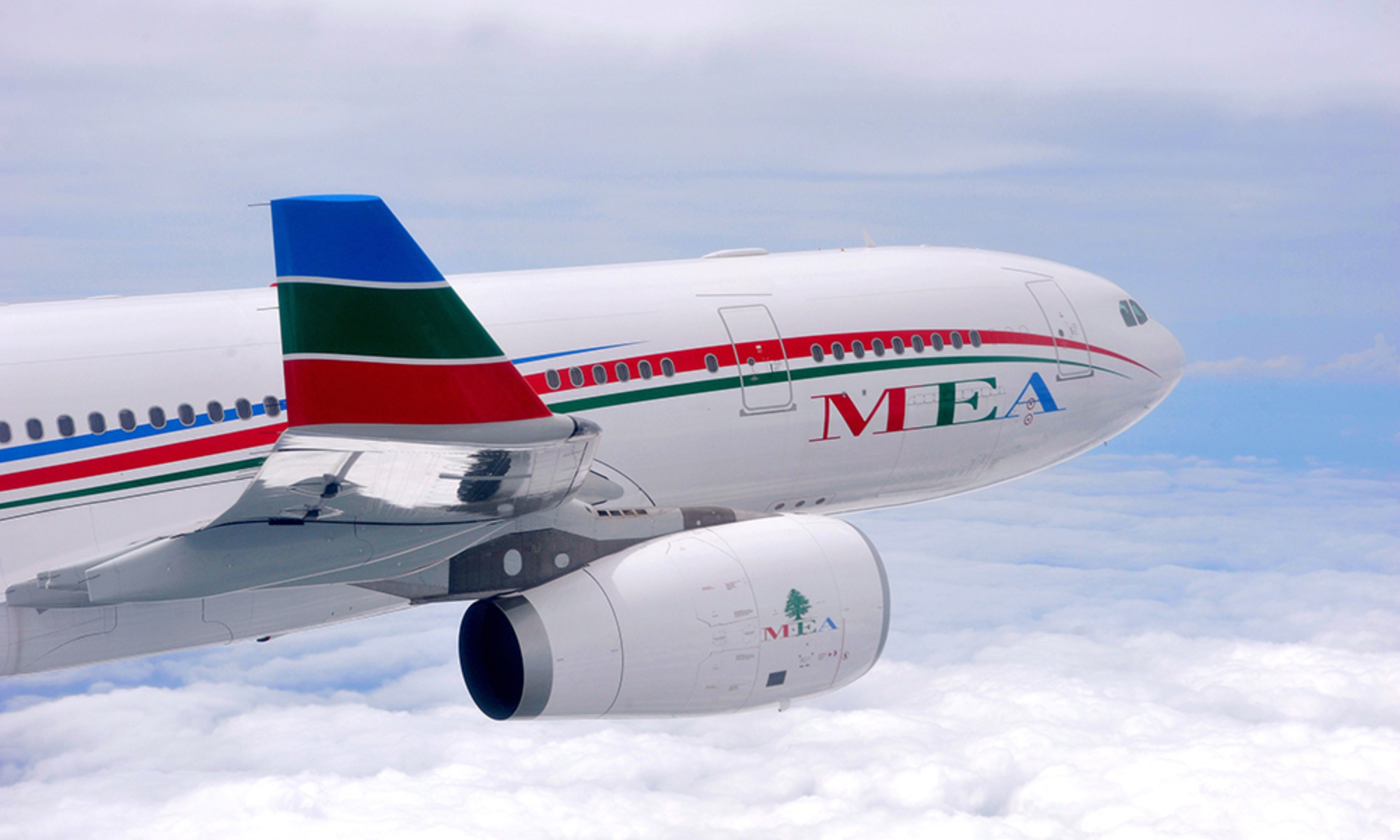
A “Code Renegade” alert recently set Greek aviation authorities on high alert following a warning issued by a NATO air control center in Torrejón, Spain. Code Renegade is a distress signal typically used in a hijacking situation. In this case, the code was issued after a Middle Eastern Airlines (MEA) flight bound for Beirut failed to answer calls and went into complete radio silence.
After repeated attempts to speak to the aircraft’s captain, authorities began to worry about the plane’s safety status, which eventually caused Greek air defense to scramble two F-16 fighter jets from Souda to intercept the unresponsive civilian airliner over Argolida in the northeastern Peloponnese.

Lebanon-based aircraft tracker InterSky, took to Twitter to report the details of the unfolding situation:
“Code Renegade set Greek authorities on alert following a relevant signal by the NATO air control center in Spain (CAOC Torrejón), to intercept a non-responsive civil aircraft Airbus A321 with 145 passengers onboard that had taken off from Madrid and was bound for Beirut.”
Also Read: Emirates Airline To Invest $2 Billion On Major Upgrades
In a further twist to the story, contact was eventually reestablished with the aircraft, after which it was revealed that the MEA pilot, Abed Al-Hout, was the son of Mohammed Al-Hout, chairman of the board of directors of Middle East Airlines. The chairman has previously received criticism for employing relatives at various levels of the company, and in this instance, his son had failed to set the communication instruments to the correct frequency, resulting in radio silence.
The news is a further embarrassing blow for Middle East Airlines, which has recently lost over 20% of staff to other airlines, as Lebanon’s financial crisis continues to deepen.



News
Nano Banana 2 Arrives In MENA For Google Gemini Users
Google brings its latest image model to Gemini and Search, adding 4K output and tighter text control for regional users.

Google has opened access to Nano Banana 2 across the Middle East and North Africa, pushing its newest image model into everyday tools rather than keeping it inside the exclusive (and expensive) Pro tier.
The rollout spans the Google Gemini desktop and mobile apps, and extends to Google Search through Lens and AI Mode. Developers can also test it in preview via AI Studio and the Gemini API.
Nano Banana 2 runs on Gemini Flash, Google’s fast inference layer. The focus is speed, but also control. Users can export visuals from 512px up to 4K, adjusting aspect ratios for everything from vertical social posts to widescreen displays.
The model maintains character likeness across up to five figures and preserves fidelity for as many as 14 objects within a single workflow. This enables visual continuity across scenes, iterations, or edits — supporting projects like short films, storyboards, and multi-scene narratives. Text rendering has also been improved, delivering legible typography in mockups and greeting cards, with built-in translation and localization directly within images.
Also Read: RØDE Adds Direct iPhone Pairing To Wireless GO And Pro Mics
Under the hood, the system taps Gemini’s broader knowledge base and pulls in real-time information and imagery from web search to render specific subjects more accurately. Lighting and fine detail have been upgraded, without slowing output.
By embedding the model inside Gemini and Search, Google is normalizing advanced image generation for a mass audience. In MENA, where startups and marketing teams are leaning heavily on AI to scale content across languages and borders, that shift lands at a practical moment.
The move also folds creative tooling deeper into search itself, so that image generation is no longer a separate workflow. It now sits right next to the query box.

Nano Banana 2 Arrives In MENA For Google Gemini Users

GluCare Rebrands To Metabolic, Dropping Diabetes-Only Identity

Apple’s March 4 Event Rumored To Put New Macs In Play

Google Adds Arabic AI Music Creation For Ramadan


