
News
How Adversarial ML Can Turn An ML Model Against Itself
Discover the main types of adversarial machine learning attacks and what you can do to protect yourself.


Machine learning (ML) is at the very center of the rapidly evolving artificial intelligence (AI) landscape, with applications ranging from cybersecurity to generative AI and marketing. The data interpretation and decision-making capabilities of ML models offer unparalleled efficiency when you’re dealing with large datasets. As more and more organizations implement ML into their processes, ML models have emerged as a prime target for malicious actors. These malicious actors typically attack ML algorithms to extract sensitive data or disrupt operations.
What Is Adversarial ML?
Adversarial ML refers to an attack where an ML model’s prediction capabilities are compromised. Malicious actors carry out these attacks by either manipulating the training data that is fed into the model or by making unauthorized alterations to the inner workings of the model itself.
How Is An Adversarial ML Attack Carried Out?
There are three main types of adversarial ML attacks:
Data Poisoning
Data poisoning attacks are carried out during the training phase. These attacks involve infecting the training datasets with inaccurate or misleading data with the purpose of adversely affecting the model’s outputs. Training is the most important phase in the development of an ML model, and poisoning the data used in this step can completely derail the development process, rendering the model unfit for its intended purpose and forcing you to start from scratch.
Evasion
Evasion attacks are carried out on already-trained and deployed ML models during the inference phase, where the model is put to work on real-world data to produce actionable outputs. These are the most common form of adversarial ML attacks. In an evasion attack, the attacker adds noise or disturbances to the input data to cause the model to misclassify it, leading it to make an incorrect prediction or provide a faulty output. These disturbances are subtle alterations to the input data that are imperceptible to humans but can be picked up by the model. For example, a car’s self-driving model might have been trained to recognize and classify images of stop signs. In the case of an evasion attack, a malicious actor may feed an image of a stop sign with just enough noise to cause the ML to misclassify it as, say, a speed limit sign.
Model Inversion
A model inversion attack involves exploiting the outputs of a target model to infer the data that was used in its training. Typically, when carrying out an inversion attack, an attacker sets up their own ML model. This is then fed with the outputs produced by the target model so it can predict the data that was used to train it. This is especially concerning when you consider the fact that certain organizations may train their models on highly sensitive data.
How Can You Protect Your ML Algorithm From Adversarial ML?
While not 100% foolproof, there are several ways to protect your ML model from an adversarial attack:
Validate The Integrity Of Your Datasets
Since the training phase is the most important phase in the development of an ML model, it goes without saying you need to have a very strict qualifying process for your training data. Make sure you’re fully aware of the data you’re collecting and always make sure to verify it’s from a reliable source. By strictly monitoring the data that is being used in training, you can ensure that you aren’t unknowingly feeding your model poisoned data. You could also consider using anomaly detection techniques to make sure the training datasets do not contain any suspicious samples.
Secure Your Datasets
Make sure to store your training data in a highly secure location with strict access controls. Using cryptography also adds another layer of security, making it that much harder to tamper with this data.
Train Your Model To Detect Manipulated Data
Feed the model examples of adversarial inputs that have been flagged as such so it will learn to recognize and ignore them.
Perform Rigorous Testing
Keep testing the outputs of your model regularly. If you notice a decline in quality, it might be indicative of an issue with the input data. You could also intentionally feed malicious inputs to detect any previously unknown vulnerabilities that might be exploited.
Adversarial ML Will Only Continue To Develop
Adversarial ML is still in its early stages, and experts say current attack techniques aren’t highly sophisticated. However, as with all forms of tech, these attacks will only continue to develop, growing more complex and effective. As more and more organizations begin to adopt ML into their operations, now’s the right time to invest in hardening your ML models to defend against these threats. The last thing you want right now is to lag behind in terms of security in an era when threats continue to evolve rapidly.


News
Visa’s Return To Syria Starts With A Test And A Bank In Lebanon
Foreign visitors will be the first users to benefit, but whether Syria’s own banks and cardholders follow is still an open question.

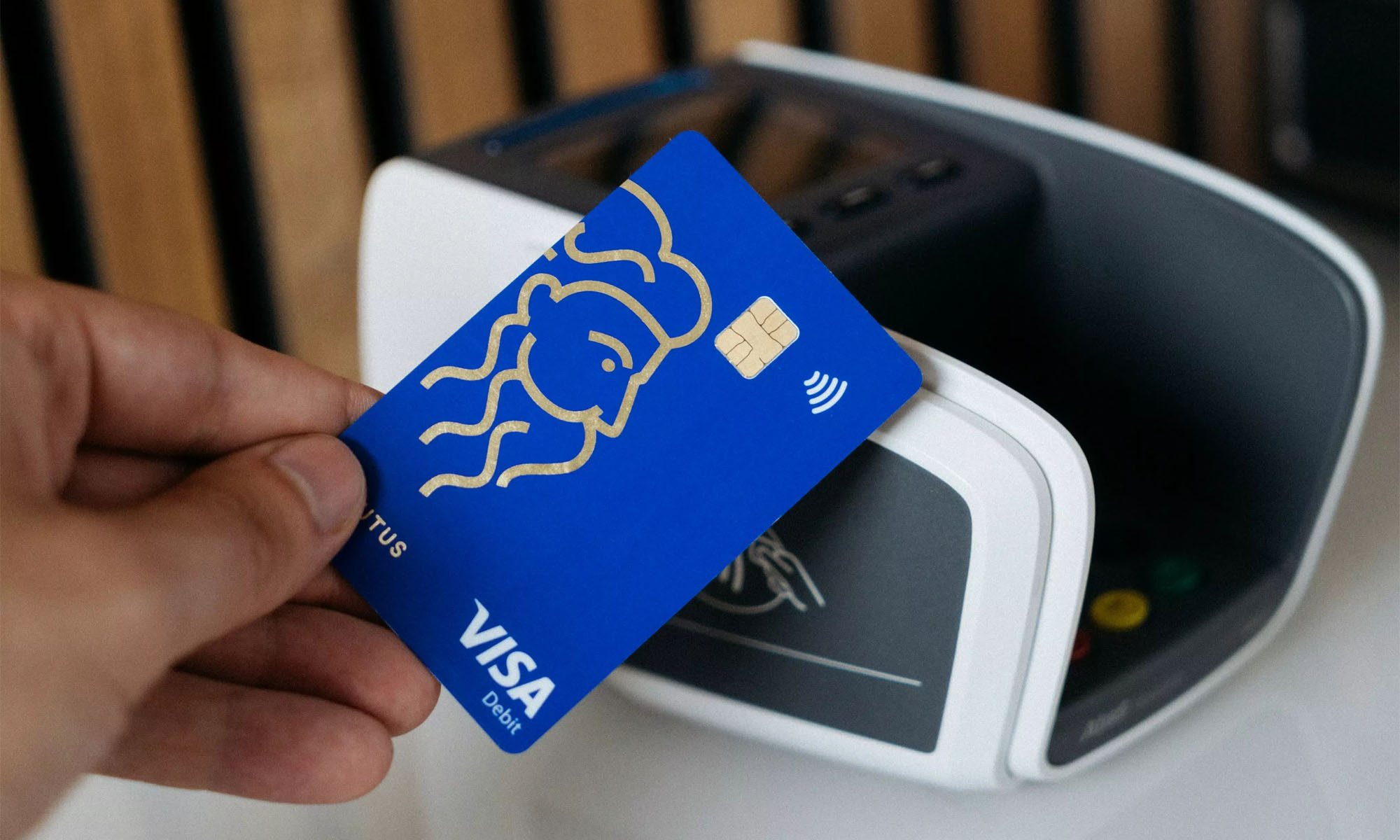
Visa is returning to Syria. Its first live international card transaction in the country was a test rather than a launch, and the milestone event ran through a Lebanese bank.
The acquirer (the bank on the merchant’s side of a card payment) was Fransabank Lebanon, with Paymera as the other named partner. Nadim Moujaes, who heads a Fransabank Group subsidiary, describes the test as both the culmination of “longstanding efforts to link Syria back to international payment networks” and “the first step in a larger path”.
Syrian President Ahmed Al-Sharaa makes the first electronic payment in Syria using a @Visa card at a store in Damascus, following the lifting of US sanctions on Syria. pic.twitter.com/lpAN7nQ6Fc
— Tech Magazine (@TechMGZN) August 27, 2026
“We are excited to have successfully tested live transactions today as we plan to enable international visitors to use their Visa cards while in Syria,” says Leila Serhan, Visa’s senior vice president and group country manager for the North Africa, Levant and Pakistan region. Although a significant first step, that plan doesn’t come with a hard date for when a visitor’s card will work normally.
Mohammed Safwat Raslan, governor of the Central Bank of Syria, says the test paves the way for international card acceptance in Syria and that maintaining strong compliance, risk management and operational controls will remain essential. Serhan likewise stresses that Visa has worked within applicable legal, regulatory and compliance requirements. For a test transaction, it seems there was a great deal of attention paid to the rules, with the entire operation being carefully managed.
Also Read: Lebanon’s 5G Era Begins With 150 Stations And A $1M Budget
The test is the latest step in a sequence that began in December 2025, when Visa announced a strategic roadmap to support Syria’s integration into the global digital economy. In February 2026 it hosted its first industry gathering of banks, ecosystem partners and policymakers in Damascus and, the same month, signed an agreement with Syria’s Ministry of Communications and Information Technology in San Francisco.
Michel Kattouah, Paymera’s CEO, called the test “the return of international card acceptance,” but while that’s positive news, there’s no word yet on when a Syrian bank will issue a Visa card to a Syrian customer.

Visa’s Return To Syria Starts With A Test And A Bank In Lebanon

RØDE’s New DS3 Studio Arm Is Built For Heavier Creator Setups

Dubai Turns AI On Its Own Civil Service To Measure Productivity

Former Rockstar Director Dismisses GTA 6 Leaks As “Nothing Burger”

Qatar Airways Flies The World’s First Starlink-Equipped 787-9

Spotify Will Now Tell You If Your Favorite Artist Isn’t Real

Instagram Redraws Its Wordmark And The Internet Reads “Instagzam”

Anghami’s New Elite Program Starts With A Three-Decade Catalog

Qatar Is Getting Its First EV Plant, Built To Cope With Gulf Heat

Dubai’s aradus Wants AI To Run The Back Office Of Physical Trade


-
 News3 weeks ago
Instagram Redraws Its Wordmark And The Internet Reads “Instagzam”
-
 News3 weeks ago
Anghami’s New Elite Program Starts With A Three-Decade Catalog
-
 News3 weeks ago
Qatar Is Getting Its First EV Plant, Built To Cope With Gulf Heat
-
 News3 weeks ago
Dubai’s aradus Wants AI To Run The Back Office Of Physical Trade