News
IBM Unveils Nighthawk And Loon Quantum Chips
The company’s new processors push toward practical quantum advantage with two divergent chip designs.


IBM has released a pair of quantum chips — Nighthawk and Loon — that the company hopes will give it a credible shot at demonstrating the quantum advantage over regular processors. The designs split into two directions, with the Loon chip being the more experimental of the pair.
Nighthawk is IBM’s main bet. The chip is a 120-qubit version that’s due for distribution to partners in late 2025, using 218 tunable couplers in a square lattice to tighten control over qubit interactions. IBM says the layout will let it “execute circuits with 30 percent more complexity” and run problems that require up to 5,000 two-qubit gates. The company wants this line to mature quickly enough to power its first verifiable advantage claim.
Loon goes off the conventional path. Instead of keeping qubits on a flat plane, it links them vertically as well. New Scientist has flagged the design as an early test of 3D quantum layouts — an attempt to reduce errors by giving qubits more routes to talk to each other. It’s not aimed at near-term rollout but could shape future rigs if the approach holds.
The split strategy underlines IBM’s view that smart connectivity, not headline qubit counts, will decide who reaches the next milestone. Google, on the other hand, is leaning another way: Its Willow chip, paired with the “Quantum Echoes” algorithm, has already been presented as a proof point for “the first-ever verifiable quantum advantage running the out-of-order time correlator (OTOC) algorithm”.
Also Read: RØDE Unveils Wireless Micro Camera Kit For Hybrid Shooters
IBM is also backing a community-run quantum advantage tracker with Algorithmiq, the Flatiron Institute and BlueQubit. The framework “supports three experiments for quantum advantage across observable estimation, variational problems, and problems with efficient classical verification,” and IBM is pushing researchers to contribute.
For MENA labs building quantum and HPC programs under national digitalization efforts, the contrast between Nighthawk and Loon offers a clearer view of where the hardware race may bend next — tight, lattice-driven control on one side; a stab at 3D connectivity on the other.
The field is moving fast, and IBM’s twin quantum chips mark its next swing at staying in the fight.





News
DJI Teases Dual-Camera Osmo Pocket 4P For 2026 Launch
Though most technical claims for the new gimbal come from industry leaks rather than DJI’s own announcement.
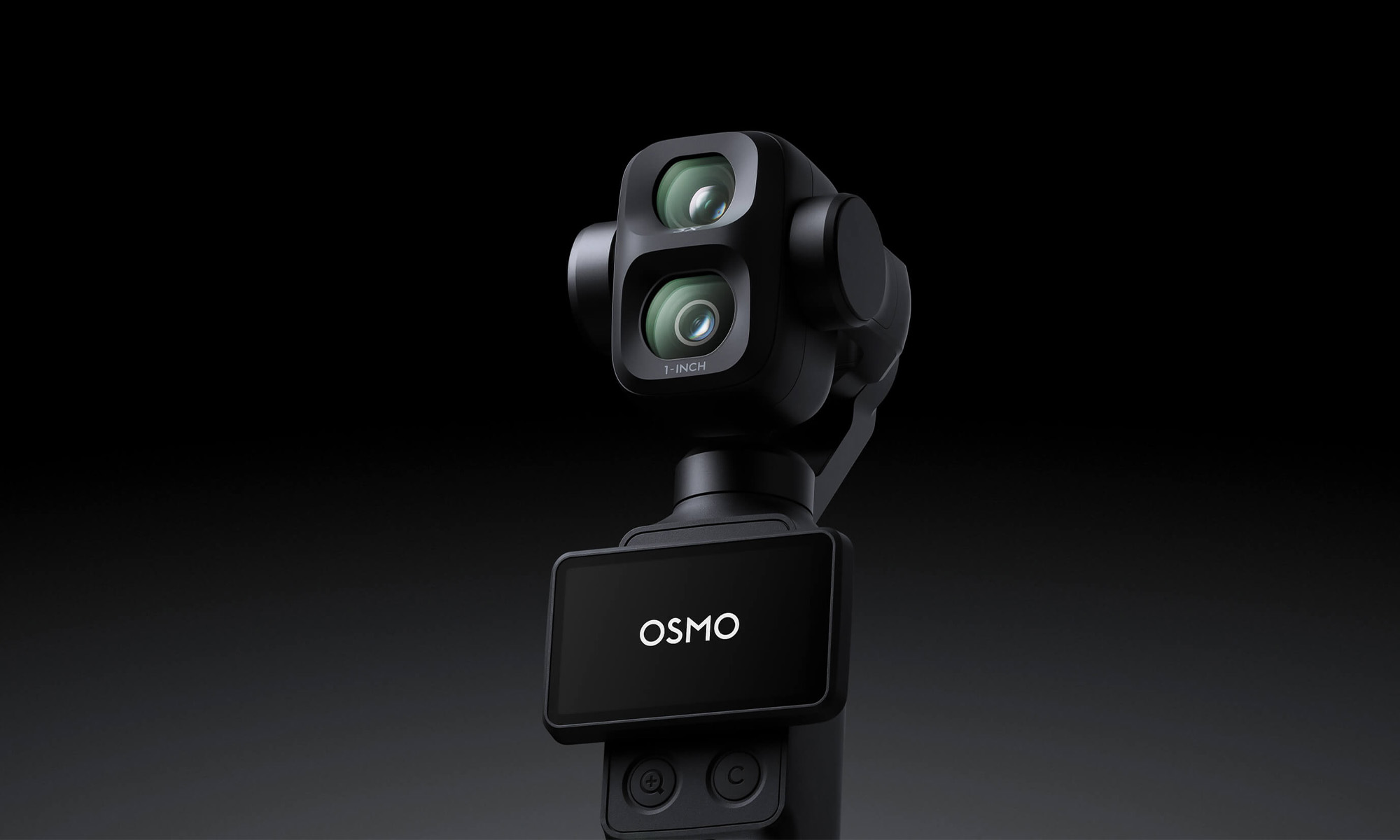
DJI has teased a dual-camera version of its Osmo Pocket gimbal, confirming that the Osmo Pocket 4P will launch in 2026. The teaser image is the company’s first preview of the device, following months of speculation about a more advanced model in its pocket camera range.
The image shows a slightly larger device than the existing Osmo Pocket 4, with two camera modules mounted above a compact three-axis gimbal. Reports suggest one camera may use a 1-inch sensor paired with a wide-angle lens, while the second may carry a 3x zoom lens — though DJI has not officially confirmed any of these details.
According to leaks circulating ahead of the launch, the Osmo Pocket 4P could support 4K video at up to 240 frames per second, offer 14 stops of dynamic range and include 10-bit D-Log color support. Those features are commonly used by filmmakers who require greater flexibility during color grading and post-production. Reports also point to Hasselblad color tuning, continuing a partnership that has already appeared in some of DJI’s drone cameras, along with up to 128GB of built-in storage that would reduce reliance on external memory cards during longer shoots.
Also Read: AltoVolo Releases Sigma Footage & Sets Date For Demonstrator
The device is expected to retain features from the existing Osmo Pocket 4, including a three-axis mechanical gimbal, updated ActiveTrack subject tracking and a flip-out touchscreen display. The Osmo Pocket line is aimed at content creators, vloggers, and independent filmmakers seeking compact equipment that can produce usable footage without a larger camera system.
DJI has not provided pricing or a specific launch date beyond the 2026 window. Industry observers expect the Osmo Pocket 4P to cost more than the standard Pocket 4 because of the dual-camera setup and expanded recording capabilities, though no figures have been disclosed. So far, most of the technical detail circulating around the product remains tied to leaks rather than official confirmation.

DJI Teases Dual-Camera Osmo Pocket 4P For 2026 Launch

Lebanon Ministers Meet Visa Over National Digital Payment Platform

AltoVolo Releases Sigma Footage & Sets Date For Demonstrator

Careem Launches Lebanon Aid Drive With WFP

United Arab Emirates To Quit OPEC After 59 Years

Deezer Says AI Tracks Now Make Up 44% Of Uploads

Yango Ride Introduces In-Chat Trip Planning In ChatGPT

NVIDIA Puts GPT-5.5 Codex In Hands Of 10,000 Staff

YouTube Tests Conversational AI Search Tool