
News
NEOM Announces Luxury Tourism Destination Epicon
The glistening coastal tower will be situated on the Gulf of Aqaba and is billed as “a gateway to the future”.


Planners of NEOM, the sustainable urban development being built in northwest Saudi Arabia, have announced a new addition to the project named Epicon, a luxury coastal tourism destination on the Gulf of Aqaba.
Epicon will “set new standards of hospitality and architecture”, according to a recent NEOM press release. Rising from the desert like a glistening mirage, the facility will feature two huge towers, one 225 meters tall and the second a massive 275 meters. The towers will house 41 ultra-premium hotels and luxury residences comprising 14 suites and apartments. A short distance from the hotel, a separate resort complex will blend “tranquility with indulgence” with another 120 rooms and 45 residential beachside villas.
In the press release, NEOM officials describe Epicon as a place “designed as a gateway to the future [providing] an opportunity to escape the stresses of the every day”. Whether relaxing at the beachside club, taking a wellness treatment at the luxurious spa, or exploring the surrounding nature, the coastal tower resort will offer guests an unparalleled experience, along with a wide array of culinary options from its many restaurants and bistros.
Also Read: Top 10 Best Freelance Platforms In The Middle East
Epicon will also offer residential apartments, giving unrestricted access to world-class facilities and views of one of the most desirable shorelines in the region. Amenities will include a state-of-the-art gym, high-tech workspaces, a library, swimming pools, and club lounges.
News of the Epicon facility follows the recent announcement by NEOM of Leyja, a sustainable tourism destination situated in a beautiful natural valley. Overall, it appears that the development of Saudi Arabia’s northwest region will soon make it one of the world’s most desirable tourist locations.




News
Abu Dhabi’s Robot Kitchen Is Serving Up Biryani, Not Burgers
Circus SE wants to put a tiny automated factory inside the buildings where Gulf residents live and work, bypassing part of last-mile delivery.
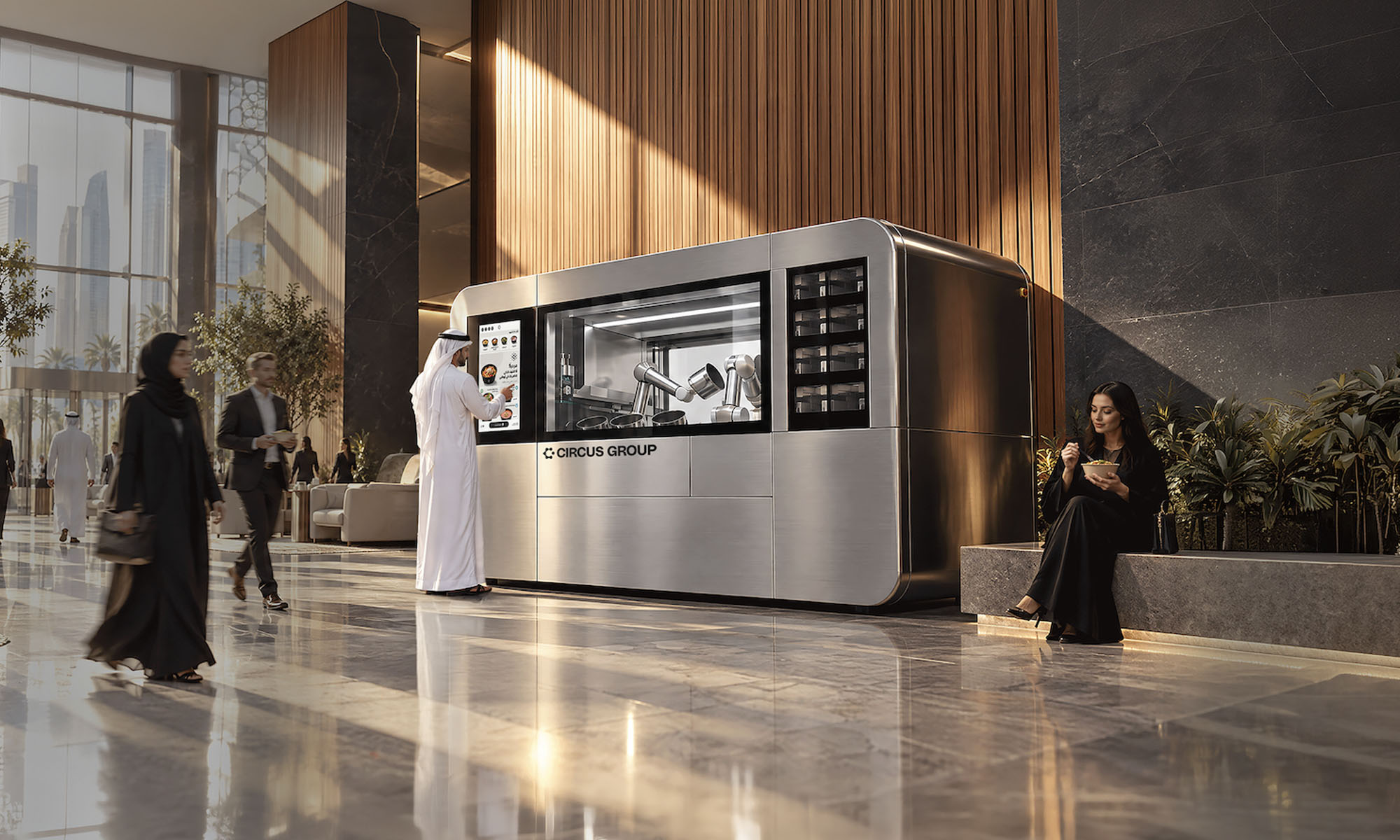
The most telling thing about a new autonomous kitchen now running in Abu Dhabi’s Marina Square is what it won’t cook:
“We don’t do fast food,” says Nikolas Bullwinkel, Founder and CEO of Circus SE. “We’ve actively decided not to build a machine that can only do burgers”.
Instead, the CA-1 system is built around pot-based cooking: curries, pastas, soups and rice dishes. After experimenting with highly personalized recipes, Circus deliberately leaned back toward recognizable food. “We’re going with a chicken biryani because you know it,” Bullwinkel says of the AED 40 dish.
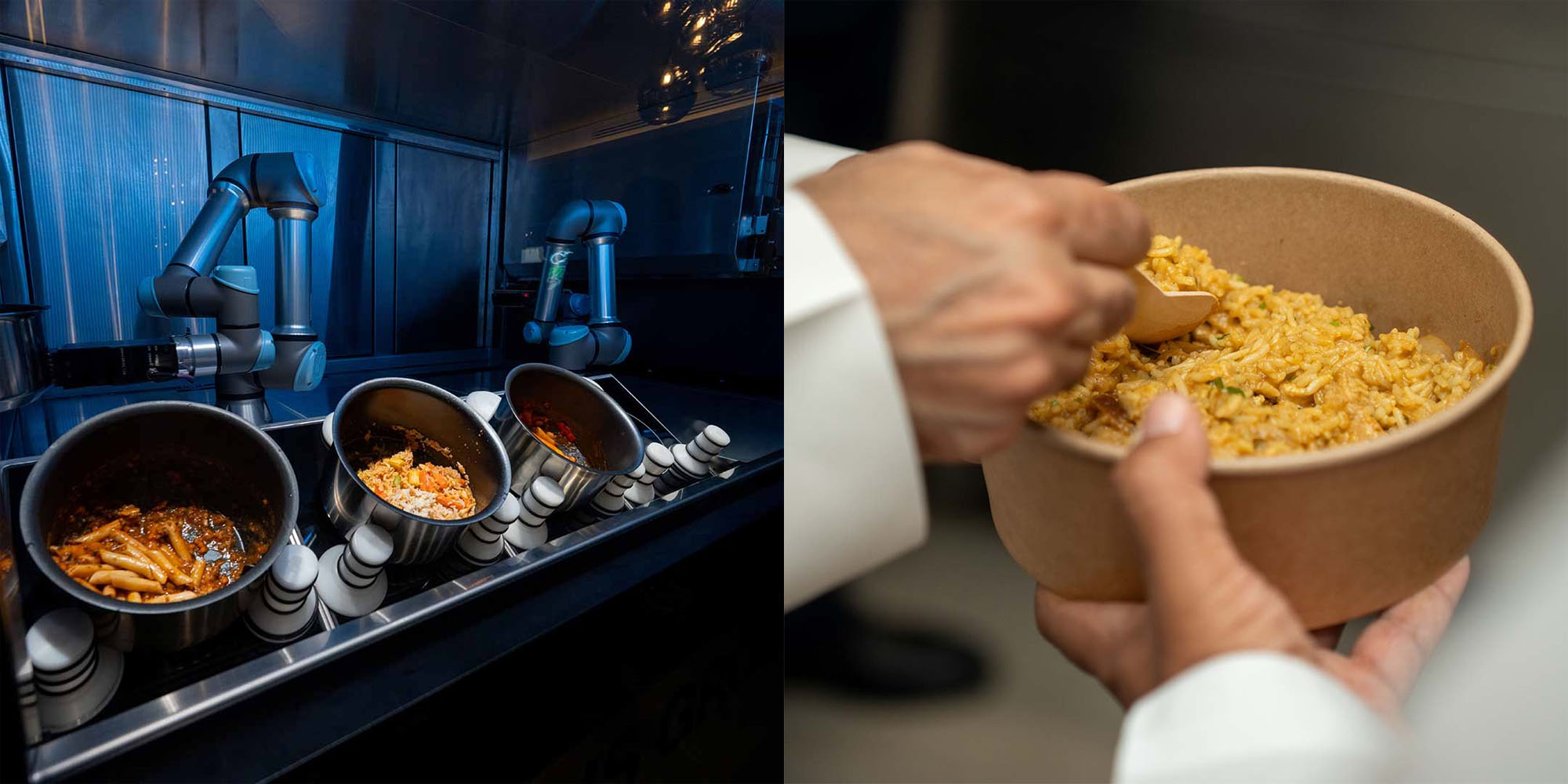
The Germany-based robotics and food technology company operates across eight countries, and Abu Dhabi is its first deployment outside Europe. More locations are expected there and in Dubai.
In Germany, its units can be placed in supermarkets, gas stations, airports and hospitals. In the Gulf, Bullwinkel wants them inside residential and office buildings, replacing some of the complexity of last-mile delivery. “We’re basically bringing a very tiny factory a few square meters into your building,” he says. Catering company Royal Prestige supplies the ingredients and knowledge of local tastes.
The CA-1 manages up to 36 refrigerated ingredient silos alongside automated induction cooking, robotic plating and a self-cleaning dishwasher. Two robotic arms move ingredients through the system with minimal human intervention. It can produce up to 120 hot meals an hour, and a meal such as rice and curry can take around three to four minutes.
Also Read: Ooredoo Qatar’s 5G+ Network Is Built For Machines As Much As People
Five cameras and multiple sensors monitor heat, temperature and consistency, an attempt to approximate what a chef perceives. “You can hear something gets burned, you can smell it, you can see it at some point,” Bullwinkel says. CircusOS, the company’s operating system, adjusts recipes in real time.
You might think of the platform as a threat to kitchen staff, but Bullwinkel frames Circus as a way for chefs to develop recipes and distribute them at scale. With that being said, rising labor costs and shortages are also part of his case for automation.

Abu Dhabi’s Robot Kitchen Is Serving Up Biryani, Not Burgers

Sennheiser’s MOMENTUM 5 Series Bets On Batteries You Can Swap

UAE’s 3-Minute University Registration Runs On Government Data

How Online Ads Became A Delivery System For Zero-Click Spyware

Shokz OpenDots 2 Review: Clip-On Audio Gets A Bass-Heavy Makeover

Dubai Says Its Deepfake Detector Needs Just 7 Seconds Of Video

New Disney+ Streaming App Has Officially Launched In The UAE

NEOPAY Wants To Follow Merchants Across Channels And Borders

RØDE’s Low-Profile Studio Arm Is Designed To Stay Out Of Shot

G42’s Inception42 Wants AI To Show Its Work Before Investors Commit


-
 News3 weeks ago
Dubai Says Its Deepfake Detector Needs Just 7 Seconds Of Video
-
 News3 weeks ago
New Disney+ Streaming App Has Officially Launched In The UAE
-
 News3 weeks ago
NEOPAY Wants To Follow Merchants Across Channels And Borders
-
 News4 weeks ago
RØDE’s Low-Profile Studio Arm Is Designed To Stay Out Of Shot