
News
OpenAI Launches ChatGPT-4: What You Need To Know
Although the latest version of the popular chat tool still isn’t 100% perfect, its creator says it performs at human levels on certain tasks.

OpenAI released the eagerly awaited update to ChatGPT – ChatGPT-4 – on Tuesday, with immediate access available on Microsoft’s Bing Chat and a developer waiting list.
ChatGPT-4 is “less capable than humans in many real-world scenarios”, OpenAI said in a recent blog post, but it represents “the latest milestone in OpenAI’s effort in scaling up deep learning”.
Since its launch last November, ChatGPT’s popularity has exploded, with traffic to the site hitting over one billion visits.
The new version of the tool is said to have “human-level performance on various professional and academic benchmarks”. ChatGPT-4 can pass the lawyer’s bar exam in the 90th percentile, for example, while by comparison, GPT-3.5’s score was in the bottom 10%.
Who Can Use ChatGPT-4?
Microsoft’s Bing Chat was co-developed with OpenAI and has run on GPT-4 for the last five weeks. GPT-4 is also available to OpenAI’s paying users, and developers can enter a waiting list to gain access to the platform.
What Are The Limitations Of ChatGPT-4?
“Despite its capabilities, GPT-4 has similar limitations as earlier GPT models,” OpenAI said, with the software still prone to producing bad advice, buggy code, or inaccurate information.
The company has cautioned against using the chat tool in “high-stakes contexts” and advises human review to check facts and add additional context. However, OpenAI claims a 40% improvement in error reduction.



News
Deezer Says AI Tracks Now Make Up 44% Of Uploads
The streamer says nearly 75,000 AI-made songs now hit its platform each day, even as those tracks account for just 1% to 3% of plays.
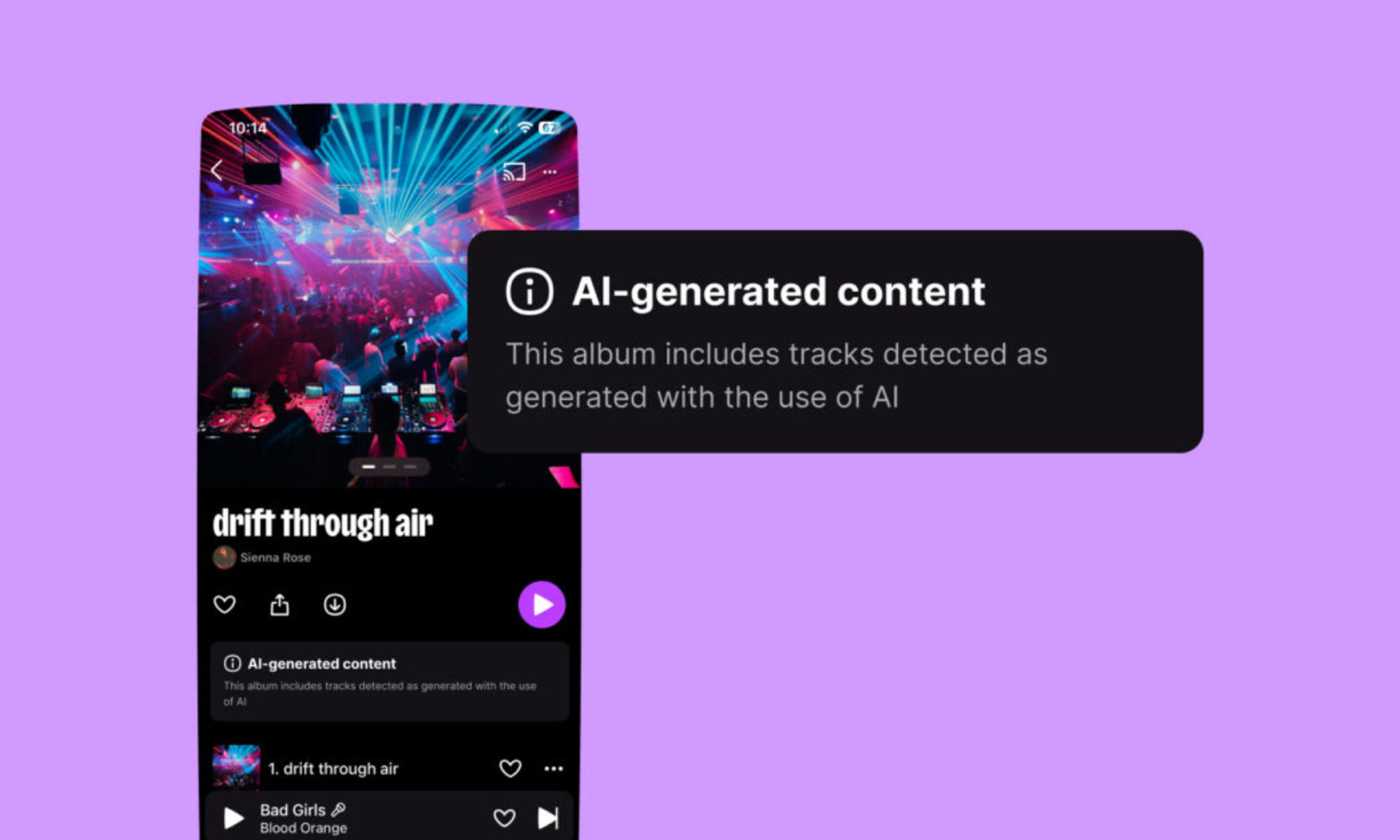
AI-generated music is becoming a real headache for music platforms, according to Deezer. The streaming service says it now receives nearly 75,000 AI-made tracks a day, equal to about 44% of all daily uploads to the platform.
The figure is up sharply from 10,000 daily AI uploads when Deezer launched its detection tool back in January 2025. The jump shows how quickly products such as Suno and Udio have made song creation cheap, fast, and easy to scale.
Despite the volume, Deezer says AI tracks still only account for 1% to 3% of total streams. The music gets few human listeners, but upload pressure is rising. The company says it is also seeing more “fraudulent” submissions.
Its response so far has been practical. Deezer has removed AI-generated songs from recommendation systems, demonetized them, and stopped storing high-resolution versions of those files.
The company also says it’s the only streaming platform currently tagging AI-generated tracks at scale, using that claim to position its moderation tools as a wider industry model.
“AI-generated music is now far from a marginal phenomenon and as daily deliveries keep increasing, we hope the whole music ecosystem will join us in taking action to help safeguard artist’s rights and promote transparency for fans,” CEO Alexis Lanternier said in a blog post.
Deezer has started licensing the detection technology to other companies, turning an internal control system into a commercial product. It says the tool can already identify music created with Suno and Udio, and can be extended to other generators if training data is available.
Also Read: Nano Banana 2 Arrives In MENA For Google Gemini Users
The company is also working on detection methods that would not require training datasets, a harder technical step that could widen coverage as new music models appear.
Rivals are taking mixed approaches. Spotify has rolled out policies aimed at curbing AI music. Apple Music is asking artists and labels to disclose AI-made tracks. Qobuz has begun automated labeling, while Bandcamp has banned AI music outright.
For now, Deezer’s numbers suggest the real issue is not listener demand. It’s supply.

Deezer Says AI Tracks Now Make Up 44% Of Uploads

Yango Ride Introduces In-Chat Trip Planning In ChatGPT

Nano Banana 2 Arrives In MENA For Google Gemini Users

GluCare Rebrands To Metabolic, Dropping Diabetes-Only Identity


