
News
UAE-Built Falcon-H1 Arabic Leads LLM Benchmarks
The lean Emirati-built language model beats larger global systems and puts Arabic at the center of training.


Abu Dhabi’s Technology Innovation Institute has released an Arabic-first large language model that tops global test boards, an uncommon edge for a region long served by English-centric systems.
Falcon-H1 Arabic comes in 3B, 7B and 34B versions. The flagship posts 75.36% accuracy on comprehensive Arabic tasks and ranks first on the Open Arabic LLM Leaderboard. It also outperforms Meta’s Llama-70B and Alibaba’s Qwen-72B while using less than half their parameters. The smallest model beats Microsoft’s Phi-4 Mini by ten percentage points on equivalent benchmarks.
Arabic remains hard territory for AI. Flexible word order, dense morphology and constant switching between regional dialects and Modern Standard Arabic leave many global models missing context or tone. Academic research has pointed to a shortage of annotated datasets for dialect and informal speech. The impact shows up in classrooms, call centers and government portals where Arabic chatbots lag their English counterparts.
TII trained Falcon-H1 Arabic on formal writing, dialects and culturally grounded content. Beyond scores, it handles practical use: long conversations, reasoning rather than literal translation, and inputs of up to 192,000 words — enough for medical records or legal filings.
“The aim is innovation that is accessible, relevant, and impactful,” said Faisal Al Bannai, Adviser to the UAE President and Secretary-General of the Advanced Technology Research Council.
Also Read: Governata Raises $4M For Saudi AI Data-Governance Push
Arabic is spoken by more than 450 million people across over 20 countries, yet has often been treated as a secondary language for foundation models. The UAE move signals a push to flip that logic and build Arabic-native stacks rather than wait for global systems to improve.
Falcon models have led their categories since 2023. With H1 Arabic, TII is offering free access via chat.falconllm.tii.ae for developers, media, healthcare and public-sector users looking to automate in natural Arabic.
As the region continues to invest in sovereign computing and data localization, the addition of Falcon-H1 Arabic adds a powerful tool built for the native language, instead of an afterthought attached to an English-trained system.



News
Visa’s Return To Syria Starts With A Test And A Bank In Lebanon
Foreign visitors will be the first users to benefit, but whether Syria’s own banks and cardholders follow is still an open question.

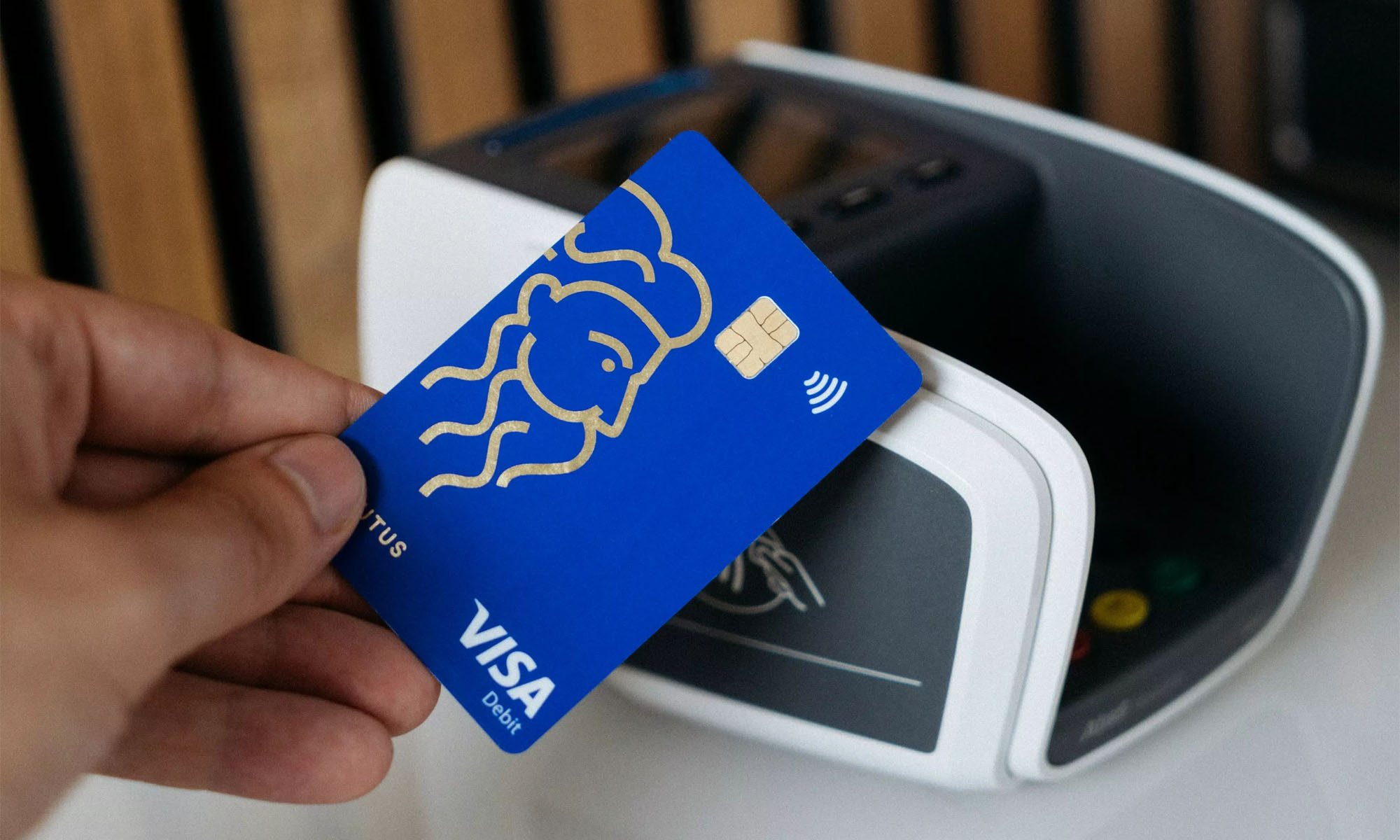
Visa is returning to Syria. Its first live international card transaction in the country was a test rather than a launch, and the milestone event ran through a Lebanese bank.
The acquirer (the bank on the merchant’s side of a card payment) was Fransabank Lebanon, with Paymera as the other named partner. Nadim Moujaes, who heads a Fransabank Group subsidiary, describes the test as both the culmination of “longstanding efforts to link Syria back to international payment networks” and “the first step in a larger path”.
Syrian President Ahmed Al-Sharaa makes the first electronic payment in Syria using a @Visa card at a store in Damascus, following the lifting of US sanctions on Syria. pic.twitter.com/lpAN7nQ6Fc
— Tech Magazine (@TechMGZN) August 27, 2026
“We are excited to have successfully tested live transactions today as we plan to enable international visitors to use their Visa cards while in Syria,” says Leila Serhan, Visa’s senior vice president and group country manager for the North Africa, Levant and Pakistan region. Although a significant first step, that plan doesn’t come with a hard date for when a visitor’s card will work normally.
Mohammed Safwat Raslan, governor of the Central Bank of Syria, says the test paves the way for international card acceptance in Syria and that maintaining strong compliance, risk management and operational controls will remain essential. Serhan likewise stresses that Visa has worked within applicable legal, regulatory and compliance requirements. For a test transaction, it seems there was a great deal of attention paid to the rules, with the entire operation being carefully managed.
Also Read: Lebanon’s 5G Era Begins With 150 Stations And A $1M Budget
The test is the latest step in a sequence that began in December 2025, when Visa announced a strategic roadmap to support Syria’s integration into the global digital economy. In February 2026 it hosted its first industry gathering of banks, ecosystem partners and policymakers in Damascus and, the same month, signed an agreement with Syria’s Ministry of Communications and Information Technology in San Francisco.
Michel Kattouah, Paymera’s CEO, called the test “the return of international card acceptance,” but while that’s positive news, there’s no word yet on when a Syrian bank will issue a Visa card to a Syrian customer.

Visa’s Return To Syria Starts With A Test And A Bank In Lebanon

RØDE’s New DS3 Studio Arm Is Built For Heavier Creator Setups

Dubai Turns AI On Its Own Civil Service To Measure Productivity

Former Rockstar Director Dismisses GTA 6 Leaks As “Nothing Burger”

Qatar Airways Flies The World’s First Starlink-Equipped 787-9

Shokz OpenFit Pro Review: Open-Ear Audio Finally Grows Up

Syria Just Got Its First Super App Featuring Built-In Digital Payments

Lebanon’s 5G Era Begins With 150 Stations And A $1M Budget

Samsung And Spotify Offer Free Premium Deal In MENA

Spotify Will Now Tell You If Your Favorite Artist Isn’t Real


-
 News3 weeks ago
Lebanon’s 5G Era Begins With 150 Stations And A $1M Budget
-
 News3 weeks ago
Samsung And Spotify Offer Free Premium Deal In MENA
-
 News2 weeks ago
Spotify Will Now Tell You If Your Favorite Artist Isn’t Real
-
 News2 weeks ago
Instagram Redraws Its Wordmark And The Internet Reads “Instagzam”