
News
Deliverect Rolls Out Self-Order Kiosks Across MENA
The restaurant tech firm is bringing its in-store ordering kiosks to the Middle East as operators look to cut queues and push higher-value orders.


Deliverect has launched its self-service ordering kiosks in the Middle East and North Africa, extending its footprint in a region where an expanding food and beverage sector means that restaurants are under pressure to move faster with fewer staff.
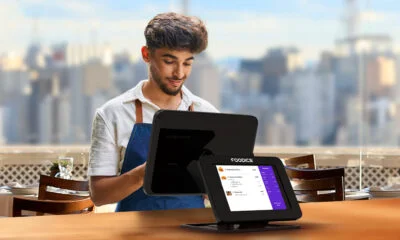
The product, Deliverect Kiosk, allows customers to browse menus, place orders and pay directly at in-store screens, without any staff involvement. For operators, the pitch is straightforward: shorter queues, faster throughput and higher average spend.
Deliverect says the kiosk is tightly integrated into its broader ordering platform, syncing menus and availability across locations in real time. Built-in upselling and bundling features are designed to nudge customers toward higher-value baskets without adding friction at the counter.
Data from Europe shows the potential gains that the system can achieve: Restaurants using its kiosks in Germany, Spain, Italy, Switzerland, Belgium and the UK have cut average order times by 17%. Half of all kiosk orders included an upsell, while ticket sizes were around 30% higher than traditional ordering flows, according to the company.
Naji Haddad, Vice President of EMEA at Deliverect, said the regional launch reflects growing demand for automation among restaurant operators. “The launch of Deliverect Kiosk represents another important milestone for the company, where restaurants can reap the benefits and accelerate their business revenues even more while also enhancing customer experiences,” he said.
Haddad also pointed to the system’s adoption by international brands as a signal of its maturity. “Not only is Deliverect Kiosk a catalyst when it comes to boosting productivity and sales, but this user-friendly innovative tech system is widely used by some of the popular brands in the world today,” the VP added.
Also Read: Belkin Launches Wireless HDMI Adapter With 131-Foot Range
The kiosks are offered in multiple formats, including floor-standing, wall-mounted and countertop models, making them suitable for quick-service, counter-service and dine-in restaurants. Stock levels are synchronized with point-of-sale systems so customers only see what is actually available.
As competition intensifies across the region’s dining hubs, tools that increase order speed and spending without adding headcount are becoming less of a nice-to-have. Deliverect is betting that kiosks will be part of that shift.





News
YouTube Rolls Out Supervised Children’s Accounts Across MENA
An industry-first feed timer lets parents cap Shorts scrolling. Access can also be switched off entirely ahead of exam season.


YouTube has launched supervised kid accounts across the Middle East and North Africa, giving parents a way to hand their children the main YouTube app without handing over all of it. Announced in Dubai on July 2, the accounts are built directly into the platform rather than the standalone YouTube Kids app, and are aimed at families who feel a child has outgrown the curated library but isn’t ready for the open feed.
Parents can choose from three content settings, each broadly aligned with international content ratings. Explore covers educational videos, tutorials, arts and crafts, and dance. Explore More adds gaming and live streams. Most of YouTube opens up almost everything except videos rated 18+ or deemed inappropriate for supervised accounts.
The standout tool is an industry-first Shorts feed timer, which lets parents set daily limits on short-form scrolling. Set it to zero and Shorts disappears altogether – a lever YouTube suggests parents might pull ahead of exam season. Other protections are on by default for all users under 18: “Take a Break” and “Bedtime” reminders, no personalized ad targeting, autoplay switched off, and no ability to upload videos or write comments. The accounts are optional, and parents can end supervision at any time.
The kid accounts join supervised teen accounts already available across the region, which notify parents by email when a teenager uploads a video or starts a live stream.
“YouTube has been a huge part of families’ lives across this region for over 20 years,” said Javid Aslanov, head of YouTube Middle East and North Africa, citing Kantar research showing 95% of viewers in Saudi Arabia and the UAE agree YouTube has top content in education and learning.
Also Read: Tamper With The Recording LED & Meta’s Glasses Kill Camera
“It’s essential that we protect young people in – not from – the digital world,” added Garth Graham, YouTube’s head of health.
The new settings are rolling out gradually across the MENA, including the Kingdom of Saudi Arabia, Oman, Kuwait, Qatar, Bahrain, Jordan, Lebanon, Egypt, Tunisia, Algeria, and Iraq. The latest features can be set up through Family Center in the YouTube app or via Google Family Link.

YouTube Rolls Out Supervised Children’s Accounts Across MENA

Meta’s New AI Tool Builds Images From Public Instagram Photos

Tamper With The Recording LED & Meta’s Glasses Kill Camera

Samsung’s Next Unpacked Could Bring Two Galaxy Z Fold 8 Models

OpenAI Cleared To Launch GPT-5.6 Publicly After Government Review

Instagram Now Lets You Tune Its Algorithm, But There’s One Big Catch

Max Fashion Brings AI Virtual Try-Ons To Gulf Online Shoppers

Deezer’s Free AI Detector Reveals What’s Hiding In Your Playlists

LUVED Is A New Curated Preloved Marketplace For The UAE

Can AI Save Your Relationship? This New “Wingman” App Thinks It Can


-

 News2 months ago
DJI Teases Dual-Camera Osmo Pocket 4P For 2026 Launch
-

 Web32 months ago
2026 Crypto Trends: Bitcoin, ETFs & The Future Of Payments
-

 News2 months ago
Lebanon Ministers Meet Visa Over National Digital Payment Platform
-
 News2 months ago
At I/O 2026, Sundar Pichai Concedes AI Must Deliver Real Value