
News
Dubai Community Launches AI-Powered Pedestrian Crossings
The new safety system can activate flashing signs, lights built into the road surface, and traffic signal controllers.


A new AI-powered pedestrian crossing has been developed by Dubai-based specialists Derq. The new system will be installed in a local neighborhood as a smarter method to warn pedestrians and vehicles of potential conflicts.
The AI-based crossing will use behavior prediction models to anticipate potentially harmful scenarios and then deploy flashing signs, in-road warning lights, and traffic signal controllers to alert anyone in the vicinity of danger.
The system will also collect data to enhance road user awareness and the effectiveness of authorities’ responsiveness to safety problems and traffic performance. The technology has taken two years of rigorous testing to bring to fruition.
The crossing is equipped with ultra-high speed 5G connectivity, enabling data collection of safety events and traffic while allowing for remote operation, maintenance, and re-configuration. In the future, the system will leverage 5G technologies to communicate safety information and alerts to connected vehicles approaching the crosswalk.
Also Read: Abu Dhabi-Backed Tech Sculpture To Be Installed In Houston
Muammar Al Katheeri, chief officer for engineering and sustainability at Dubai Integrated Economic Zones Authority (DIEZ), explained: “This system serves as a cornerstone in cementing DSO’s position as a technologically advanced zone, offering residents and business partners a seamless and intelligent living and working experience. Through our longstanding partnership with Derq, we will continue to make remarkable progress in ensuring pedestrian safety and advancing Dubai’s smart city agenda”.
According to Dr. Georges Aoude, co-founder and CEO of Derq, the new AI-powered pedestrian crossing system aligns with Dubai’s vision to establish itself as a bicycle and pedestrian-friendly city with a range of eco-friendly transportation options.




News
New Disney+ Streaming App Has Officially Launched In The UAE
The app’s recommendations now factor in what’s popular in the UAE, and a dedicated Junior Mode gives kids their own corner of Disney+.


A new Disney+ app has officially launched in the UAE, and subscribers can now keep watching their favorite titles when they travel. Disney+ says access extends across supported markets in Europe, the United States and beyond.
The app is built around a dynamic homepage and simpler navigation, with recommendations drawn from each customer’s viewing habits and what’s popular in the UAE. Content from Hulu and ESPN is now easier to find alongside Disney+’s own library, the company says. Audio and subtitles come in up to 25 languages, and supported devices get high-quality video and sound.
For families, the app includes Junior Mode, a dedicated, simplified version of Disney+ for younger viewers, built around age-appropriate shows and movies. It sits alongside existing controls such as PIN-protected profiles, customizable content ratings and account notifications when a profile is changed.
The catalog still spans Disney, Pixar, Marvel, Star Wars, National Geographic, Hulu and FX. Returning series include Season 8 of “The Kardashians,” Season 23 of “Grey’s Anatomy” and Season 38 of “The Simpsons”. Also on the service are the second season of International Emmy and BAFTA Award-winning series “Rivals,” comedy “Only Murders in the Building,” Walt Disney Animation Studios’ “Zootropolis 2” and 20th Century Studios’ “Send Help”.
Also Read: Best Video Streaming Services In The Middle East
Marvel Television’s “VisionQuest” is on the way, and Disney’s live-action “Moana” is due later this autumn. Beyond Hollywood, the Turkish title “Halef” is coming to the platform alongside a lineup of Korean entertainment: Korean-Japanese romantic comedy “Merry Berry Love” is streaming now, and “The Remarried Empress” arrives November 4.
Existing subscribers will be prompted to download the new app and sign in with their current credentials, with on-screen steps covering account confirmation and profile setup. Subscriptions start at AED 49.99 per month and can be canceled at any time.
For UAE subscribers planning to travel, the update will likely be well received, but Disney has left one question open. It confirms Europe and the United States as supported markets but doesn’t yet say which others fall under and beyond.

New Disney+ Streaming App Has Officially Launched In The UAE

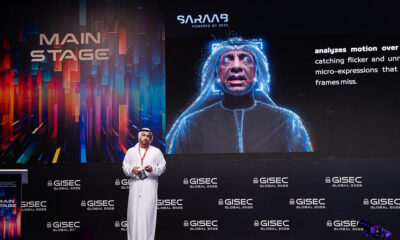
Dubai Says Its Deepfake Detector Needs Just 7 Seconds Of Video

OpenAI Has Announced A Visual Ad Format For ChatGPT

For etisalat, More Bandwidth Is A Matter Of Digital Sovereignty

NEOPAY Wants To Follow Merchants Across Channels And Borders

Trip.com Is Betting An AI Agent Will Book Your Next Vacation

Musk’s Boring Company Wants To Dig 150 KM Of Tunnel Under The UAE

OKX Bets Streaming Perks Can Take Crypto Mainstream Across MENA

Meta’s New $499 Plan Puts A Price On Reaching A Real Person

Apple’s First Folding iPhone Arrives Late To A Shrinking Market


-
 News3 weeks ago
Trip.com Is Betting An AI Agent Will Book Your Next Vacation
-
 News4 weeks ago
Musk’s Boring Company Wants To Dig 150 KM Of Tunnel Under The UAE
-
 News3 weeks ago
OKX Bets Streaming Perks Can Take Crypto Mainstream Across MENA
-
 News3 weeks ago
Meta’s New $499 Plan Puts A Price On Reaching A Real Person