
News
Dubai Residents Will Soon Travel Door To Door By Flying Car
Aviation firm Aviterra has signed a deal with Dutch company PAL-V to purchase over 100 Liberty flying cars.

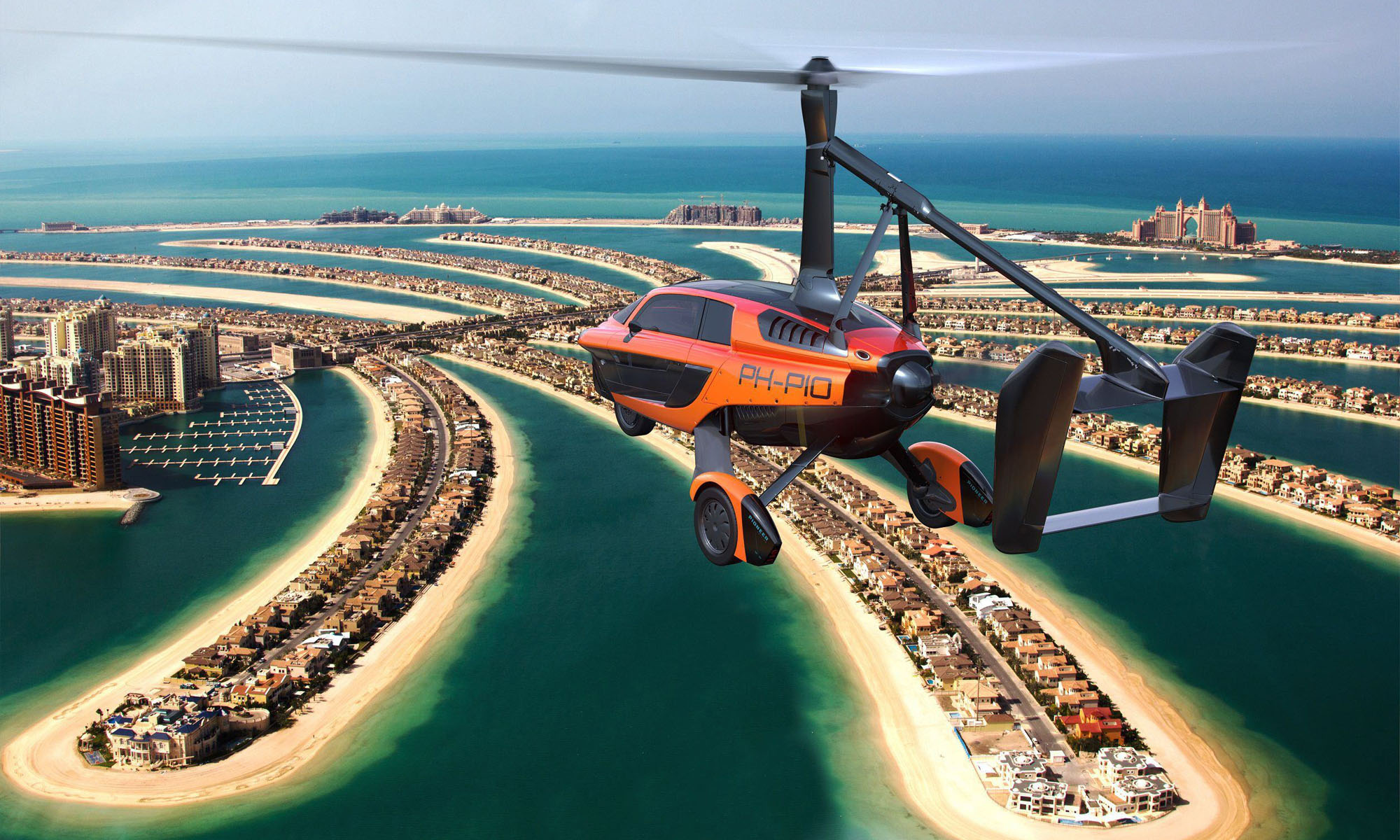
A Dubai-headquartered aviation company has signed an agreement with Dutch firm PAL-V to bring their groundbreaking flying cars to the Middle East.
Aviterra, a manufacturer of aviation and aerospace components, will purchase over 100 Liberty flying cars and directly invest in the European aviation company, they revealed in a recent joint statement.
At $799,000, the two-seat Liberty is a costly vehicle predominantly aimed at high-end, corporate, and government clients and individuals with very deep pockets. Described by PAL-V as a “personal aircraft for daily medium and long-distance commutes,” the Liberty combines a gyroplane and three-wheeled car with collapsable propellers and tail fins stored on the roof.
In car mode, the vehicle can reach 100 kph in under nine seconds and has a top speed of 160 kph. Changing into aircraft modes takes around five minutes, with the helicopter-like blades rising from the roof and the tail fins extending up and out from the rear. Finally, the car’s rear jacks up, and two hatches open to deploy the rear-facing propeller.

As an aircraft, the Liberty has a range of between 400 and 500 km and a maximum speed of 180 kph. It can reach an altitude of 11,000 feet and requires a runway (or straight road) of at least 200 meters for both takeoff and landing.
The current batch of Liberty flying cars run on regular gasoline but will eventually be configured as EVs “once batteries get lighter”, according to Robert Dingemanse, CEO and founder of PAL-V.
Also Read: Abu Dhabi To Develop $1 Billion eSports Island Facility
Meanwhile, as both Abu Dhabi and Dubai continue to make strong commitments to air mobility, other companies are also keen to deploy flying cars in the Middle East. Slovakian firm KleinVision, for example, is developing a flying vehicle called the Aircar, powered by a BMW engine.
Dubai’s Roads and Transport Authority recently signed agreements to use air taxis in the city in the next two years, while Abu Dhabi’s Investment Office has announced plans to introduce an all-electric air taxi fleet by 2026.






News
Ooredoo Qatar’s 5G+ Network Is Built For Machines As Much As People
Built on 5G Standalone and 5G Advanced, the upgrade lays the groundwork for Qatar’s 2030 digital ambitions.


Ooredoo Qatar has launched what it calls the country’s first 5G+ mobile network. Customers get faster connections, but much of what the operator is promising is aimed at machines.
5G+ isn’t a new generation of mobile technology so much as a layering of upgrades, building on 5G Standalone and 5G Advanced. The result is the familiar trio of higher speeds, greater capacity and lower latency.
For consumers, Ooredoo promises smoother streaming, more responsive gaming and steadier connections on the move. The service is commercially available through mobile broadband in 5G+ coverage areas, and the operator is aiming it at campers during the camping season. The network has been deployed at locations across Qatar, but the announcement doesn’t name them, say whether smartphone plans are included or put figures on the speed and latency gains.
The business case is more detailed: Greater capacity lets more devices connect and exchange data efficiently, while shorter response times support real-time equipment monitoring and automated processes. Network slicing tailors connectivity to specific uses, and 5G Advanced combined with edge computing targets mission-critical applications that require rapid responses. Expanded IoT capabilities cover industrial sensors, asset trackers and utility meters, the building blocks for automation and future smart city services. The company also cites AI-enabled services and complex digital workloads.
Also Read: WHOOP Goes Arabic, Betting On The Gulf’s Appetite For Health Data
“With the 5G+ network, we are enhancing everyday digital experiences for our consumers, enabling innovation, and strengthening the competitiveness of businesses across the country,” said Sheikh Ali bin Jabor bin Mohammad Al Thani, chief executive officer of Ooredoo Qatar.
“From launching the world’s first 5G network in 2018 to deploying Qatar’s first 5G Standalone core network, we have consistently advanced connectivity,” he added.
Ooredoo ties the rollout to Qatar National Vision 2030 and the Digital Agenda 2030, framing it as part of the country’s effort to strengthen its position as a leading regional digital hub. For that ambition, the devices that matter most may be the ones without screens.

Shokz OpenDots 2 Review: Clip-On Audio Gets A Bass-Heavy Makeover

Ooredoo Qatar’s 5G+ Network Is Built For Machines As Much As People

G42’s Inception42 Wants AI To Show Its Work Before Investors Commit

WHOOP Goes Arabic, Betting On The Gulf’s Appetite For Health Data

New Disney+ Streaming App Has Officially Launched In The UAE

In Kuwait, Your Surgeon Might Be Operating From Another Country

Microsoft Plans $10 Billion-Plus Gulf Expansion Despite Iran Conflict

Qatar Folds 45 State Companies Into A Single Investment Platform

NEOPAY Wants To Follow Merchants Across Channels And Borders

RØDE’s Low-Profile Studio Arm Is Designed To Stay Out Of Shot


-
 News3 weeks ago
In Kuwait, Your Surgeon Might Be Operating From Another Country
-
 News3 weeks ago
Microsoft Plans $10 Billion-Plus Gulf Expansion Despite Iran Conflict
-
 News3 weeks ago
Qatar Folds 45 State Companies Into A Single Investment Platform
-
 News2 weeks ago
NEOPAY Wants To Follow Merchants Across Channels And Borders